Mood Stabilizer Interaction Checker
Select Your Medications
Interaction Analysis
Why These Three Mood Stabilizers Don’t Play Nice Together
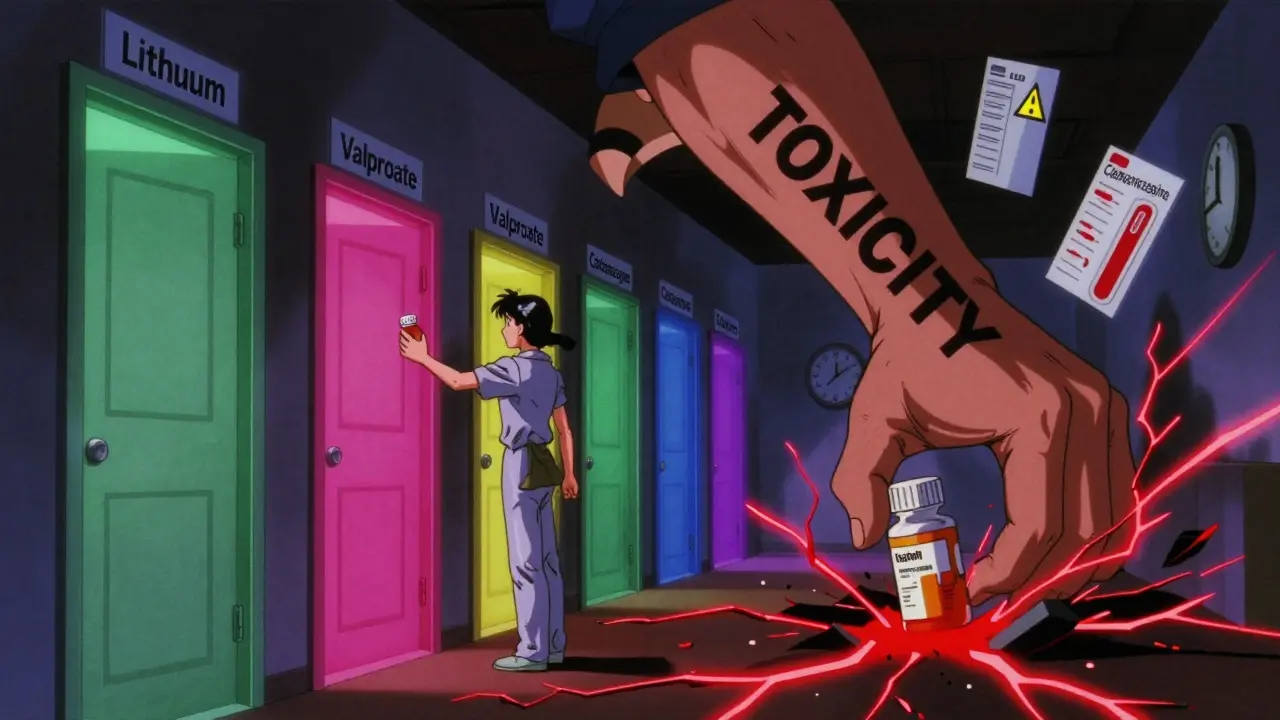
Take lithium, valproate, and carbamazepine - three of the oldest and most trusted mood stabilizers for bipolar disorder. Each works differently. Each is cleared from the body in a unique way. And each can turn dangerous when mixed with the others - or even with common over-the-counter drugs.
It’s not just about side effects. It’s about toxicity. A simple ibuprofen for a headache can push lithium levels into the danger zone. A switch from carbamazepine to valproate can make your lamotrigine dose double in effect. These aren’t rare edge cases. They happen regularly. And if you’re on one of these meds, you need to know how to avoid a hospital visit.
Lithium: The Renal Risk
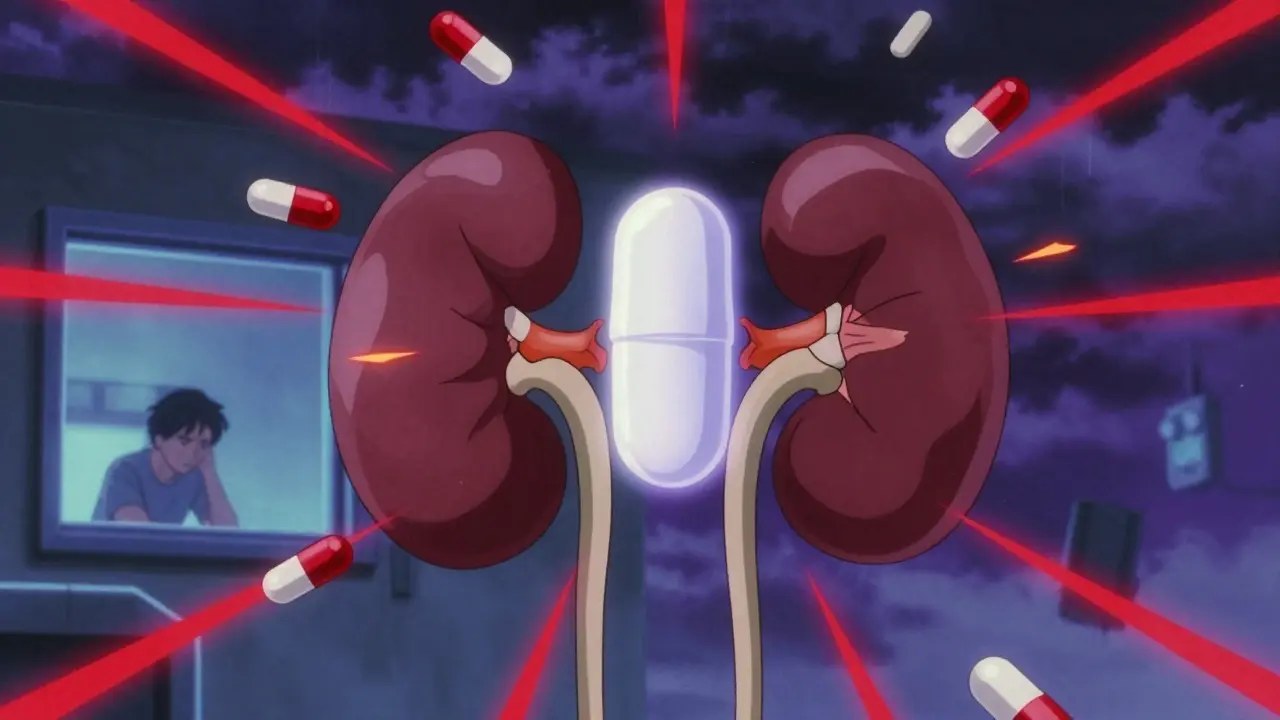
Lithium doesn’t get broken down by the liver. It doesn’t bind to proteins. It just rides through your kidneys and gets flushed out - if everything’s working right. That’s why even small changes in kidney function can send lithium levels skyrocketing.
Common medications like NSAIDs (ibuprofen, naproxen), diuretics (hydrochlorothiazide), and even ACE inhibitors (lisinopril) can reduce how fast your kidneys clear lithium. A 1989 study showed NSAIDs can bump lithium levels by 25-30%. That’s enough to cause tremors, confusion, or worse. One patient on Reddit described going from a safe level of 0.8 mmol/L to 1.3 mmol/L in just three days after starting ibuprofen. That’s above the toxic threshold.
Therapeutic levels for lithium are narrow: 0.6 to 1.2 mmol/L. Anything above 1.5 mmol/L can lead to seizures, kidney damage, or coma. The safest approach? Avoid NSAIDs entirely if you’re on lithium. Use acetaminophen instead. If you must take a diuretic, your doctor should check your lithium level within 5-7 days. And never skip your water. Dehydration? That’s a fast track to lithium toxicity.
Valproate: The Double-Edged Sword
Valproate works differently. It’s mostly processed by the liver through three different pathways. That makes it less likely to be affected by a single drug interaction - but not immune. Its biggest danger? It interferes with how other drugs are broken down.
When you take valproate with lamotrigine, lamotrigine levels can jump 100-200%. That’s why a patient switching from carbamazepine to valproate might need to cut their lamotrigine dose in half. One Reddit user reported going from 400 mg to 200 mg after the switch - exactly what the science says.
But valproate also gets pushed out faster when combined with carbamazepine. Carbamazepine boosts liver enzymes that break down valproate, cutting its levels by 30-50%. That means your mood could destabilize even if you’re taking the same dose. Monitoring valproate levels is critical here - especially if you’re adding or removing carbamazepine.
And there’s another layer: valproate binds tightly to proteins. When levels go above 100 mcg/mL, more of the drug becomes “free” and active - increasing side effects like drowsiness or liver stress. That’s why doctors often keep levels between 50 and 125 mcg/mL. But even within that range, interactions can sneak up on you.

Carbamazepine: The Metabolism Changer
Carbamazepine doesn’t just interact - it rewires your body’s drug-processing system. It’s a strong inducer of CYP3A4, the liver enzyme responsible for breaking down more than half of all prescription drugs. That means it can make other medications less effective.
Oral contraceptives? Their effectiveness drops by 50-70%. Risperidone? Levels fall by 40-60%. Even antidepressants and antifungals can become useless. This isn’t theoretical. A 2001 review documented cases where women on carbamazepine got pregnant despite using birth control.
But here’s the twist: when you add valproate to carbamazepine, the interaction flips. Valproate doesn’t lower carbamazepine levels - it raises its toxic metabolite, carbamazepine-epoxide (CBZ-E), by 40-60%. That’s the compound linked to dizziness, balance problems, and confusion. The 1997 study by Patsalos et al. showed this wasn’t because valproate blocked one enzyme - it blocked two. That’s why guidelines now say: when starting valproate with carbamazepine, reduce the carbamazepine dose by 25% and monitor CBZ-E levels. Target: under 3.5 mcg/mL.
And carbamazepine doesn’t stop there. It auto-induces its own metabolism. The first few weeks, you might feel fine. But after 3-5 weeks, your body starts clearing it faster. That’s why people often need dose increases during that window - not because they’re building tolerance, but because their liver is changing.
What Happens When You Mix Them?
Combining lithium and valproate? That’s actually one of the safer dual therapies. Studies show it can work well for rapid-cycling bipolar disorder. But you still need to monitor both levels. Lithium stays renal. Valproate stays hepatic. They don’t directly interfere - but together, they increase the risk of side effects like tremors or weight gain.
Valproate and carbamazepine? That’s the trickiest pair. The CBZ-E buildup can cause neurological symptoms that mimic a seizure disorder or brain injury. Patients often report feeling “off,” clumsy, or foggy. Clinicians call it “carbamazepine toxicity without high carbamazepine levels.” The fix? Lower the carbamazepine dose and check the epoxide metabolite.
Lithium and carbamazepine? Less direct interaction, but still risky. Carbamazepine can slightly lower lithium levels by increasing kidney clearance. That might make lithium less effective. And if you stop carbamazepine, lithium levels can creep up. Always check lithium levels after changing carbamazepine doses.
Who’s at Highest Risk?
It’s not just about the drugs. Your body matters too.
- Older adults: Kidney function drops with age. Lithium becomes riskier.
- Women of childbearing age: Valproate carries a 10.7% risk of major birth defects. The FDA warns against it unless no other option exists.
- People with kidney disease: Lithium is off-limits unless closely managed.
- Those on multiple meds: The more drugs you take, the higher the chance of a hidden interaction.
A 2019 survey of 853 psychiatrists found that 74% considered carbamazepine-valproate interactions “moderately to severely problematic.” Yet many patients still get this combo because it’s one of the few options left after other treatments fail.
How to Stay Safe
There’s no magic trick. Safety comes down to three things: monitoring, communication, and patience.
- Track your levels. Lithium, valproate, and carbamazepine all need regular blood tests - not just when you start, but every time you add or stop another medication.
- Know your meds. Tell every doctor you see - even your dentist - that you’re on a mood stabilizer. Over-the-counter drugs, antibiotics, and supplements can all interfere.
- Don’t rush changes. If your doctor switches you from carbamazepine to valproate, give it time. Your body needs weeks to adjust. Symptoms like dizziness or nausea aren’t always “just side effects” - they could be early signs of toxicity.
- Use the LITH acronym. Level monitoring, Instruct about symptoms, Teach hydration, Hold if toxic signs appear. It’s simple. It’s taught in nursing schools. And it saves lives.
The Bigger Picture: Why These Drugs Are Still Used
Despite the risks, these three drugs are still first-line choices. Why? Because they work - and they’ve been proven over decades.
Lithium reduces suicide risk by nearly 50%. Valproate stops acute mania faster than most alternatives. Carbamazepine helps when others fail. But they’re not for everyone. Newer drugs like lamotrigine and lurasidone have fewer interactions and are now preferred for many patients - especially women and older adults.
Still, in real-world practice, these older drugs are everywhere. Generic lithium costs $30 a month. Brand-name valproate runs $350. That matters. So does access. Many patients can’t get newer meds due to insurance limits.
The future? Pharmacogenetic testing is coming. By 2027, doctors may test your CYP3A4 genes before prescribing carbamazepine. Lithium precision programs are already testing urine biomarkers to predict who’s at risk for toxicity. But for now, the gold standard remains the same: know the drugs, check the levels, and never assume a new pill is harmless.
What to Do If You Think You’re Having an Interaction
Signs of lithium toxicity: tremors, nausea, confusion, muscle weakness, blurred vision, or seizures.
Signs of carbamazepine epoxide buildup: dizziness, loss of balance, slurred speech, double vision, or extreme fatigue.
Signs of valproate toxicity: severe drowsiness, liver pain, unusual bruising, or swelling in the hands or feet.
If you notice any of these - and you’re on one of these drugs - don’t wait. Call your prescriber. Get a blood test. Don’t stop the medication unless told to. Abruptly stopping can trigger seizures or a manic episode. But ignoring symptoms? That’s how people end up in the ER.

Comments (13)
Anna Pryde-Smith January 22 2026
I was on lithium for 5 years and one ibuprofen for a headache almost sent me to the ER. They didn't even warn me. I had tremors, nausea, and felt like my brain was melting. Don't be like me. Ask your pharmacist before you take ANYTHING. Seriously.Susannah Green January 23 2026
Lithium levels are so finicky-hydration is non-negotiable. I lost 8 lbs during a heatwave and my level jumped from 0.9 to 1.4 in 72 hours. I didn't even feel sick until I started vomiting. Now I drink a gallon of water daily, and I track my sodium intake like it's my job. Also-acetaminophen only. No exceptions.Dawson Taylor January 24 2026
The real tragedy is not the interactions-it's that we still rely on 1950s pharmacology when we have tools to personalize treatment. Genetic testing for CYP enzymes isn't experimental anymore. It's cost-effective. And yet, most clinics still use trial-and-error with drugs that can kill you. We're not just behind-we're negligent.Laura Rice January 25 2026
I switched from carbamazepine to valproate and suddenly I couldn't walk straight. Felt like I was drunk without drinking. My doctor said it was 'just side effects'... turns out my CBZ-E was at 4.8. They didn't even test it. I had to beg for the test. Don't let them gaslight you. If you feel off-push. Hard.Janet King January 26 2026
Always check your levels. Always. Even if you feel fine. Lithium and valproate both need blood tests every 3 months. More if you change meds. It's simple. It's cheap. It saves lives. Don't skip it.Stacy Thomes January 28 2026
I used to think bipolar meds were just 'take and forget.' Then I almost died from a drug interaction. Now I carry a card in my wallet that says: 'I take mood stabilizers. Do NOT give me NSAIDs or diuretics.' I hand it to every doctor, nurse, and pharmacist. It's saved me twice. You need one too.dana torgersen January 29 2026
I'm so tired of people saying 'just take your meds' like it's easy... like it's not a full time job managing side effects, interactions, blood tests, and the fear that one tylenol will kill you. I'm on 3 mood stabilizers and 2 antidepressants and I still forget what I'm supposed to take when. My brain is fried. And no one gets it.Sallie Jane Barnes January 30 2026
I'm a nurse and I've seen too many patients get hurt because no one asked about their mood stabilizers. Even the ER docs. If you're on lithium, valproate, or carbamazepine, tell every provider-every time. Write it on your chart. Say it out loud. Don't assume they'll check. They won't.Andrew Smirnykh January 31 2026
In my country, these drugs are almost impossible to get without a specialist. But even then, monitoring is inconsistent. I've seen patients on lithium for years without a single blood test. It's not negligence-it's systemic failure. We need better access, not just better warnings.charley lopez February 1 2026
Carbamazepine's auto-induction profile is well-documented in the pharmacokinetic literature. The CYP3A4 upregulation leads to a 30-50% reduction in plasma concentration over 3-5 weeks. This necessitates dose titration protocols that are often overlooked in primary care settings.Kerry Evans February 3 2026
People who don't monitor their levels are just being irresponsible. If you're on lithium and you take ibuprofen, you're playing Russian roulette. You think you're being smart by saving money on brand-name meds? You're risking your life. And if you die, don't blame the doctor. Blame yourself.Kerry Moore February 3 2026
I appreciate how thorough this breakdown is. The LITH acronym is brilliant. I've shared it with my care team. We're implementing it in our patient education packets. Small changes like this can have massive impact. Thank you for writing this.Sue Stone February 4 2026
I take lithium and just started tramadol for back pain. Should I be worried? I didn't see it mentioned.