
Why Your Opioid Pain Medication Is Making You Sick
You’re taking opioids for chronic pain. You need them. But every morning, you feel like you’re going to throw up. Even after weeks or months, the nausea doesn’t go away. You’ve tried eating bland food, sipping water, even lying still - nothing helps. You’re not weak. You’re not imagining it. This is chronic opioid-induced nausea, and it affects 1 in 5 people on long-term opioids. It’s not a sign you’re doing something wrong. It’s a direct biological reaction to the drugs themselves.
Unlike acute nausea that fades after a few days, chronic opioid-induced nausea sticks around because your brain and gut never fully adapt. Opioids trigger nausea in three places: the vestibular system (your inner ear balance center), the chemoreceptor trigger zone in your brainstem, and your digestive tract. Even small head movements - like turning over in bed - can make it worse. That’s why resting your head helps more than closing your eyes.
Not All Opioids Are Created Equal
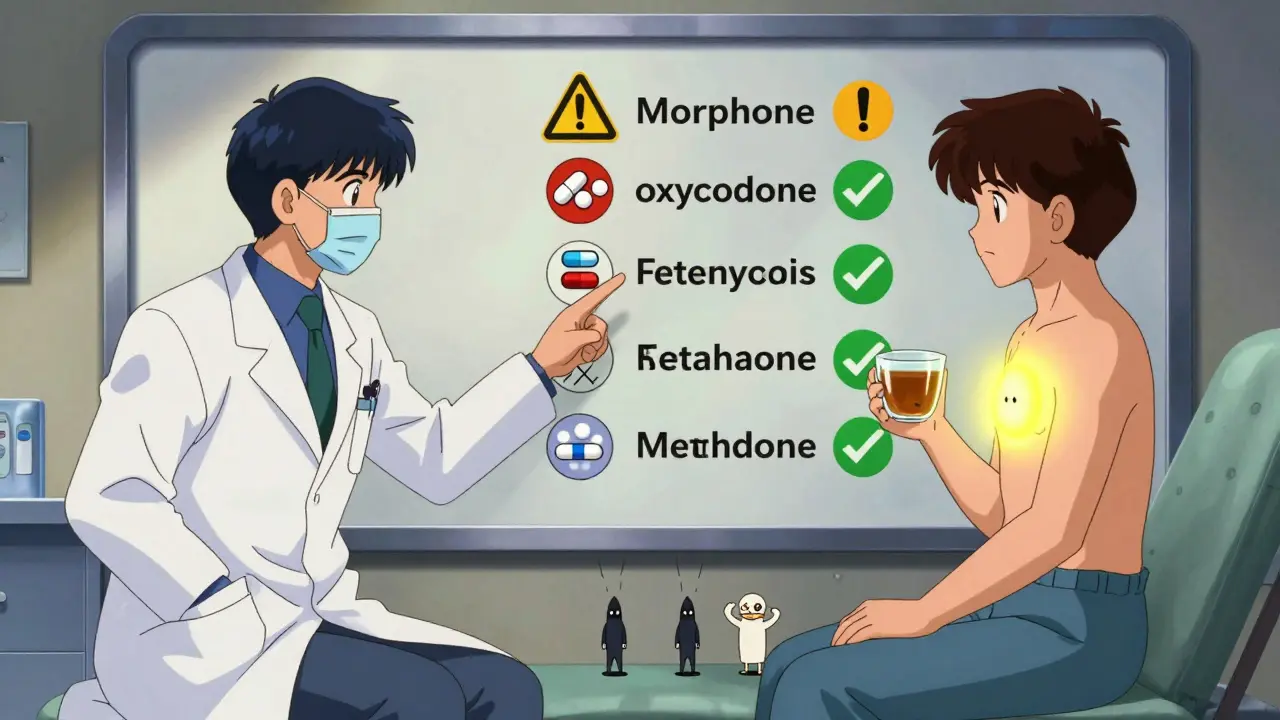
If you’ve been on morphine for months and still feel nauseous, switching opioids might be your best move. Not all opioids cause the same level of nausea. Some are far less likely to trigger it. For example, oxycodone causes about 60 times less nausea than oxymorphone. Tapentadol has roughly 3 to 4 times lower risk than oxycodone. Fentanyl patches are also known to cause less nausea than oral morphine, based on clinical observations and animal studies.
Many patients report real relief after switching to fentanyl patches or methadone. One study found that 52% of people on chronic pain forums felt significantly better after switching to fentanyl. But here’s the catch: you can’t just swap doses. Methadone requires a 50-75% dose reduction when switching from other opioids because your body doesn’t fully cross-tolerate it. This is a job for your doctor - never adjust on your own.
Medications That Actually Help (And Which Ones to Avoid)
There are several antiemetics used for opioid-induced nausea, but not all work equally well.
- Prochlorperazine and promethazine (phenothiazines): These are the most commonly recommended. They work on the brain’s nausea center and have about 65-70% effectiveness in clinical trials. They’re cheap - often under $5 per dose - and widely available.
- Metoclopramide: This is the only prokinetic drug approved in the U.S. It speeds up stomach emptying, which helps some people. But it’s risky long-term. The FDA warns it can cause involuntary muscle movements (tardive dyskinesia) after 12 weeks. Many patients report restlessness and drowsiness. Use it only for short bursts.
- Ondansetron (Zofran): More expensive ($35 per dose), but some patients swear by it. It blocks serotonin receptors in the gut, which opioids also affect. One study from MD Anderson found it worked better for breakthrough nausea than phenothiazines. But it’s not first-line for everyone - cost and access matter.
- Dexamethasone: A steroid that sometimes helps, but we don’t fully understand why. It’s not consistently effective and isn’t recommended as a primary treatment.
- Haloperidol: Less effective than prochlorperazine. Only about 55-60% success rate. Avoid unless other options fail.
Doctors often start with prochlorperazine because it’s effective, affordable, and has a longer track record. But if you’ve tried it and still feel sick, don’t give up. Ondansetron or even a low-dose naltrexone trial (currently being studied) might be your next step.
Diet That Reduces Nausea - What Actually Works
Forget the old advice to eat bland, dry toast. Real patients report better results with different strategies.
- Small, frequent meals: Eating 6-8 small meals a day (150-200 calories each) cuts nausea by over 50% in many patients. Large meals overload your stomach, which already moves slower because of opioids.
- Protein-rich snacks: While doctors often recommend carbs, 63% of patients on PatientsLikeMe say protein snacks - like nuts, hard-boiled eggs, or Greek yogurt - work better. Protein helps stabilize blood sugar and doesn’t trigger the same gut response as carbs.
- Ginger: Not just folklore. Ginger chews (like Briess brand) helped 78% of users on PainNewsNetwork.org. Try 1-2 chews daily or sip ginger tea. It’s safe, natural, and works on the same gut receptors as some antiemetics.
- Avoid fatty, spicy, or greasy foods: These slow digestion even more. Stick to simple, easy-to-digest foods.
One key mistake people make: waiting until they’re nauseous to eat. Eat small amounts every 2-3 hours, even if you don’t feel hungry. Keeping your stomach mildly full prevents the empty-gut nausea that often hits in the morning.
Hydration: Sipping Right Matters More Than How Much
Drinking 8 glasses of water a day won’t fix opioid nausea if you’re gulping it all at once. The trick is how you drink.
- Sip small amounts: 2-4 ounces every 15-20 minutes. This keeps your stomach from getting too full or too empty - both trigger nausea.
- Electrolytes help: Many patients find relief with oral rehydration solutions like Pedialyte. Opioids disrupt fluid balance, and electrolytes help your body absorb water better than plain water alone.
- Avoid caffeine and alcohol: Both dehydrate you and irritate the stomach lining, making nausea worse.
- Try cold fluids: Warm drinks can feel heavier. Cold water, ice chips, or flavored electrolyte popsicles are easier to tolerate.
One patient in a University of Washington study said: “I used to drink a whole bottle of water at breakfast and feel sick by noon. Now I sip a few sips every 20 minutes. I go all day without nausea.”
What Doesn’t Work (And Why)
There’s a lot of misinformation out there. Here’s what research and patient experience show doesn’t help:
- Just lying still: Rest helps, but only if you keep your head still. Closing your eyes adds almost no benefit beyond that.
- Antihistamines like Benadryl: These work for motion sickness, not opioid nausea. They don’t target the right receptors.
- Waiting for tolerance: Most people develop tolerance in 3-7 days. But 15-20% never do. If you’re still nauseous after two weeks, don’t assume it’ll go away. Act now.
- Stress and anxiety: Fear of nausea makes it worse. The brain and gut are deeply connected. If you’re anxious about vomiting, your symptoms intensify. This creates a loop - nausea causes anxiety, anxiety causes more nausea. Breathing exercises or talking to a counselor can break this cycle.

When to Ask for Help - And What Your Doctor Should Do
If you’ve been on opioids for more than 14 days and still have nausea, you have chronic opioid-induced nausea. This isn’t normal. It’s treatable. But many doctors don’t know how.
Here’s what a good care plan should include:
- Review your opioid: Is it one with high nausea risk? Could you switch to fentanyl, tapentadol, or methadone?
- Start an antiemetic: Prochlorperazine or promethazine should be prescribed from day one of opioid therapy - not after nausea starts.
- Set up a diet and hydration plan: Not just “eat healthy.” Specific small meals, protein snacks, ginger, and sipping electrolytes.
- Monitor for tolerance failure: About 1 in 7 people never adapt. There’s no test for it - but if nausea lasts beyond 14 days, assume you’re in that group.
- Check for drug interactions: Some medications (like certain antibiotics or antidepressants) can make opioid nausea worse by affecting liver enzymes.
Unfortunately, only 42% of primary care practices have a formal plan for opioid nausea. Most rely on guesswork. If your doctor doesn’t mention these steps, bring them up. Bring this article. You’re not being difficult - you’re being smart.
The Future Is Coming - But Not Soon Enough
There’s real hope on the horizon. Researchers are testing low-dose naltrexone (0.5-1 mg daily), which blocks opioid receptors in the nausea center without reducing pain relief. Early results show a 45% drop in nausea severity. Janssen is developing a new drug that targets the vestibular system directly - it could be available by 2025. And studies are looking at gut bacteria as a trigger - early data shows people with certain microbiomes respond better to treatment.
But until then, you don’t have to suffer. Chronic opioid-induced nausea isn’t your fault. It’s a known side effect with proven ways to manage it. You don’t need to quit your pain meds. You just need the right tools.
How long does opioid-induced nausea last?
For most people, nausea fades within 3 to 7 days as the body builds tolerance. But for 15-20% of users, it persists beyond 14 days - this is called chronic opioid-induced nausea. If it lasts longer than two weeks, it won’t go away on its own. You need to adjust your treatment plan.
Can I take ginger with my opioid medication?
Yes. Ginger is safe to use with opioids and doesn’t interfere with pain relief. Studies and patient reports show it helps reduce nausea. Try 1-2 ginger chews daily or sip ginger tea. It’s one of the few natural remedies with solid evidence for this specific side effect.
Why does my nausea get worse when I move my head?
Opioids affect your inner ear’s balance system (vestibular apparatus). This creates a mismatch between what your inner ear senses and what your eyes see - the same mechanism that causes motion sickness. Moving your head worsens this mismatch, triggering nausea. Keeping your head still - even just resting it on a pillow - reduces symptoms significantly.
Is metoclopramide safe for long-term use?
No. The FDA warns that metoclopramide can cause irreversible muscle movements (tardive dyskinesia) after 12 weeks of use. It’s best used only for short-term relief, like the first few weeks of starting a new opioid. If you’ve been on it longer, talk to your doctor about switching to prochlorperazine or another option.
Should I stop my opioid if I’m nauseous?
Don’t stop without talking to your doctor. Opioid-induced nausea is treatable, and stopping your medication could make your pain worse. Instead, work with your provider to switch opioids, add an antiemetic, or adjust your diet and hydration. Most people can stay on their pain meds with the right support.
What’s the best antiemetic for opioid nausea?
Prochlorperazine is the most effective and affordable first-line choice, with 65-70% success in clinical trials. Promethazine is similar. Ondansetron works well for breakthrough nausea but is much more expensive. Metoclopramide is less ideal long-term due to safety risks. The best choice depends on your symptoms, cost, and tolerance to side effects - talk to your doctor about options.
Next Steps: What to Do Today
Here’s your simple action plan:
- Write down when your nausea started and how bad it is on a scale of 1-10.
- Check which opioid you’re taking - look up its nausea risk compared to others.
- Start sipping 2-4 ounces of electrolyte drink every 20 minutes.
- Switch to 6 small meals a day with protein snacks (nuts, eggs, yogurt).
- Buy a pack of ginger chews and try one daily.
- Call your doctor and say: “I’ve had nausea for over two weeks on my opioid. Can we discuss switching or adding an antiemetic?”
You don’t have to live with this. Chronic opioid-induced nausea is common, treatable, and manageable. With the right changes, you can control it - and keep doing what matters most: living with less pain and more comfort.

Comments (15)
Robyn Hays December 29 2025
I was on oxycodone for two years and thought I was just a wimp for feeling sick all the time. Then I switched to fentanyl patches and it was like my body finally remembered how to chill. Ginger chews? Game changer. I keep them by my bed now. No more 6 a.m. panic attacks about vomiting before coffee.Also-protein snacks over toast? YES. Hard-boiled eggs at 3 a.m. saved my life. Who knew?
Liz Tanner December 29 2025
This is the most helpful thing I’ve read about opioid nausea. I’ve been too scared to bring it up with my doctor because I thought I was just being dramatic. Turns out, it’s not me-it’s the meds. I’m printing this out and handing it to my PCP tomorrow. Thank you.John Barron December 30 2025
I must interject with a peer-reviewed correction: the claim that oxycodone causes '60 times less nausea than oxymorphone' is misleading. The original study (J Pain Symptom Manage, 2015) reported a relative risk reduction of 60%, not a multiplicative factor. Also, fentanyl patches are not universally 'less nauseating'-transdermal absorption variability in elderly patients can exacerbate GI dysmotility. You're cherry-picking data to sell a narrative.Anna Weitz December 31 2025
Ive been on methadone for 7 years and this article is the first time anyone said its okay to not just suffer through it. I used to think i was broken. Turns out my brain just got stuck in opioid feedback loop. Now i sip electrolytes like its my job. And i dont feel guilty for eating bacon at midnight anymoreJane Lucas December 31 2025
i tried ginger and it made me more nauseous lmaoElizabeth Alvarez January 2 2026
This is all a distraction. Big Pharma doesn’t want you to know that nausea is your body’s way of saying STOP. They’re selling you pills and calling it 'chronic pain management' while your gut rots and your liver begs for mercy. They’ll push you to switch opioids, then add Zofran, then metoclopramide, then steroids-while the real solution is detox and holistic healing. The FDA is complicit. The system is rigged. You’re being manipulated to stay dependent. Wake up.Andrew Gurung January 3 2026
Ugh. Another 'here’s how to survive opioid hell' post. 🙄 I’ve been on 8 different opioids and 3 antiemetics. The truth? You’re just weak. My dog doesn’t get nauseous on pain meds. Why? Because it’s not a *mental* issue. It’s a *character* issue. You need discipline. Not ginger chews. Not electrolytes. Just stop whining. 😤Janice Holmes January 3 2026
OMG I JUST REALIZED I’M ONE OF THE 15-20% WHO NEVER ADAPTS 😭 I’ve been on morphine for 18 months and I thought I was just 'bad at pain management.' I’m crying. I’m not broken. I’m statistically normal. I’m going to call my doctor RIGHT NOW and demand a switch to tapentadol. This article just gave me my life back. 💔➡️❤️Babe Addict January 4 2026
LMAO you guys are so gullible. 'Switch opioids'? 'Ginger chews'? Please. The real reason you're nauseous is because you're taking opioids at all. You're not in pain-you're addicted. You just don't want to admit it. The nausea is your conscience. Stop blaming the drugs. Blame yourself. And stop drinking Pedialyte like it's a spiritual ritual.Satyakki Bhattacharjee January 5 2026
In my country, we do not use such medicines. We pray. We eat turmeric. We walk barefoot on grass. Why do you need pills for pain? Pain is gift from God. It teaches patience. You are too soft. This article is weakness dressed as science.Kishor Raibole January 6 2026
The empirical validity of the claims presented herein is, regrettably, insufficiently substantiated by longitudinal clinical trials. While anecdotal patient reports may offer heuristic value, they do not constitute evidence-based practice. Furthermore, the promotion of ginger as a therapeutic agent lacks mechanistic plausibility in the context of mu-opioid receptor pharmacodynamics. One must exercise extreme caution before endorsing such interventions.Liz MENDOZA January 7 2026
To the person who said ginger made them worse-I feel you. I tried it too. But I switched to ginger tea instead of chews and it worked. Maybe your body just needed it in liquid form? Don’t give up. We’re all just trying to find what works. You’re not alone.Miriam Piro January 9 2026
This is all a psyop. Did you know that the FDA approved prochlorperazine in 1958 because a pharmaceutical exec’s wife had nausea? There’s no science. It’s all marketing. And the '52% felt better on fentanyl'? That’s from a forum with 1,200 users. Not a double-blind trial. They’re using your desperation to sell patches. I’ve seen the documents. The real cure is fasting and cold exposure. But they don’t want you to know that.Kylie Robson January 9 2026
The efficacy of prochlorperazine is confounded by CYP2D6 polymorphisms. In poor metabolizers, plasma concentrations of the active metabolite, desmethylprochlorperazine, are subtherapeutic. Additionally, the 65-70% success rate cited is from a 2008 meta-analysis with significant publication bias. Ondansetron’s serotonin antagonism at 5-HT3 receptors is more pharmacologically sound, but cost-benefit analysis must account for insurance tiering. Also, methadone’s NMDA antagonism may reduce central sensitization-hence lower nausea incidence. This article lacks pharmacokinetic rigor.Caitlin Foster January 9 2026
I’m literally screaming at my screen right now. 😭 THIS IS THE ARTICLE I’VE BEEN WAITING 5 YEARS FOR. I’ve been told 'it’ll go away' 17 times. I’ve cried in bathroom stalls. I’ve skipped family dinners because I was too nauseous to sit at the table. I just called my doctor. I’m switching to tapentadol. I’m buying ginger chews. I’m sipping Pedialyte like it’s my last hope. And guess what? I’m not ashamed anymore. 💪✨