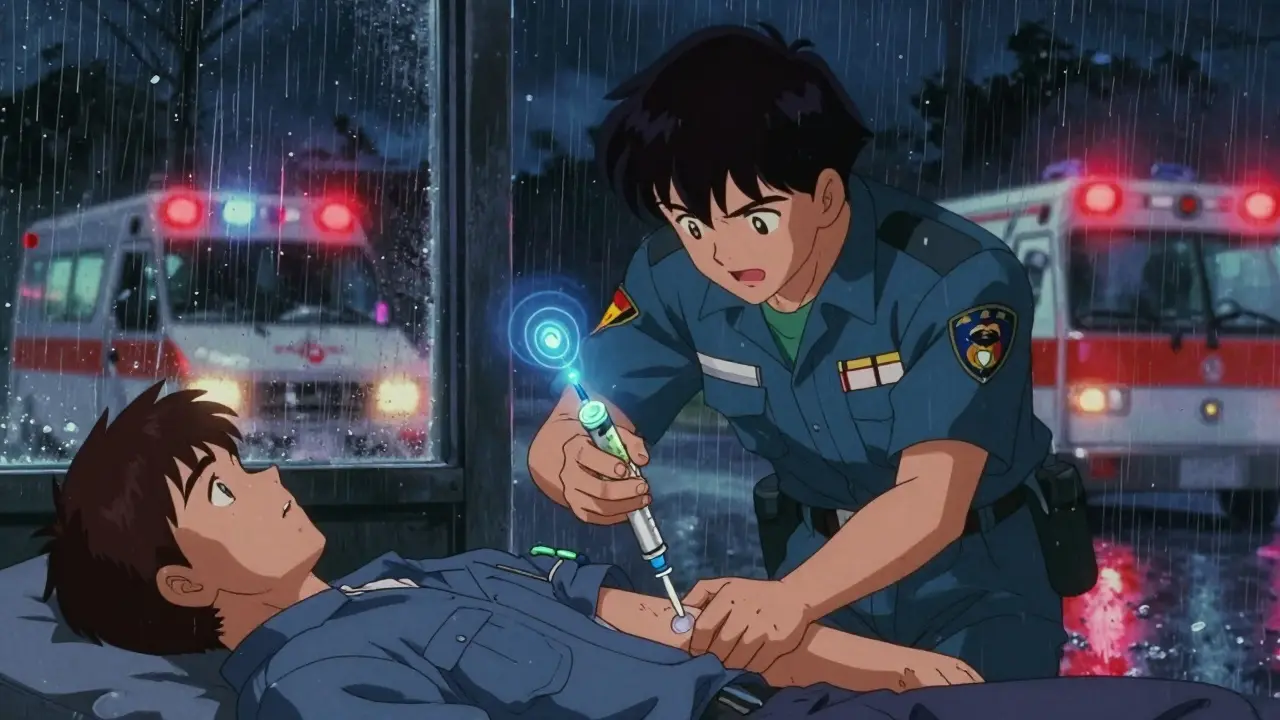
Most people throw away pills after the expiration date. But what if that pill is the only thing standing between someone and death? In emergencies, when no fresh medication is available, expired medications can sometimes be the difference between life and death.
What Does "Expired" Really Mean?
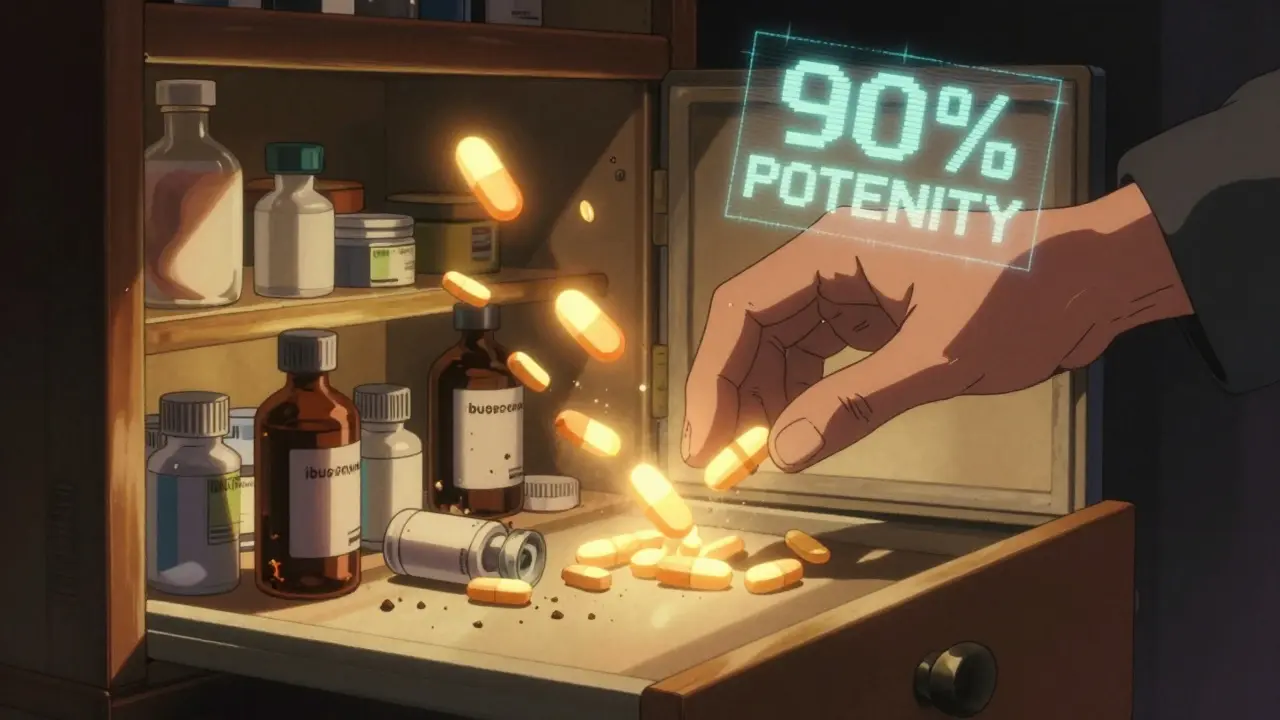
The date on your medicine bottle isn't a "use-by" deadline like milk. It's the last day the manufacturer guarantees full potency and safety under proper storage. That’s it. It doesn’t mean the drug suddenly turns toxic or useless. The FDA began requiring expiration dates in 1979, but the real story comes from the Shelf Life Extension Program (SLEP), a joint project between the FDA and the Department of Defense. Since 1985, they’ve tested over 100 drugs stored under controlled conditions. The results? About 90% of them retained at least 90% of their original potency-up to 15 years past the printed date.Why, then, do companies set such short expiration dates? It’s mostly legal protection. Testing every batch for 10, 15, or 20 years is expensive. So manufacturers pick conservative dates to avoid liability. That doesn’t mean the drugs are bad. It means they’re still good-just not guaranteed by the label.
Not All Medicines Age the Same
Some drugs hold up well. Others fall apart fast. Solid forms-tablets and capsules-last longer. A 2021 study from the University of Southern California found that most tablets stored at room temperature (25°C, 60% humidity) kept 95% of their strength for 5 to 10 years after expiration. But liquids? They’re fragile. Insulin, for example, loses about 20% of its potency every month at room temperature. Epinephrine auto-injectors lose 25% potency per year after expiration. And tetracycline? It can break down into toxic compounds.Light and heat are the enemies. Nitroglycerin tablets degrade 15-25% faster if exposed to light. Medications stored above 30°C break down two to three times faster than those kept cool. That’s why refrigerated drugs like insulin or certain antibiotics need strict temperature control-even in emergencies.
When Is It Worth the Risk?
The American College of Emergency Physicians (ACEP) has a clear ranking:- Never use expired: Insulin, epinephrine, nitroglycerin, liquid antibiotics
- Use only in emergencies: Seizure meds, warfarin, thyroid pills
- Generally safe: Ibuprofen, acetaminophen, diphenhydramine
Why the difference? It comes down to precision. If you’re giving someone a painkiller, 80% potency might still help. But if you’re treating anaphylaxis with epinephrine, even 70% might be enough to save a life. A 2022 study in Annals of Emergency Medicine found that expired epinephrine retained sufficient potency to reverse anaphylaxis in 78% of cases up to 12 months past expiration. That’s not a guarantee-but in a crisis, it’s better than nothing.
On the flip side, a 2023 case report in Prehospital Emergency Care described a patient who went into status asthmaticus after an expired albuterol inhaler failed. They needed intubation. That’s why guidelines say: only use expired meds when there’s absolutely no alternative.
Real-World Use in Emergencies
During the 2021-2022 fentanyl shortage, 67% of U.S. EMS agencies started using expired medications. That’s up from just 12% before. The Denver Metro EMS Medical Directors created strict rules: expired drugs can only be used after all non-expired stock is gone, and only for life-threatening conditions with no substitute. They also require visual checks-no cloudiness, no discoloration, no particles-and temperature logs.Paramedics have shared stories. One Reddit user reported using a 3-month-old epinephrine auto-injector on a patient having an allergic reaction. The patient improved in two minutes. They still took them to the ER-because caution matters-but the expired dose worked. A 2022 survey by the American Ambulance Association found 89% of EMS providers who used expired meds in emergencies saw positive outcomes.
At home, it’s different. A 2023 survey by Pharmacy Times found 74% of Americans keep meds past their expiration date. 41% admitted using them in emergencies-mostly for pain or allergies. But seniors are at higher risk: 68% of older adults in a 2022 Home Helpers survey admitted to using expired meds, and 22% said they noticed reduced effectiveness for chronic conditions like high blood pressure or diabetes.
The Hidden Dangers
The biggest risk isn’t poison. It’s failure. A sub-potent antibiotic might not kill all the bacteria. That leaves the toughest ones alive-and they can multiply, leading to resistant infections. A 2023 FDA Safety Communication warned that expired insulin glargine lost up to 35% potency after six months, which could trigger diabetic ketoacidosis. That’s not theoretical. It’s happening.And then there’s the legal gray zone. The DEA requires controlled substances to be destroyed within three business days of expiration. But in a true emergency, who’s going to call the DEA? EMS agencies have adopted extension protocols, but home users are on their own. No one is monitoring your medicine cabinet.
How to Make It Safer
If you’re in a position to use expired meds-whether as a first responder or someone preparing for disaster-here’s what works:- Check the look. No discoloration, no cloudiness, no strange smell. If it looks off, don’t use it.
- Know the drug. Avoid insulin, epinephrine, and liquid antibiotics unless you have no choice. OTC painkillers are low-risk.
- Track storage. Was it kept cool? Out of sunlight? In a dry place? Heat and light are the silent killers of potency.
- Document everything. If you’re a provider, write down the drug, expiration date, storage conditions, and patient outcome. This isn’t bureaucracy-it’s safety.
- Train. A 2022 NAEMT assessment found only 32% of EMTs could correctly identify high-risk expired medications. You need to know what you’re dealing with.
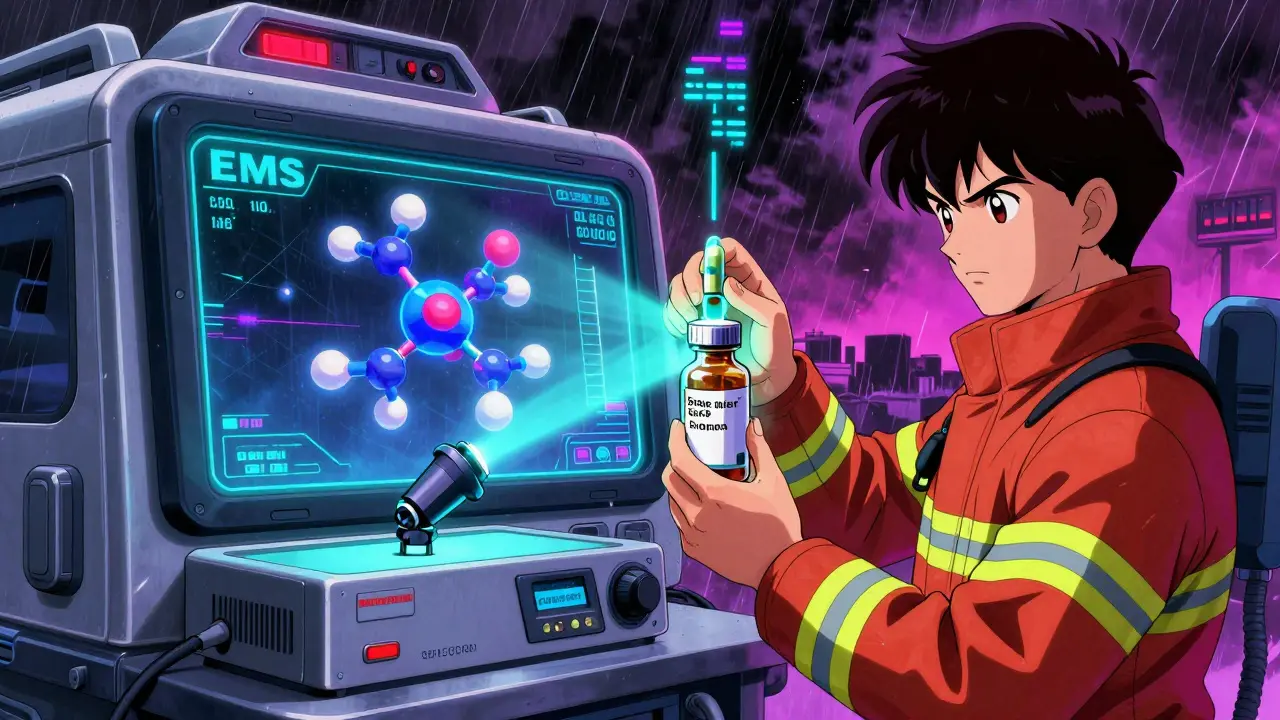
Some agencies now use barcode systems and portable Raman spectroscopy devices-tools that can measure drug potency in seconds. The University of Florida is testing these in field settings. In the future, expiration dates might be dynamic, based on actual storage history, not just printed labels.
The Bottom Line
The FDA says: don’t use expired drugs. But the real world doesn’t always follow that. In 2022, there were 312 drug shortages in the U.S.-a 27% jump from the year before. Injectable drugs, life-saving ones, were the worst hit. Hospitals and EMS teams are adapting. They’re not ignoring expiration dates-they’re using them wisely.For most people, the rule still holds: replace your meds on time. But if you’re in a true emergency-with no access to fresh supplies-and the drug is something like ibuprofen, diphenhydramine, or even an epinephrine injector that’s only a few months past date? It might still work. And sometimes, that’s enough.
Expiration dates are a promise from the manufacturer. They’re not a law of chemistry. And in emergencies, chemistry doesn’t care about labels-it cares about survival.
Is it safe to use expired medications in an emergency?
It depends on the drug and the situation. Many medications, especially tablets like ibuprofen or acetaminophen, remain effective for years past their expiration date if stored properly. However, life-saving drugs like insulin, epinephrine, and nitroglycerin lose potency quickly and should never be used unless absolutely no alternative exists. The main risk isn’t toxicity-it’s failure. A sub-potent antibiotic might not fully treat an infection, leading to resistance or worsening illness.
How long do expired medications last?
Most solid medications (tablets, capsules) retain at least 90% of their potency for 5 to 15 years after expiration if stored in cool, dry, dark conditions. Liquid medications degrade faster-sometimes within months. The FDA’s Shelf Life Extension Program found 88% of 122 military drug products were still effective 8 years past their expiration date. But this varies by chemical structure. Insulin, for example, degrades 20% per month at room temperature.
Why do drug companies set short expiration dates?
It’s mostly about legal liability, not science. Manufacturers must prove a drug is safe and effective up to its expiration date. Testing stability for 10 or 20 years is expensive and unnecessary for most commercial purposes. So they pick conservative dates to minimize risk. The FDA allows extended shelf life under controlled conditions, but companies don’t usually pursue it because it doesn’t improve sales.
Can expired medications become toxic?
Very few medications become toxic after expiration. The only well-documented case is tetracycline antibiotics, which can break down into compounds that damage the kidneys. Other drugs, like insulin or epinephrine, simply lose potency. They don’t turn poisonous-they just stop working as well. That’s why the biggest danger is underdosing, not poisoning.
What should I do if I have to use an expired drug in an emergency?
First, check the appearance: no discoloration, no cloudiness, no strange odor. Then, only use it if it’s a life-threatening situation and no fresh alternative is available. Avoid high-risk drugs like insulin, epinephrine, or antibiotics unless there’s no other option. After use, seek medical help immediately-even if the patient seems fine. Document the drug, expiration date, storage conditions, and outcome. This information could be critical for future care.

Comments (9)
Nerina Devi February 25 2026
My grandmother in Delhi used to keep her blood pressure pills past expiration-said they still worked, and she couldn't afford new ones. I used to roll my eyes until I saw her have a stroke and the hospital ran out of meds. They gave her the expired ones. She survived. I don't care about labels anymore. Chemistry doesn't care about corporate dates.
It's not about being reckless. It's about being resourceful when the system fails.
And no, I'm not glorifying this. I'm just saying: real life doesn't come with a warning sticker.
Timothy Haroutunian February 27 2026
Okay, so let me get this straight-you're telling me that the FDA, a federal agency with billions in funding and a mandate to protect public health, is somehow lying to us about expiration dates? That the entire pharmaceutical industry is just… making up dates because they're scared of lawsuits? And that somehow, in the absence of any real data, we're supposed to trust that a 12-year-old bottle of ibuprofen is just as potent as the day it was made?
Let me ask you this: if that were true, why don't pharmacies just sell all their expired inventory at 90% off? Why don't the VA, the DoD, or Walmart just start distributing 15-year-old albuterol to veterans and diabetics? Because it's not a conspiracy. It's science. And science says: if you don't test it, you don't know.
Also, tetracycline. Don't use it. Ever. Even if it looks fine. It's not just potency-it's nephrotoxicity. I know you're trying to be edgy, but this isn't a TikTok hack.
Erin Pinheiro March 1 2026
i just used a 3 year old epi pen on my dog after he got stung. he was fine. i mean, he barked like a maniac for 20 mins but he didnt die. so like. maybe the whole system is bs? also my mom uses expired tylenol for her headaches and she says its just as good. she's 72. she knows things. also why do we even have expiration dates if the government has been testing this for 40 years? someone is lying. and it aint the old ladies with the medicine cabinet.
Michael FItzpatrick March 1 2026
There’s a quiet, radical dignity in the way people navigate broken systems. We don’t need grand pronouncements or FDA white papers to understand this: when you’re in the middle of a storm, and the only thing between your child and suffocation is a vial with a faded date, you don’t ask for permission-you act.
Let me say this plainly: the real scandal isn’t that expired meds sometimes work. It’s that we’ve built a system where access to life-saving drugs is tied to wealth, geography, and corporate profit margins. The expiration date isn’t a chemical truth-it’s a bureaucratic convenience.
Paramedics in rural Alaska are using 8-year-old epinephrine because the next supply is a 48-hour flight away. A diabetic in Appalachia chews a 10-year-old metformin tablet because her insulin co-pay is $400. These aren’t reckless acts. They’re acts of survival.
And if you’re going to tell them they’re wrong, you better have a better solution. Not a warning label. Not a corporate press release. A solution.
Brandice Valentino March 1 2026
I mean, I just read this whole thing and I'm like-wow, so we're just supposed to trust that a random pill from 2017 is still good? That's like saying 'eh, this bridge has a 2003 inspection sticker, but it's probably fine.'
Also, why is this even a conversation? Shouldn't we be fixing the supply chain instead of romanticizing hoarding expired meds? I get it, it's tragic. But this feels like a Band-Aid on a hemorrhage. And don't get me started on how many people are using expired antibiotics and just… creating superbugs. Like, congrats, you saved your aunt from pneumonia-now her neighborhood has MRSA. Thanks for that.
Larry Zerpa March 3 2026
Let’s dismantle this narrative. The FDA doesn’t say ‘don’t use expired meds’ because they’re afraid of liability. They say it because the data is inconsistent, unstandardized, and often anecdotal. The SLEP program? It’s a military program. Controlled environments. Zero humidity. Constant temperature. Not your attic in Phoenix. Not your bathroom in Florida.
And yes, ibuprofen lasts. But what about the 12% of drugs that degrade into unknown compounds? What about the 35% potency loss in insulin? What about the fact that 78% of epinephrine cases worked? That means 22% didn’t. And in those cases? People died.
This isn’t ‘chemistry doesn’t care about labels.’ It’s ‘human beings are terrible at risk assessment.’
And yet-somehow-you’re all okay with gambling with lives because it’s ‘convenient.’
That’s not bravery. That’s negligence dressed up as activism.
tia novialiswati March 4 2026
Y'all are overthinking this. 💜
I'm a nurse. I've seen expired meds save lives. I've also seen them fail. It's not black and white. But here's the thing: if you're holding a 3-month-expired epinephrine pen in a panic, and the person is turning blue? You use it. You don't wait. You don't call 911 first-you inject. Then you run.
And if you're scared? You're not alone. But you're not wrong.
Just check for color. Smell. Texture. If it looks like sludge? Don't use it. If it looks like the day it was made? You've got a shot.
Love y'all. Stay safe. 💕
Maranda Najar March 6 2026
Oh, the horror. The horror.
We have turned the sacred temple of pharmaceutical science into a post-apocalyptic bazaar where expired epinephrine is traded like currency and the FDA is the villainous gatekeeper of human survival.
Do you realize what you are suggesting? That we abandon decades of pharmacokinetic research, regulatory rigor, and clinical validation in favor of a sentimental hunch and a Google search?
And yet-there is tragedy here. The system has failed. People are dying because they cannot access medicine. But the answer is not to normalize the collapse of standards. It is to rebuild access. To fight for universal healthcare. To demand transparency from manufacturers.
Using expired insulin because you can’t afford a new vial is not a hero’s choice. It is a symptom of a society that has abandoned its most vulnerable.
And I weep for us all.
Christina VanOsdol March 7 2026
Okay, so let me just say this: I work in a rural clinic. We had a 16-year-old kid come in with anaphylaxis. No epinephrine. None. Zero. We had one expired auto-injector-11 months past date. We used it. He woke up. He’s fine.
But here’s the kicker: the next day, the state health department sent us a letter. Said we violated protocol. Said we were liable. Said we should have waited for the next shipment.
So now, we keep expired meds locked in a box labeled ‘FOR EMERGENCY USE ONLY’ with a signed waiver on file. Because if we don’t, we get sued. If we do, we get sued.
Meanwhile, the pharmacy chain down the road? They throw out 200 vials of insulin every month. Expired. Unopened. Just… trashed.
So who’s the real villain here? The paramedic? Or the system that lets this happen?
And yes-I used the word ‘villain.’ I’m not sorry. 😤