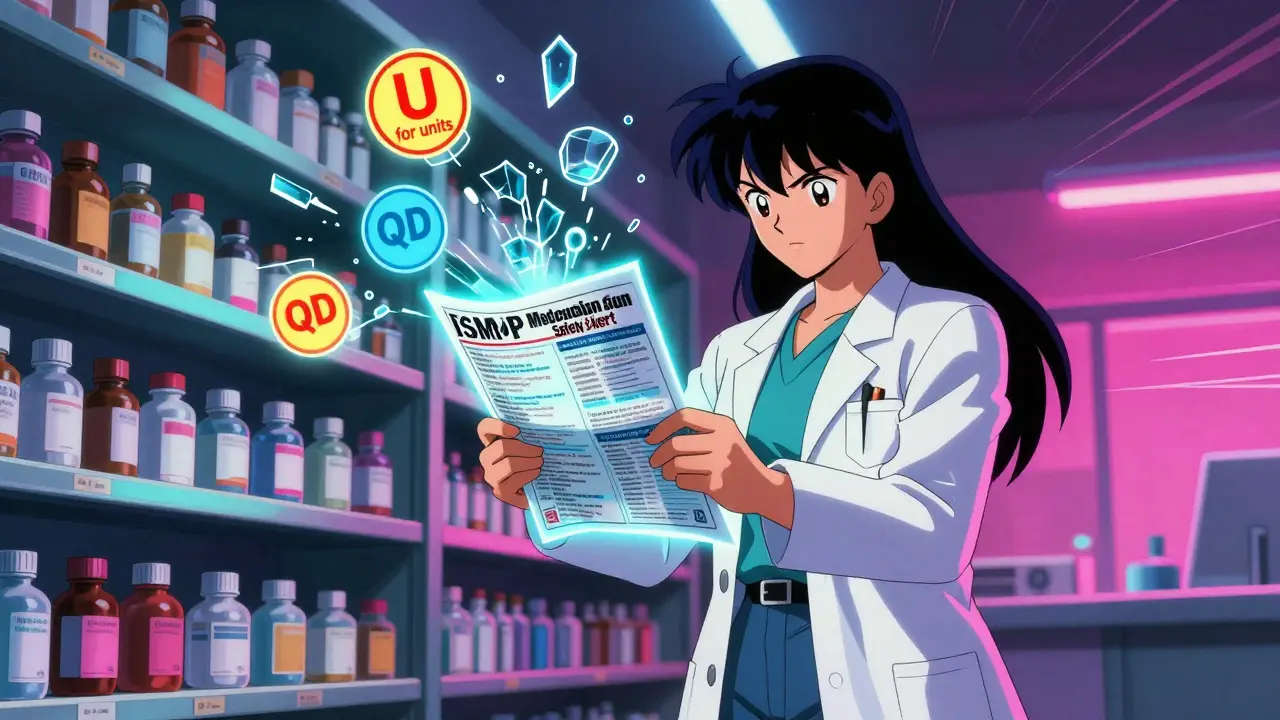
Every year, thousands of preventable medication errors happen because someone didn’t see the latest safety update. Not because they didn’t care-because they didn’t know where to look. If you’re a pharmacist, nurse, or doctor, you’re expected to keep up with changes in drug safety, but the flood of emails, alerts, and bulletins can feel overwhelming. The truth? You don’t need to read everything. You just need to know where to find the right updates-and how to use them before they become someone’s next mistake.
Where the Real Safety Updates Come From
Not every alert is created equal. Some are urgent. Some are bureaucratic. The most valuable ones come from professional societies and agencies that track actual errors-not just theoretical risks. The ISMP (Institute for Safe Medication Practices, now part of ECRI) is the gold standard. Since 1991, they’ve collected over 100,000 medication error reports from hospitals and pharmacies. Their weekly Medication Safety Alert! newsletter isn’t just a summary-it’s a live feed of what’s going wrong on the floor right now. In 2023, 92% of subscribers implemented at least one change from each issue. That’s not theory. That’s prevention.
The FDA (U.S. Food and Drug Administration) issues drug safety communications when a medication causes harm. In 2023 alone, they published 47 alerts. But here’s the catch: the FDA acts after the damage is done. The average time between a drug causing harm and the FDA issuing a warning? 47 days. That’s why you can’t wait for the FDA. You need ISMP’s early warnings.
ASHP (American Society of Health-System Pharmacists) offers practical tools-like their Medication Safety Self-Assessment and implementation checklists. These aren’t just guidelines. They’re templates you can adapt to your hospital or clinic. Their free resources are solid, but the premium content ($99/year) includes continuing education credits and downloadable toolkits that cut down setup time.
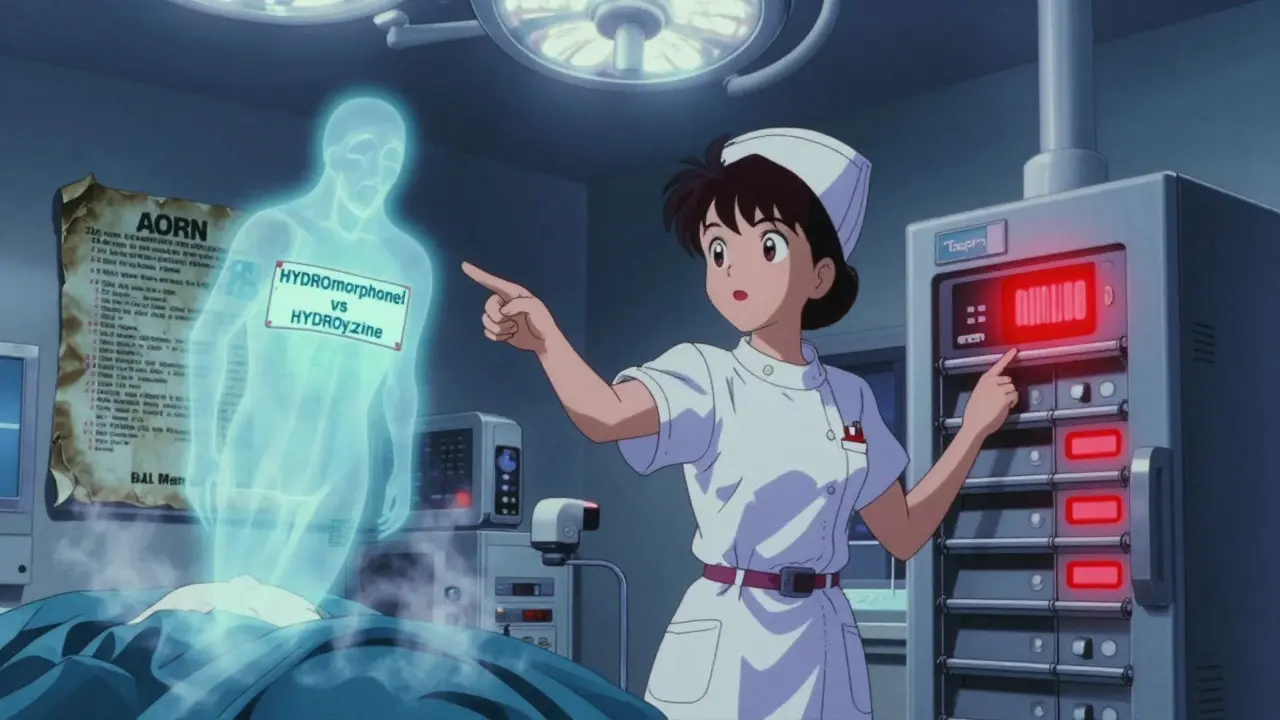
If you work in surgery, AORN (Association of periOperative Registered Nurses) is non-negotiable. Their October 2023 Medication Safety guideline added new rules on automated dispensing cabinets and barcode scanning in ORs. They’re the only group that tracks what happens when a patient gets a drug in the operating room-a place where errors are silent and deadly.
And globally, the WHO (World Health Organization) runs the Medication Without Harm campaign. Launched in 2017, it’s meant to cut severe medication harm by 50% by 2022. While 137 countries signed on, only 42 met the benchmarks. WHO’s value isn’t in daily alerts-it’s in setting the global standard. Their frameworks help hospitals in low-resource settings build safety systems from scratch.
How to Subscribe Without Getting Overwhelmed
You don’t need all of them. You need a smart system. Here’s how to build one:
- Start with ISMP Medication Safety Alert! - It’s the only one that gives you real-time, error-driven insights. Cost: $299/year. Worth every penny if you handle medications.
- Sign up for FDA Drug Safety Communications - Free. Set up email alerts. Check them once a week. Don’t read every word-just scan for your drugs.
- Use ASHP’s free resources - Their Medication Safety Resource Center has downloadable checklists for common errors like look-alike/sound-alike drugs. No subscription needed.
- If you’re in surgery or anesthesia, subscribe to AORN’s guidelines. Their updates are biennial, so you’ll get a big revision every two years. Mark your calendar.
- For global context, bookmark the WHO Medication Without Harm portal. You won’t check it weekly-but when you’re designing a new safety protocol, it’s your foundation.
Don’t subscribe to everything. That’s how burnout happens. Pick the ones that match your role. A primary care nurse doesn’t need AORN. A hospital pharmacist can’t afford to skip ISMP.
What to Do When an Alert Comes In
An alert isn’t a suggestion. It’s a call to action. Here’s how to turn it into change:
- Identify the risk - What’s the exact error? Is it a dosing mistake? A labeling issue? A drug interaction? Write it down.
- Check your system - Do you use barcode scanning? Are you still writing “U” for units? ISMP’s List of Error-Prone Abbreviations is updated every year. If you’re using “QD” or “CC,” you’re at risk.
- Assign responsibility - Who fixes this? The pharmacy? The nursing supervisor? The EHR team? Don’t assume someone else will handle it.
- Test it - Run a quick simulation. Can your team catch the error now? If not, revise the protocol.
- Document it - Update your policy manual. Train your team. Track if the error drops after the change.
One hospital in Ohio cut insulin errors by 70% after they followed ISMP’s 2022-2023 best practice on vial labeling. They didn’t just read the alert. They changed their workflow. That’s how safety works.
Common Mistakes That Cost Lives
Most teams fail not because they ignore updates-but because they treat them like paperwork.
- Waiting for the next meeting - If a new alert says “stop using this drug in renal patients,” don’t wait for the quarterly safety huddle. Act now.
- Assuming EHRs will auto-update - Epic and Cerner are adding ISMP alerts in 2024, but right now, most systems don’t auto-block dangerous prescriptions. You still have to set the rules.
- Ignoring non-hospital sources - If you’re in a clinic, you’re not safe just because you’re not in a hospital. ISMP’s 2024 update included new rules for outpatient compounding pharmacies. That’s where 1 in 5 medication errors now happen.
- Not training new staff - A new nurse hired last month may never have heard of the “Tall Man” lettering rule (like HYDROmorphone vs. HYDROxyzine). Train them on the latest ISMP list.
Dr. Michael Cohen, former ISMP president, put it bluntly: “Relying on a single source for medication safety updates is as dangerous as using a single verification step in medication administration-redundancy saves lives.”
What’s Changing in 2024-2025
The landscape is shifting fast:
- ISMP’s 2024-2025 Best Practices now include two new sections: AI-assisted prescribing and compounding pharmacy oversight. AI tools are being used to flag interactions-but they’re not perfect. ISMP warns against over-reliance.
- AORN is moving to quarterly micro-updates instead of biennial overhauls. This means you’ll get smaller, more frequent changes. Set up a monthly review.
- WHO launched a new handoff toolkit for transitions between hospital units. Poor communication during shift changes causes 20% of medication errors.
- The FDA and ISMP are partnering to build real-time error reporting into EHRs. By late 2024, some systems will auto-alert you if a prescription matches a known dangerous pattern.
These aren’t future ideas. They’re happening now. If you’re not adapting, you’re falling behind.
What to Do If You Can’t Afford Subscriptions
Money shouldn’t be the barrier to safety. Here’s how to get the same info for free:
- Join your local pharmacy association-they often share ISMP summaries with members.
- Check your hospital’s intranet. Most have a safety bulletin board that reposts FDA and ISMP alerts.
- Use ASHP’s free resources. Their Medication Safety Resource Center has dozens of downloadable tools.
- Subscribe to the ISMP Community Forum (free). It’s a 3,200-member group where pharmacists post real cases and solutions.
- Bookmark the FDA Drug Safety Portal. It’s searchable. You can look up any drug and see all past alerts.
You don’t need a $300 subscription to save a life. You just need to know where to look-and how to act.
Final Rule: If You Don’t Act, You’re Part of the Problem
Medication safety isn’t about compliance. It’s about responsibility. Every alert you ignore is a chance for someone to get hurt. Every change you make is a chance to prevent it.
Start today. Pick one update. Read it. Act on it. Then tell your team. That’s how safety spreads-not through policy documents, but through people who refuse to look away.
How often do professional societies update medication safety guidelines?
It varies by organization. ISMP releases its Medication Safety Alert! newsletter weekly and updates its Targeted Best Practices biennially. AORN revises its guidelines every two years, with plans to shift to quarterly micro-updates starting in 2024. ASHP updates its resources annually, while the FDA issues drug safety communications as needed-47 in 2023 alone. WHO’s global framework is ongoing, with new toolkits released periodically.
Which organization’s safety updates are most trusted by hospitals?
According to the American Hospital Association’s 2023 Safety Leadership Report, ISMP’s Targeted Medication Safety Best Practices are ranked as the most valuable, with 87% of hospitals implementing them. FDA Drug Safety Communications come second at 79%, followed by ASHP guidelines at 63%. ISMP leads because its alerts are based on real error reports from frontline staff, not just theoretical risks.
Are FDA alerts enough to keep me safe?
No. The FDA acts after harm occurs, with an average 47-day delay between identifying a problem and issuing a warning. ISMP, by contrast, identifies risks before they cause injury-often using reports from hospitals before the FDA even knows about them. Relying only on the FDA is like waiting for a fire alarm to go off before you check your smoke detector.
Can I get these updates for free?
Yes. The FDA’s Drug Safety Communications are free. ASHP offers free access to many of its practice guidelines and self-assessment tools. ISMP’s Community Forum is free and has thousands of real-world case discussions. Many hospitals also redistribute ISMP and FDA alerts internally. You don’t need to pay for everything-just prioritize the ones that matter to your role.
What should I do if my hospital doesn’t follow these updates?
Start small. Pick one high-risk area-like insulin dosing or look-alike drug labels-and use ISMP’s best practices to propose a change. Bring data: show how many errors occurred last quarter. Suggest a pilot. Most hospitals respond when safety improvements are tied to measurable outcomes. If leadership resists, escalate through your professional association or patient safety committee.
How do I know if a safety update is credible?
Stick to the major professional societies: ISMP, ASHP, AORN, WHO, and the FDA. Avoid blogs, social media posts, or vendor newsletters claiming to offer “safety tips.” These groups base their updates on peer-reviewed data, error reporting systems, and clinical evidence. If it doesn’t come from one of these sources, treat it as speculation-not guidance.
Next steps: Open your email right now. Find the subscription for ISMP or FDA alerts. If you don’t have one, sign up today. Then, share this article with a colleague. Safety isn’t a solo job. It’s a team effort-and it starts with one person deciding to act.

Comments (10)
Sidra Khan December 23 2025
Look, I get it - ISMP is the ‘gold standard.’ But let’s be real: 92% of subscribers implement changes? That’s either a rigged survey or everyone’s just clicking ‘yes’ to get CE credits. I’ve been in this game 12 years and half the ‘best practices’ are just corporate fluff dressed up as life-saving advice. I’ve seen hospitals follow ISMP to the letter and still mess up insulin dosing because their EHR won’t let them override it. 🤷♀️
Lu Jelonek December 24 2025
As someone who works in a rural clinic in Nebraska, I appreciate this breakdown. We don’t have a budget for $300/year subscriptions, but we do have a shared Google Drive folder with all the FDA and ISMP alerts we can find. I print out the weekly ISMP summaries and tape them to the medication cart. New staff get a 5-minute ‘what’s changed’ briefing during shift handoff. Simple. No fancy tools. Just consistency. And yeah - it’s saved lives.
Ademola Madehin December 25 2025
YOOOOO. I just read this and I’m shaking. Like… WHO is telling us to ‘act now’ while the FDA is ‘late’? That’s not safety - that’s a death sentence waiting for paperwork. 😭 I work in Lagos and we get ZERO of these alerts. Our pharmacy gets a monthly newsletter from a guy who used to sell vitamins on Instagram. ISMP? FDA? We don’t even know what those acronyms stand for. Someone needs to send this to every hospital in Africa. Like, NOW. 🙏
siddharth tiwari December 26 2025
ok but what if the whole system is rigged? like… what if ISMP is funded by pharma? i read somewhere that ecric got bought by some big medcorp and now their alerts only target generics. and the FDA? they’re just delaying warnings so the stock prices don’t crash. i saw a tweet from a nurse in ohio who said her hospital was told to ‘hold off’ on changing a label because ‘audit season is coming’. this isn’t safety. it’s capitalism with a stethoscope.
suhani mathur December 27 2025
Wow. So you’re telling me the only thing standing between a patient and a lethal mistake is a $299/year newsletter? And if you’re poor or in a developing country, you’re just supposed to ‘hope’ someone else acts? Cute. I’m a nurse in Mumbai and we get our ‘safety updates’ via WhatsApp group from a retired pharmacist who forwards PDFs from 2018. The ‘free’ ISMP forum? Requires a US phone number to join. So… we’re supposed to die quietly because we can’t afford the right subscription? 🙄
Diana Alime December 27 2025
Okay but like… why is everyone acting like ISMP is some kind of angel? I work in a hospital that uses their stuff and we had a code blue last month because someone followed an ISMP ‘best practice’ to use ‘micrograms’ instead of ‘mcg’ - and the EHR auto-converted it to ‘mg’. So we gave 1000x the dose. Oops. Turns out ISMP didn’t mention that their own ‘recommended format’ breaks half the systems in the US. So… thanks for the advice? 🤦♀️
Adarsh Dubey December 27 2025
This is actually one of the most balanced takes I’ve seen on medication safety. I’ve worked in both urban hospitals and rural clinics across India, and the core message holds: you don’t need everything, just the right things. The WHO framework is especially useful in low-resource settings - even if you can’t implement everything, having a clear structure helps prioritize. And yes, the free ISMP forum is gold. I’ve learned more from a thread about a nurse in Kentucky misreading a vial than any textbook. Simple, practical, human.
Jeffrey Frye December 29 2025
Let’s be honest - this whole thing is a performance. Hospitals don’t change because of alerts. They change because they got sued. I’ve seen 3 different hospitals ignore ISMP for 3 years straight… then suddenly ‘adopt’ it after a $2M settlement. The ‘87% implement’ stat? That’s the number of hospitals that *said* they did - not the ones that actually trained staff or updated workflows. We’re not saving lives here. We’re checking boxes. And the people who pay for this stuff? They’re just trying to avoid liability. Not prevent harm.
Chris Buchanan December 29 2025
Okay - I’m a pharmacy tech in Phoenix and I’ve been reading ISMP for 5 years. I used to skip it. Then I saw a coworker give a patient 10x the right dose because the label said ‘10mg’ and the system showed ‘10mg’ but the vial said ‘10mcg’ - and no one caught it. That’s when I started printing every ISMP alert and putting it on the counter. Now my whole team checks the list before shift. We’ve caught 4 near-misses in the last year. This isn’t about subscriptions. It’s about culture. And if you’re not part of the solution, you’re part of the problem. So go sign up. Right now. I’ll wait.
Wilton Holliday December 30 2025
Hey - I just wanted to say thank you for this. I’m a new nurse and I was drowning in emails. This gave me a clear path: ISMP weekly, FDA once a week, ASHP when I need a checklist. I made a sticky note for my monitor: ‘What’s the ONE thing I can fix today?’ Last week, I noticed our unit was still using ‘QD’ - so I printed the ISMP list of banned abbreviations and posted it by the med cart. No big speech. Just a printout. Two days later, the charge nurse thanked me. 🙌 You don’t need to fix everything. Just fix one thing. Then help someone else fix one thing too. That’s how safety grows.