
After a kidney transplant, your body doesn’t know the new organ isn’t a threat. It sees it as an invader and tries to attack it. That’s where tacrolimus, mycophenolate, and steroids come in. These three drugs form the backbone of immunosuppression for most kidney transplant patients today. They don’t cure rejection-they stop it before it starts. But they’re not magic pills. They come with trade-offs: side effects, constant monitoring, and lifelong commitment.
Why This Triple Combo Is the Standard
In the 1990s, transplant doctors were stuck. Cyclosporine, the old go-to drug, kept rejecting kidneys alive-but not well. About 21% of patients had biopsy-proven acute rejection within the first year. Then came tacrolimus and mycophenolate mofetil (MMF). When added to steroids, rejection rates dropped to just 8.2%. That’s a 61% improvement. It wasn’t luck. It was science. Each drug hits a different part of the immune system. Tacrolimus blocks T-cells from activating. Mycophenolate stops them from multiplying. Steroids calm down the whole inflammatory response. Together, they’re more than the sum of their parts. By 2023, nearly 90% of U.S. transplant centers still use this combo as the starting point for new kidney recipients. It’s not the only option-but it’s the most proven.How Each Drug Works
Tacrolimus is a calcineurin inhibitor. It’s taken twice a day, usually with food or without-consistency matters. It hits hard and fast: peak levels in 1.5 to 3 hours, and it starts working within 12 to 24 hours. But its window is narrow. Too low? Rejection risk goes up. Too high? You risk kidney damage, tremors, high blood sugar, or even seizures. Doctors aim for blood levels between 5 and 10 ng/mL in the first year. After that, they often lower it to reduce long-term toxicity. Mycophenolate (sold as MMF or Myfortic) is a prodrug. Your body turns it into mycophenolic acid, which shuts down the enzyme that immune cells need to replicate. The standard dose is 1 gram twice daily. But here’s the catch: up to 30% of patients can’t tolerate it. Diarrhea, nausea, vomiting-these are common. About 15% develop low white blood cell counts (leukopenia), forcing dose cuts or stopping the drug entirely. Some centers now use therapeutic drug monitoring (AUC levels, not just troughs) to tailor doses better. It’s not perfect, but it’s more precise than guessing. Steroids like prednisone or methylprednisolone are the quick fix. Most patients get a 1,000-mg IV dose in the operating room right after transplant. Then comes the taper: down to 15 mg daily by 3 to 4 weeks, then 10 mg by 2 to 3 months. Steroids suppress inflammation like a fire extinguisher on a whole building. But they come with a heavy cost: weight gain, acne, mood swings, bone thinning, and a 18-21% chance of triggering new-onset diabetes after transplant. That’s why many centers now try to get patients off steroids entirely-within months.The Real-World Trade-Offs
You might think: if the triple combo cuts rejection so well, why not use it forever? Because side effects pile up. The same 1998 study that showed 8.2% rejection also found that 18-21% of patients developed diabetes within a year. That’s not just high blood sugar-it’s lifelong insulin dependence, higher heart disease risk, and more hospital visits. Gastrointestinal issues are the #1 reason people stop mycophenolate. One patient I spoke with (anonymously) said, “I lost 15 pounds in two weeks from diarrhea. I couldn’t eat. My doctor said, ‘We’ll cut the dose,’ but I still felt like I was being poisoned.” That’s not rare. Up to 25-30% of patients report this. And leukopenia? It’s invisible until you get an infection. One man got pneumonia at month 6 because his white count had dropped unnoticed. Steroids? They’re the silent saboteurs. Weight gain around the face and belly. Hirsutism-excess hair on the face and arms. Mood swings that make families nervous. A 2005 study showed that patients on steroid-free regimens (using daclizumab induction instead) had the same rejection rates but far better quality of life. Eighty-eight percent stayed off steroids at six months. That’s huge.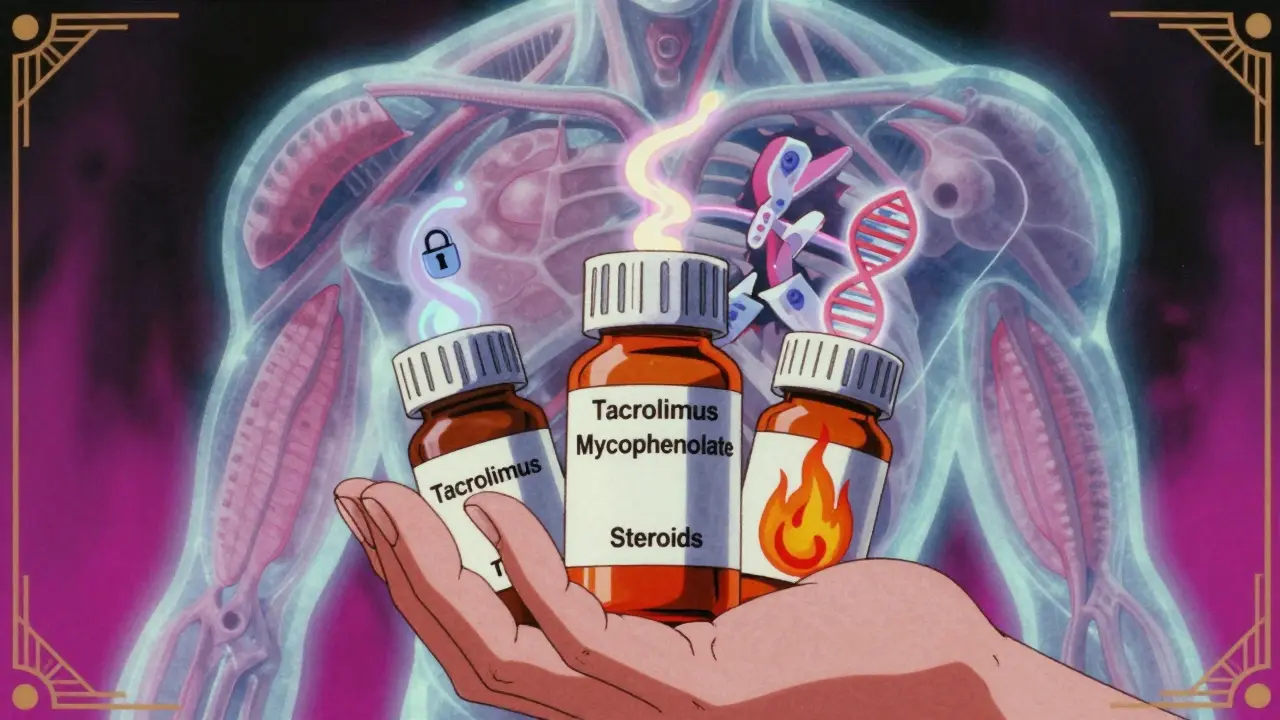
What’s Changing in 2026?
The field isn’t standing still. We’re moving away from one-size-fits-all dosing. Instead of just checking blood levels at 12 hours (trough), we’re now measuring the full drug exposure over time-AUC. For tacrolimus and mycophenolate, this gives a clearer picture of how much drug your body actually absorbed. One study showed patients with optimal AUC had 30% fewer rejection episodes than those just hitting target troughs. Steroid minimization is now mainstream. Many centers skip steroids entirely for low-risk patients: those with living donors, no prior transplants, and no sensitization. They use induction drugs like basiliximab or alemtuzumab instead. These are stronger, shorter-term blockers that give the immune system a reset. Then, tacrolimus and mycophenolate do the heavy lifting. Even more exciting? Pharmacogenomics. Some people metabolize tacrolimus slowly because of a gene variant (CYP3A5). If you’re one of them, you need a lower dose. Others clear it fast and need more. Genetic testing before transplant is now available in major centers. It’s not standard everywhere-but it’s coming.What About Long-Term Survival?
Here’s the sobering truth: even with this triple combo, about 25% of adult kidney transplant recipients lose their graft within five years. Why? Chronic injury. The drugs stop acute rejection-but they don’t fix the slow, silent damage from inflammation, high blood pressure, or drug toxicity. Tacrolimus itself can scar the kidney over time. Mycophenolate doesn’t protect against fibrosis. Steroids accelerate bone loss and metabolic syndrome. The goal now isn’t just survival. It’s healthy survival. That means tighter blood pressure control, managing cholesterol, avoiding smoking, and staying active. It means monitoring kidney function not just with creatinine, but with eGFR trends and protein in the urine. It means asking: Are we over-immunosuppressing? Are we increasing infection or cancer risk for no reason?When This Regimen Isn’t Right
Not everyone gets this combo. Some patients can’t take mycophenolate because of severe GI issues. Others have a history of cancer and can’t risk immunosuppression. In those cases, alternatives exist:- Tacrolimus + sirolimus: Used when avoiding steroids is critical, but mycophenolate isn’t an option. Sirolimus can cause mouth sores and high cholesterol.
- Cyclosporine + MMF + steroids: Still used in some places, especially where tacrolimus is too expensive. Higher cosmetic side effects (hairy face, swollen gums).
- Belatacept-based regimens: An IV drug given monthly. No kidney toxicity. But higher risk of early rejection and requires frequent clinic visits.

What Patients Need to Know
If you’re on this regimen, here’s what matters most:- Take your drugs at the same time every day. Miss a dose? Call your team-not your pharmacist.
- Don’t take antacids, proton pump inhibitors (like omeprazole), or herbal supplements without checking. They can mess with absorption.
- Watch for signs of infection: fever, cough, sore throat, unusual fatigue. Don’t wait.
- Get your blood sugar checked monthly for the first year. Diabetes can sneak up.
- Report diarrhea, bruising, or mouth sores early. These aren’t normal. They’re signals.
- Ask about AUC monitoring. If your center only checks troughs, ask why.
The Future: Personalized, Not Standard
By 2030, experts predict 15-20% fewer patients will get the classic triple combo. Why? Because we’re learning who doesn’t need it. Who can skip steroids. Who can use lower doses. Who needs a different drug altogether. Biomarkers are coming. Blood tests that tell us if your immune system is quiet-or about to rebel. Imaging that shows early scarring before creatinine rises. AI models that predict rejection risk based on your genes, drug levels, and lifestyle. The goal isn’t to eliminate these drugs. It’s to use them smarter. Less is often more. And sometimes, the best immunosuppression is the kind you don’t need to take at all.Why are tacrolimus, mycophenolate, and steroids used together after a kidney transplant?
They’re used together because each drug targets a different part of the immune system. Tacrolimus stops T-cells from activating, mycophenolate prevents them from multiplying, and steroids reduce overall inflammation. Used together, they cut the risk of acute rejection by more than half compared to older regimens. This triple approach became standard in the 1990s and remains the most effective foundation for preventing early graft loss.
Can I stop taking steroids after a kidney transplant?
Yes, many patients can-and should-stop steroids within 2 to 6 months after transplant. Steroid-free regimens using induction therapy (like basiliximab) plus tacrolimus and mycophenolate have been shown to be just as effective at preventing rejection, with far fewer side effects like weight gain, diabetes, and bone loss. Your transplant team will decide if you’re a candidate based on your risk level, donor type, and overall health.
What are the most common side effects of this drug combo?
The most common side effects are gastrointestinal issues (diarrhea, nausea-especially with mycophenolate), low white blood cell counts (leukopenia), and new-onset diabetes (18-21% of patients). Tacrolimus can also cause tremors, high blood pressure, and kidney toxicity over time. Steroids lead to weight gain, acne, mood changes, and bone thinning. These side effects are why dose adjustments and steroid minimization are now routine.
How often do I need blood tests while on this regimen?
In the first 3 months, you’ll likely need blood tests 1-2 times per week to check drug levels (tacrolimus troughs or AUC), kidney function, blood counts, and glucose. After that, frequency drops to every 2-4 weeks, then monthly. Once stable, you might only need testing every 3 months. But if you get sick, start a new medication, or feel unwell, your levels should be checked immediately.
Can these drugs cause cancer or serious infections?
Yes. All immunosuppressants carry a black box warning from the FDA for increased risk of lymphoma, skin cancer, and serious infections like CMV, PJP, or tuberculosis. The risk is highest in the first year and with higher drug doses. That’s why you’ll get vaccines before transplant (if possible), avoid raw meat and undercooked eggs, and report fevers or unusual rashes right away. Regular skin checks and cancer screenings are part of long-term care.
What happens if I miss a dose of tacrolimus or mycophenolate?
Missing one dose isn’t usually an emergency, but it’s not harmless. If you miss a dose, take it as soon as you remember-unless it’s close to your next scheduled dose. Never double up. Missing doses increases rejection risk, especially in the first 6 months. Keep a pill organizer, set phone alarms, and talk to your pharmacist about strategies. If you miss multiple doses, contact your transplant team immediately.
Are there alternatives to this triple-drug regimen?
Yes. Alternatives include cyclosporine instead of tacrolimus (less common now), sirolimus for steroid-free cases, or belatacept (an IV drug given monthly). Some patients get a single drug like belatacept combined with mycophenolate and no steroids. Others use lower-dose tacrolimus with newer agents like voclosporin. The choice depends on your risk profile, donor source, and side effect tolerance. Your transplant team will tailor your regimen-not just follow a template.

Comments (9)
Dan Nichols January 27 2026
Tacrolimus levels between 5-10 ng/mL? That’s outdated. I’ve seen patients reject at 8.5 because their AUC was garbage. Troughs are for lazy docs. If your center isn’t doing AUC monitoring, you’re playing Russian roulette with your graft.
Renia Pyles January 28 2026
Yeah right, like anyone actually cares about AUC. My sister took this combo for 8 years and ended up with diabetes, a face like a moon, and a kidney that barely worked. They call it ‘standard of care’-I call it medical abuse.
Nicholas Miter January 29 2026
Just wanted to say-this post was super clear. I’m 3 months post-transplant and honestly thought I’d be on steroids forever. Learning about steroid minimization gave me hope. Still scared, but less lost.
Rakesh Kakkad January 30 2026
Dear colleagues, the pharmacokinetic variability of tacrolimus in Indian populations, particularly those expressing CYP3A5*1 allele, necessitates individualized dosing protocols. The standard Western algorithm is not universally applicable. We have observed 40% higher clearance rates in South Asian recipients, leading to subtherapeutic exposure if dosed by body weight alone. This is not anecdotal-it is evidence-based.
George Rahn January 31 2026
They call it science. I call it surrender. We used to fight infections with willpower. Now we poison our bodies with chemical chains just to keep a foreign organ alive. We’re not healing-we’re outsourcing our biology to a pharmaceutical cartel. This isn’t medicine. It’s a Faustian bargain wrapped in a white coat.
Ashley Karanja February 1 2026
It’s fascinating how the immune system’s memory operates on a cellular level-like a neural network that remembers threats. Tacrolimus inhibits calcineurin, which disrupts NFAT translocation, effectively silencing the T-cell activation cascade. Mycophenolate’s inhibition of IMPDH starves lymphocytes of guanine nucleotides, halting clonal expansion. And steroids? They’re broad-spectrum transcriptional modulators suppressing cytokine production across multiple pathways. The synergy isn’t just additive-it’s multiplicative, and that’s why the rejection rate dropped so dramatically. But we’re still missing the epigenetic layer-what if we could reprogram immune memory instead of suppressing it? That’s the next frontier.
Karen Droege February 2 2026
My cousin got a kidney from her brother in 2021. They skipped steroids entirely. She’s now 2 years out, no diabetes, no weight gain, and she runs marathons. Meanwhile, her friend on the old regimen is on insulin and can’t walk up stairs. This isn’t just theory-it’s life or death. Why aren’t we pushing steroid-free as default for low-risk patients? Because inertia. And that’s tragic.
Robin Van Emous February 4 2026
I’m from Canada, and we’ve been doing steroid-free induction for low-risk cases since 2018. It works. People live better. The drugs aren’t the enemy. The one-size-fits-all mindset is. Let’s stop pretending we’re all the same.
Angie Thompson February 5 2026
Just got my first AUC test back-turns out I was under-dosed. My doc didn’t even know what AUC meant until I asked. Thank you for this post. I’m not just a patient anymore-I’m an advocate. 💪🫶