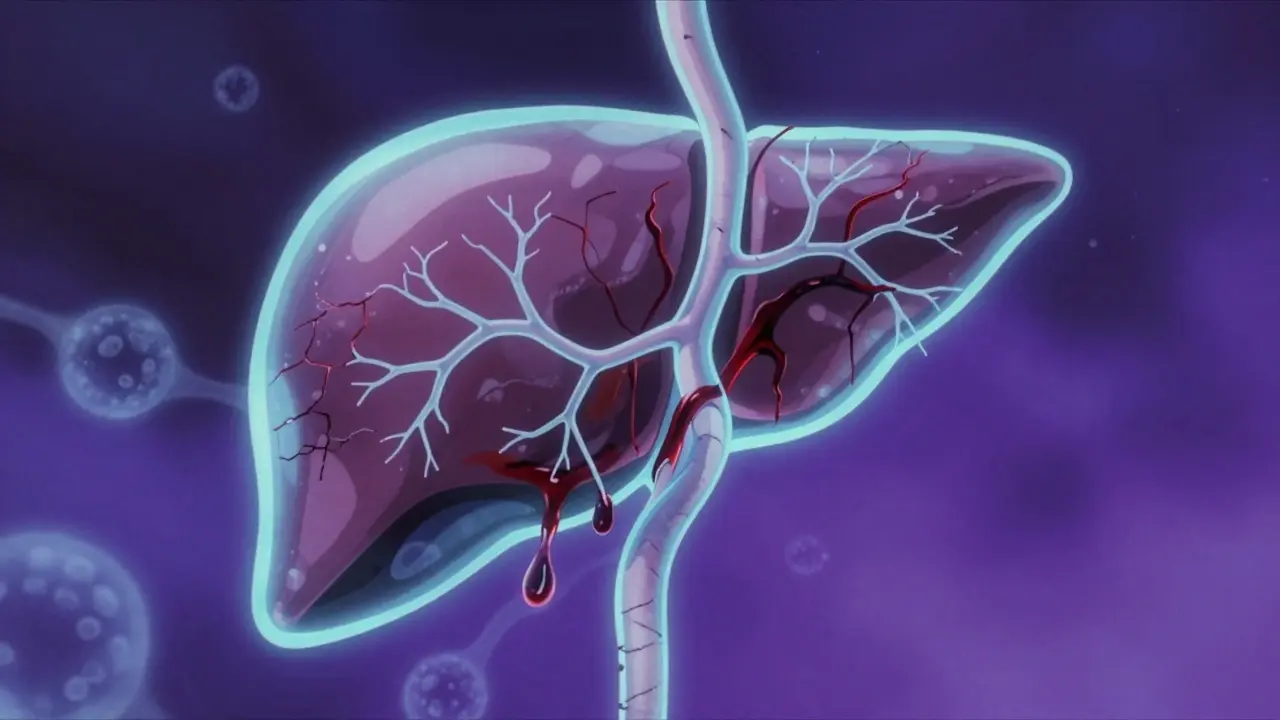
Primary Sclerosing Cholangitis (PSC) isn’t something most people have heard of-until it hits them or someone they love. It’s a rare, slow-burning disease that attacks the bile ducts inside and outside the liver, turning them into scar tissue over time. No one knows exactly why it happens, but once it starts, it doesn’t stop. There’s no cure. And unlike many liver conditions, blood tests alone won’t catch it early. By the time symptoms show up, the damage is often already advanced.
What Happens Inside the Liver With PSC?
Your liver makes bile-a fluid that helps digest fat. Bile flows through tiny tubes called bile ducts, moving from the liver to the small intestine. In PSC, those ducts get inflamed, then scarred, then narrowed. Imagine a garden hose slowly being squeezed shut from the inside. Eventually, bile backs up in the liver, poisoning liver cells. This leads to cell death, more scarring, and over time, cirrhosis.
The scarring doesn’t happen evenly. Some ducts become so narrow they’re barely visible on imaging-less than 1.5mm wide, compared to normal ducts that are 3-8mm. This isn’t just about blocked pipes; it’s a systemic immune attack. Studies show the body’s own immune system targets the bile duct lining, likely triggered by a mix of genes and gut bacteria. The gut-liver connection is real: over 70% of people with PSC also have ulcerative colitis, a form of inflammatory bowel disease. It’s not a coincidence. The same faulty immune signals that inflame the colon may be attacking the bile ducts.
Who Gets PSC-and Why?
PSC doesn’t pick randomly. It’s most often diagnosed between ages 30 and 50, with the average age being 40. Men are twice as likely to get it as women. It’s also far more common in people of Northern European descent. In Sweden, about 6.3 out of every 100,000 people have PSC. In the U.S., roughly 25,000 people are diagnosed. Globally, it affects about 1 in 100,000.
Genetics play a big role. Scientists have found 22 gene locations linked to higher risk, with the strongest tied to HLA-B*08:01. If you carry this gene, your chance of developing PSC jumps by more than twice. But genes alone aren’t enough. Something in the environment-likely a gut infection, antibiotic use, or changes in gut bacteria-triggers the immune system to go haywire. That’s why PSC is considered an autoimmune disorder, even though it doesn’t show the classic antibodies seen in lupus or rheumatoid arthritis.
How Is It Diagnosed?
There’s no single blood test for PSC. Liver enzymes like ALP and AST often rise, but they can also be normal in early stages. That’s why diagnosis is often delayed-on average, people wait 2 to 5 years before getting a correct answer. Many are misdiagnosed with fatty liver or hepatitis.
The gold standard is an MRCP (Magnetic Resonance Cholangiopancreatography), a special MRI that shows the bile ducts in high detail. It’s non-invasive and can reveal the telltale “beaded” pattern of strictures and dilations. In some cases, an ERCP (a scope inserted through the mouth) is needed to confirm or treat blockages. Biopsies are rarely helpful because the damage is patchy and hard to catch.
Doctors also test for p-ANCA, an antibody found in 20-50% of PSC patients. But unlike PBC (Primary Biliary Cholangitis), which has a clear antibody marker (AMA), PSC is a mystery in the lab. That’s part of what makes it so hard to treat.
Symptoms: The Silent Progression
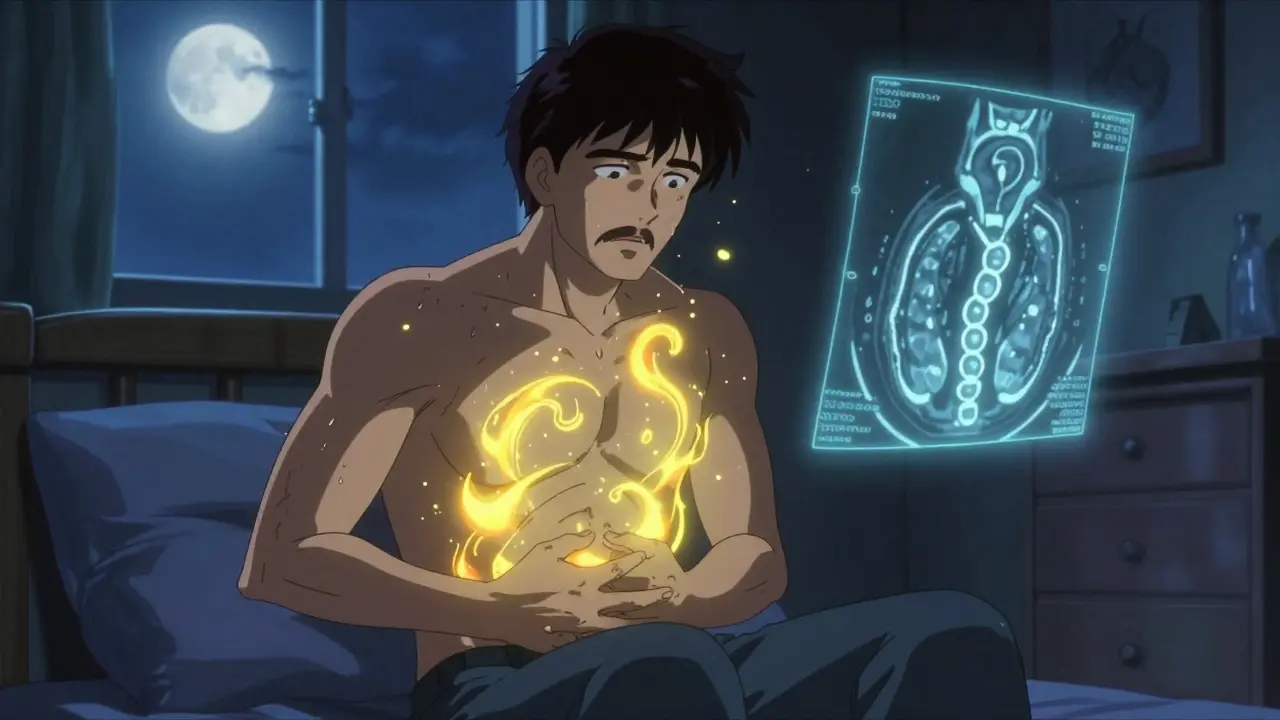
Early on, many people feel fine. No jaundice. No pain. Just fatigue that won’t go away. That’s the first red flag for most. Then comes itching-pruritus-that doesn’t respond to lotions or antihistamines. Patients describe it as a deep, bone-level itch, worse at night. One Reddit user wrote, “It feels like my skin is crawling from the inside.”
As the disease advances, symptoms get worse: dark urine, pale stools, yellowing eyes, abdominal pain in the upper right side. Some develop cholangitis-an infection of the bile ducts-marked by fever, chills, and sharp pain. That’s a medical emergency.
Fatigue hits hardest. In surveys, 92% of PSC patients say it’s their worst symptom. It’s not laziness. It’s a constant, crushing exhaustion that makes work, parenting, or even walking the dog feel impossible. And it doesn’t improve with sleep.
Why UDCA Is No Longer Recommended
For years, the go-to treatment was ursodeoxycholic acid (UDCA), a bile acid thought to protect liver cells. Doctors prescribed it to nearly everyone with PSC. But large, well-designed trials proved it doesn’t extend life or delay liver failure. Worse, high doses (28-30 mg/kg/day) may actually increase the risk of complications.
In 2023, the European Association for the Study of the Liver (EASL) updated its guidelines to say: do not use UDCA routinely. That’s a major shift. It means thousands of patients have stopped taking it, and doctors are now focusing on symptom control instead of false hope.
Managing Symptoms: What Actually Works
Since there’s no drug to stop PSC, care is about managing what you can:
- Itching: Rifampicin (150-300mg daily) helps 50-60% of patients. If that fails, naltrexone (50mg daily) or colesevelam (a bile acid binder) are next options.
- Fatigue: No drug works reliably. Exercise, sleep hygiene, and managing IBD symptoms help the most.
- Vitamin deficiencies: PSC blocks fat absorption, so vitamins A, D, E, and K drop. Blood tests every 3-6 months are critical. Supplements are usually needed.
- IBD monitoring: If you have ulcerative colitis, you need a colonoscopy every 1-2 years. PSC raises your risk of colorectal cancer to 10-15% over your lifetime.
- Cholangitis: If you develop fever, pain, or jaundice, antibiotics are urgent. Delaying treatment can lead to sepsis.
The Transplant Reality
For many, liver transplant is the only long-term solution. About 10-15 years after diagnosis, half of PSC patients reach end-stage liver disease. Transplant success is high-over 80% survive five years after surgery. But it’s not a cure. PSC can come back in the new liver, though it’s rare and slow.
The wait for a donor liver is long. And not everyone qualifies. Some patients develop bile duct cancer (cholangiocarcinoma) before they even get on the list. That’s why regular imaging is vital: annual MRIs or CT scans to catch tumors early. Cholangiocarcinoma in PSC patients has a 5-year survival rate of just 10-30% if caught late.

What’s on the Horizon?
Hope isn’t gone-it’s just taking longer than expected. Several drugs are in late-stage trials:
- Obeticholic acid (OCA): Reduced liver enzymes by 32% in a 2023 trial. Still under FDA review due to safety concerns.
- Cilofexor: A non-steroidal FXR agonist that lowered ALP by 41% in phase 2 trials. Granted orphan drug status in Europe in early 2023.
- Fibrates: Used off-label for some patients, showing promise in reducing ALP and slowing fibrosis.
Researchers are also exploring gut microbiome therapies-probiotics, fecal transplants, and targeted antibiotics-to reset the immune trigger. The PSC Partners Seeking a Cure registry, with over 3,100 patients worldwide, is helping speed up research by sharing real-world data.
Experts predict that within five years, we’ll have at least two disease-modifying drugs approved. They won’t cure PSC, but they could slow it enough to delay transplant for many.
Where to Get Care
Not all liver clinics are created equal. Patients treated at specialized PSC centers report 85% better symptom control than those seeing general hepatologists. These centers have teams that include hepatologists, gastroenterologists, nutritionists, and psychologists familiar with the disease.
In the U.S., 72% of patients live within 100 miles of a specialized clinic. In rural Europe, that number drops to 35%. If you’re diagnosed, ask for a referral to a center that treats at least 50 PSC patients a year. Experience matters.
Living With PSC: The Emotional Toll
It’s not just the physical symptoms. The uncertainty is exhausting. Will I need a transplant? Will I get cancer? Why did this happen to me? Many patients feel isolated because their disease is so rare. Online communities like PSC Partners and Reddit’s r/liverdisease are lifelines.
One common theme: frustration. Seventy-four percent of patients say they’re tired of being told, “There’s nothing else we can do.” That’s changing. More doctors are listening. More research is being funded. And patients are speaking up.
For now, the best strategy is vigilance: regular blood tests, imaging, colonoscopies, vitamin checks, and open conversations with your care team. Stay informed. Join a registry. Ask about clinical trials. You’re not just a patient-you’re part of the solution.
Is primary sclerosing cholangitis the same as primary biliary cholangitis?
No. PSC and PBC are different diseases. PSC affects both large and small bile ducts inside and outside the liver, and is strongly linked to inflammatory bowel disease. PBC mainly attacks the small bile ducts inside the liver and is marked by anti-mitochondrial antibodies (AMA) in 95% of cases. PSC patients rarely test positive for AMA, but 20-50% have p-ANCA instead. Their treatments, progression, and associated risks are also different.
Can PSC be cured with medication?
No. There is currently no medication that stops or reverses PSC. Treatments focus on managing symptoms like itching and fatigue, preventing complications, and monitoring for liver cancer. Liver transplant is the only cure for end-stage disease, though PSC can recur in the transplanted liver in rare cases.
Why is itching so severe in PSC?
Itching in PSC is caused by bile acids building up in the bloodstream because they can’t flow out of the liver. These acids stimulate nerve endings in the skin and even deeper tissues, creating a deep, unrelenting itch that doesn’t respond to typical antihistamines. Medications like rifampicin, naltrexone, and colesevelam work by either reducing bile acid levels or blocking the brain’s itch response.
How often should I get imaging tests if I have PSC?
Annual MRCP or ultrasound imaging is recommended to monitor bile duct changes and screen for cholangiocarcinoma. Some centers also recommend alternating with CT scans every 6-12 months, especially if you have a family history of liver cancer or have had previous bile duct strictures. Your doctor will tailor the schedule based on your disease progression and risk factors.
Does having ulcerative colitis mean I’ll definitely get PSC?
No. While 60-80% of PSC patients have ulcerative colitis, only about 3-5% of people with ulcerative colitis develop PSC. The link is strong, but not guaranteed. If you have ulcerative colitis and develop unexplained fatigue, itching, or abnormal liver tests, ask your doctor about PSC screening.
What lifestyle changes help with PSC?
Avoid alcohol completely-it speeds up liver damage. Eat a balanced, low-fat diet to reduce digestive stress. Take prescribed vitamin supplements daily. Exercise regularly, even light walking, to help with fatigue and mood. Quit smoking, as it increases cancer risk. Stay up to date on vaccines (hepatitis A and B, flu, pneumonia). And connect with others who have PSC-emotional support is part of treatment.
Can I still work or have children with PSC?
Yes. Many people with PSC work full-time, raise families, and live full lives-especially if diagnosed early and managed well. Fatigue may require adjustments like flexible hours or remote work. PSC doesn’t affect fertility, and pregnancy is generally safe, though it requires close monitoring by a high-risk OB and hepatologist. Talk to your care team before planning a pregnancy.

Comments (13)
John Chapman January 1 2026
This is the most comprehensive PSC breakdown I’ve ever seen. 🙌 I’ve been living with this for 8 years and no doctor ever explained it like this. Thank you for putting this out there. 💪Sara Stinnett January 2 2026
Let’s be real-this is just Big Pharma’s way of selling more tests and vitamins. There’s no ‘cure’ because they don’t want one. You think they’d stop pushing UDCA if it actually worked? Wake up.Paul Huppert January 2 2026
I’m newly diagnosed and this post saved me from spiraling. Just needed to know I’m not alone.Kayla Kliphardt January 3 2026
The part about itching being bone-deep... I’ve described it exactly like that. No one gets it until they live it. I wish more doctors read this.Lawver Stanton January 4 2026
Okay but let’s talk about the elephant in the room-why is this still so underfunded? We’re talking about a disease that kills people slowly, silently, and with zero public awareness. Meanwhile, people are getting $10M grants to study why some cats sneeze in the rain. I’m not mad, I’m just disappointed. And honestly? Kinda furious.Brandon Boyd January 5 2026
You’re not broken. You’re not failing. You’re just navigating a shitty hand. Every blood test, every scan, every vitamin you take? That’s strength. Keep going. You’ve got this.Branden Temew January 6 2026
So we’re told there’s no cure… but we’re also told we’re part of the solution? Cool. So I’m a lab rat with a hashtag. Thanks for the pep talk, Dr. Optimism.Hanna Spittel January 8 2026
I read somewhere that PSC is caused by 5G towers and glyphosate. I’m not saying it’s true... but I’m also not saying it’s not. 🤔Frank SSS January 9 2026
I’m just here wondering why no one ever talks about the mental toll of being told ‘you’re fine’ while your body is falling apart. I’ve had three ER visits for cholangitis and been told ‘it’s probably just gas.’ I’m not a drama queen. I’m just dying quietly.Aaron Bales January 9 2026
If you’re diagnosed, get to a specialized center. Period. Don’t settle for a general hepatologist. Ask for the PSC clinic. If they don’t have one, push. Your life depends on it.Jenny Salmingo January 10 2026
I’m from Indonesia and my cousin has PSC. We didn’t even know what it was until we found this post. Thank you for writing in English so we could use translate. We’re sending love from Jakarta.Brady K. January 11 2026
Let’s not pretend obeticholic acid is the silver bullet. It’s a Band-Aid on a hemorrhage. We’re still playing whack-a-mole with bile acids while the real problem-the immune system’s betrayal-goes unaddressed. The real breakthrough? Immunomodulation. Everything else is just noise.linda permata sari January 12 2026
I just got diagnosed yesterday. I cried for two hours. Then I read this. Now I’m making a list of vitamins and calling my GI. I’m not giving up. Not today.