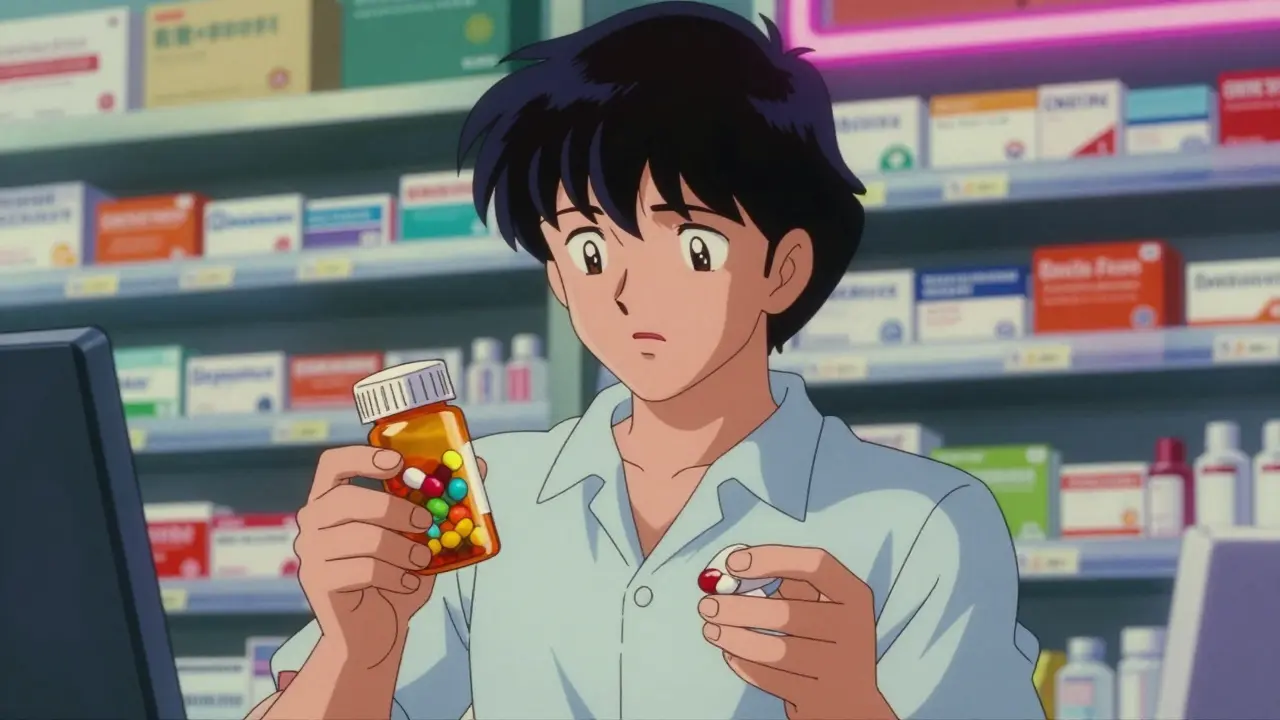
It happens almost everywhere now. You walk into the pharmacy expecting your usual box of pills, and the pharmacist hands you a different package. The logo is gone. The color is slightly off. Maybe the shape isn't right. Suddenly, you wonder if the medicine inside is really doing its job. You are not alone. With generic medications accounting for roughly 90 percent of all prescriptions dispensed in many healthcare systems today, this switch is common. But does "common" mean "safe"? For most people, yes. For some, especially those on sensitive treatments, it requires a bit more attention.
This guide cuts through the noise. We aren't going to tell you to avoid generics-that would be financially reckless for most families and medically unnecessary for the vast majority. Instead, we will focus on exactly how to verify that your health remains stable after that switch. We will look at specific timelines, what numbers to track, and which drugs require your closest eye.
Understanding the Science Behind the Switch
Before you start checking your blood pressure or logging symptoms, it helps to understand what you are actually taking. Generic Medications are pharmaceutical equivalents that contain the same active ingredients, strength, dosage form, and route of administration as their brand-name counterparts. When agencies like the U.S. Food and Drug Administration (FDA) or the World Health Organization approve these drugs, they demand proof. That proof comes in the form of bioequivalence studies.
Bioequivalence sounds technical, but the concept is straightforward. When you take a tablet, it dissolves in your stomach and enters your bloodstream. For a generic version to be approved, it must deliver the same amount of active ingredient into your bloodstream within the same timeframe as the original brand-name product. Regulations typically require that the generic performs between 80 and 125 percent of the reference drug's performance levels in clinical trials. While this range might sound wide to a layperson, clinically, for nearly every patient, there is zero difference in how the body responds.
However, the human body is not a lab petri dish. Individual biology varies. While large-scale data suggests less than 1 percent of reports involve actual therapeutic inequivalence, that small percentage represents real patients who notice changes. Some differences come from inactive ingredients-fillers, binders, or dyes-which are allowed to vary slightly between manufacturers. These do not change the potency, but they can sometimes affect how the pill dissolves or cause minor sensitivities in people with allergies or digestive issues.
| Standard Requirement | |
|---|---|
| Active Ingredient | Must be identical chemically |
| Safety Profile | Must meet identical standards |
| Potency | 90% confidence interval within 80-125% |
| Manufacturing Quality | Subject to rigorous inspection cycles |
The 30-Day Monitoring Protocol
If you have recently picked up a generic prescription, don't panic, but do pay attention. The most critical period is the first month. Most recommendations suggest a tiered approach. During the first week, simply observe. Are there any immediate reactions like rash, nausea, or unexpected drowsiness? By week two, you should start measuring hard data points. If your doctor has told you to track specific biomarkers, this is when you begin logging them.
The American Academy of Family Physicians recommends that for stable chronic conditions, you continue this monitoring for 90 days. Why three months? Because some physiological adjustments take time. You might see your blood sugar dip slightly in week two and rebound by week four. Without a full quarter of data, you might assume the generic failed, when in reality, your metabolism was just adjusting to a slightly different release rate of the active compound.
Create a simple diary. It doesn't need to be fancy. Write down the date, the time you took the pill, and any symptoms you felt. If you are on specific therapy, add the relevant measurements:
- Asthma Patients: Monitor peak flow measurements daily for the first two weeks post-switch.
- Diabetes Patients: Track HbA1c levels at 4 weeks and 8 weeks following the switch.
- Hypertension: Check blood pressure readings twice daily during the initial transition.
- Epilepsy: Log seizure frequency or aura sensations precisely.
These specific metrics remove guesswork. If your peak flow drops significantly, that is objective evidence that the inhaler formulation may need changing. If your blood sugar stays consistent despite the pill changing colors, you know the generic is working perfectly.

High-Risk Medications Requiring Extra Caution
Not all drugs are created equal regarding sensitivity. There is a specific category known as Narrow Therapeutic Index (NTI) drugs. Narrow Therapeutic Index describesdrugs where small differences in blood concentration can lead to treatment failure or toxic side effects. If your prescription falls into this category, you need closer follow-up. Doctors often schedule appointments specifically 14 days after switching these particular medications.
Examples of these high-risk categories include antiepileptic drugs like lamotrigine and levothyroxine for thyroid issues. Research indicates that negative experiences are reported more frequently for levothyroxine, with about 12 percent of thyroid medication switchers noticing significant changes. Cardiovascular medications like warfarin also fall here. If you are on blood thinners, a slight variation in absorption could change your INR levels enough to risk bleeding or clotting.
For these patients, the advice changes from "monitor casually" to "test proactively." Laboratory tests should ideally be conducted 7 to 14 days after starting a new manufacturer's generic, and again at 30 days. Always inform your prescriber before making any decisions to switch back to a brand-name product. Sometimes a dose adjustment solves the issue rather than returning to the expensive original brand.
Identifying the Product and Reporting Issues
One thing many patients overlook is the packaging. While a pharmacy might switch the manufacturer of a generic drug without telling you, you can usually identify the exact source by looking at the National Drug Code (NDC) number. This unique code appears on the bottle label. If you notice a problem, record this number. Different manufacturers produce generics differently, so swapping back to the same drug but from a different maker might solve the issue.
If you experience genuine side effects or feel the medication isn't working, there are formal channels to report this. Regulatory bodies maintain safety surveillance committees to track these signals. In the United States, this is the FDA's MedWatch program. Globally, systems exist under the World Health Organization framework to catch substandard medicines. When reporting, provide details: lot number, NDC code, and precise description of the symptom.
Reports like these feed into safety evaluations that happen continuously. For example, recent initiatives aim to analyze adverse event reports related to generic drugs within 72 hours of submission, a massive improvement over older standards. Knowing that the system is listening makes the act of reporting much more meaningful.

The Reality of Satisfaction Rates
It is easy to get caught up in anecdotal horror stories online. Forums and social media threads often amplify bad experiences. It is important to look at the aggregate data. Surveys consistently show that around 89 to 92 percent of users are satisfied with generic medications. In a large analysis of over 700,000 users, 92.7 percent maintained equivalent symptom control after switching.
The 7 to 8 percent who experienced variations often did not require medical intervention. Only about 1 percent of cases involved true therapeutic inequivalence requiring a switch back. The most common complaints usually relate to pill appearance-size, texture, or taste-which rarely affects efficacy. Remembering this statistic helps keep anxiety in check. Most people switch, notice nothing wrong, and save money. Monitoring confirms that peace of mind.
Frequently Asked Questions
Is it safe to switch from a brand-name drug to a generic?
Yes, generally speaking. Regulators require generic drugs to demonstrate bioequivalence, meaning they must perform within the same range as the brand-name drug in terms of how much active ingredient enters your bloodstream. Studies show that approximately 90 percent of patients maintain equivalent symptom control without issues.
Which medications need extra monitoring after switching?
Drugs with a Narrow Therapeutic Index require closer watching. This includes antiepileptics like lamotrigine, thyroid medications like levothyroxine, and cardiovascular drugs like warfarin. Small changes in dosage effectiveness matter more with these medicines.
How long should I monitor my health after switching?
Start closely in the first week, but for chronic conditions, continue tracking symptoms and biomarkers for up to 90 days. If you are on NTI drugs, schedule follow-ups at 7, 14, and 30 days post-switch to ensure stability.
Can I ask for the brand-name drug back if I feel worse?
You can discuss this with your doctor. Insurance coverage may vary, and costs will rise, but if you document clear therapeutic differences (like rising blood pressure or glucose levels) linked to the generic, a physician can often justify switching back.
Why do generic pills look different than the originals?
Inactive ingredients like dyes, fillers, and binders are not required to be identical. Manufacturers use different production processes to lower costs. As long as the active ingredient is the same, visual differences do not affect efficacy.

Comments (15)
Goodwin Colangelo April 1 2026
Monitoring your health requires dedication to get the real picture. Many people ignore the early signs completely until something goes wrong. You need to track every single symptom consistently without skipping days. Blood pressure fluctuations matter the most for cardiovascular patients specifically. Keep a dedicated daily log book right next to your bedside lamp. Writing things down physically prevents forgetting small details later on. Your doctor needs raw data to make informed decisions eventually. Generic formulations do differ slightly sometimes depending on the manufacturer. Filler ingredients might change the absorption rate unexpectedly. Watch out for sudden nausea or headaches during the first week specifically. Thyroid medication switches are tricky specifically compared to standard antibiotics. Levothyroxine levels drop easily without close laboratory monitoring. Blood thinners also require strict lab work before adjusting doses further. Insurance companies love saving money over patient quality of life unfortunately. Stay vigilant for the full ninety days recommended in the guidelines. Do not skip the follow-up appointments scheduled for your safety.
Joseph Rutakangwa April 3 2026
nti drugs need watching.
Will Baker April 4 2026
People act like they know everything but most have no idea what happens in their own blood. It is funny how everyone wants to be a doctor here suddenly. Nobody actually tests the pills themselves in a controlled environment properly. This is just fear mongering for attention really.
Rachelle Z April 5 2026
I think it is super important!!!! 😊 Don't forget to write stuff down!! It helps so much! 😭 You really need to pay attention!!!!
Brian Shiroma April 6 2026
Pharmacies claim generics are identical yet they change the fillers without warning patients. It is amazing how little transparency exists in our healthcare infrastructure today. Consumers have to play detective while paying bills anyway.
simran kaur April 6 2026
The big corporations push cheap versions to save costs while ignoring side effects. They want to control our bodies through subtle chemical manipulation. Do not trust the FDA approval numbers blindly either.
Jenna Carpenter April 8 2026
I hate when people listen to this garbage advice. The goverment knows exactly what to dose and we dont have recieve good care anymore. These meds are trash and nobody talks about the risks thier enough.
HARSH GUSANI April 9 2026
India makes better pharma products than many others worldwide 🙏 Our standards are high for export. You should be proud of local production too 😎
Sam Hayes April 10 2026
everyone should just keep track of things calmly. it helps to stay organized. dont panic but pay attention to what your body tells you
sophia alex April 11 2026
It is absolutely terrifying that they swap our medicine without asking 😱 Why do we let this happen? 💔 We deserve better treatment options! 🚫
Mark Zhang April 12 2026
Tracking your symptoms gives you power back over your own health situation. It feels scary at first but the routine becomes easier quickly. Support each other through these transitions in support groups. Everyone has different experiences with different brands so sharing helps.
Sakshi Mahant April 13 2026
Different cultures approach medication adherence differently and that is fine. We should respect individual needs while following medical science guidelines. Communication between patient and doctor remains vital always.
Hudson Nascimento Santos April 15 2026
The nature of identity in modern medicine is tied to consistency of treatment regimens. When the form changes we question the essence of healing itself philosophically. Is the pill merely a vessel or the substance of cure?
Hope Azzaratta-Rubyhawk April 16 2026
Optimism is essential for recovery regardless of pharmaceutical formulation used. Patients must maintain confidence in their prescribed therapies despite minor variations. Compliance drives outcomes more than brand loyalty ever could.
Dee McDonald April 16 2026
Get excited about staying healthy instead of worrying constantly! You can crush this monitoring process! Track everything you eat and sleep too! Stay strong!