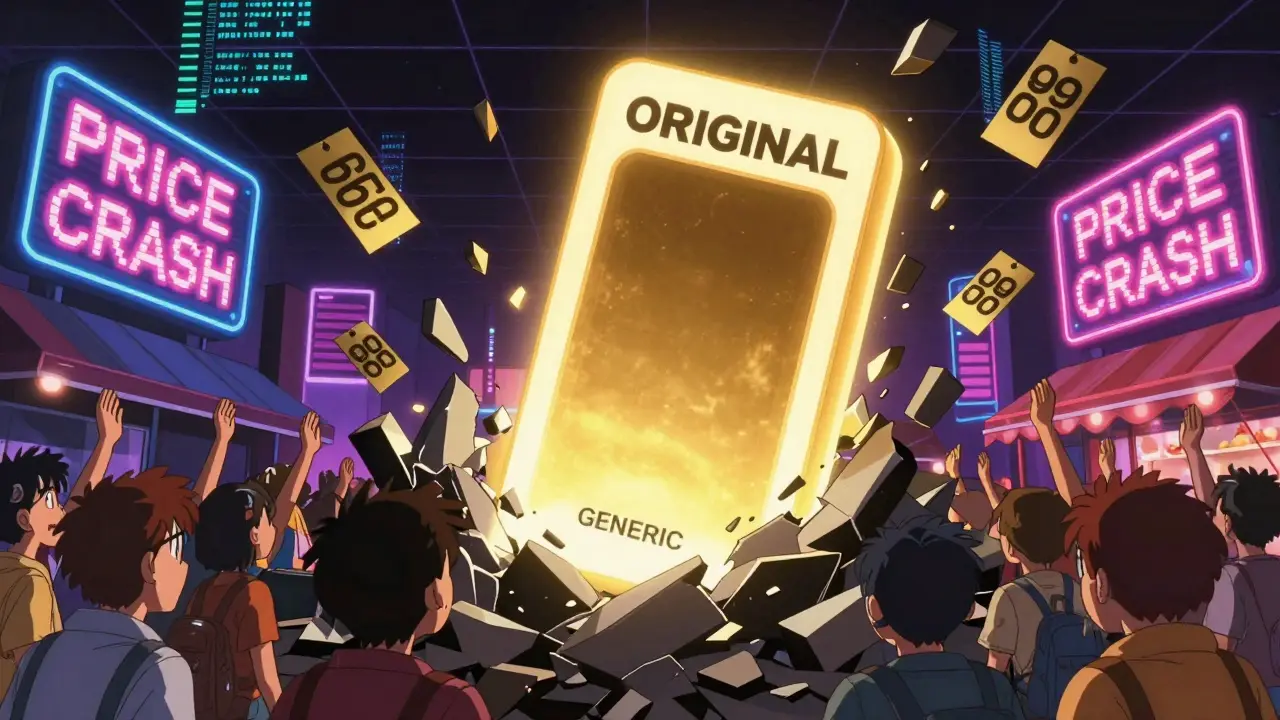
When a new product hits the market, you’d expect it to be expensive. That’s how it’s always been - early adopters pay more, and prices come down over time. But something different happens with first generic entry. It’s not a slow decline. It’s a crash. Within weeks, sometimes days, prices plunge by half or more. And it’s not just drugs. It’s software, electronics, even cloud services. Why?
It’s Not About Cost - It’s About Control
Think back to when Apple first launched the iPod in 2001. It cost $399. No competition. People bought it because there was nothing else. Then, in 2004, companies like Creative and Sony started making MP3 players. Within two years, you could buy a decent one for under $100. Apple didn’t suddenly become cheaper to make. They didn’t cut corners. The price dropped because the monopoly ended. That’s what first generic entry does. It breaks control. When a company has no rivals, they set the price. When someone else steps in with a version that works just as well - even if it’s not perfect - everything changes. In pharmaceuticals, this is well-documented. When a drug’s patent expires, the first generic version hits shelves and prices drop 76% on average within six months, according to the Congressional Budget Office. Why? Because the drug hasn’t changed. The chemistry is identical. But now there are two suppliers. And buyers - pharmacies, insurers, patients - will go with the cheaper one.Software Follows the Same Script
You might think software is different. It’s not physical. You can’t reverse-engineer it like a pill. But you can copy the function. And that’s exactly what happens. Take Oracle’s database. For years, enterprises paid tens of thousands in license fees just to run it. Then came PostgreSQL - open source, free to use, and by 2020, it matched 90% of Oracle’s core features. Companies didn’t need every fancy add-on. They needed reliability. Performance. Scalability. PostgreSQL gave them that. The result? A 78% drop in licensing costs for many, according to user reports on Reddit’s r/sysadmin. One company in Manchester switched from Oracle to PostgreSQL and saved $1.2 million in the first year. They didn’t lose anything. They gained flexibility. And they didn’t need to pay for a vendor’s sales team to keep pushing upgrades. This isn’t rare. In enterprise software, the first competitive SaaS alternative typically launches at 40-60% below the incumbent’s price. Gartner found that within 18 months, incumbents were forced to cut their license fees by 30-45% just to stay in the game.Why Do Generic Alternatives Win So Fast?
It’s not just price. It’s timing, perception, and risk. First, the new entrant doesn’t have legacy costs. No expensive sales force. No decades of R&D to recoup. No shareholders demanding quarterly growth. They’re lean. They’re built on open-source tools like Linux and Apache. Their infrastructure costs are 25-40% lower. That’s where the savings come from. Second, customers are tired of being locked in. In 2023, 72% of enterprise buyers told Gartner they cared more about total cost of ownership than brand loyalty. If you’re paying $50,000 a year for software and someone offers the same thing for $15,000, you don’t need to be a genius to choose the cheaper option. Third, the fear of switching has dropped. Early adopters worried about support, integration, training. Now? Most first-gen alternatives offer 24/7 support within 15% of the response time of big vendors. Documentation has improved. Communities have grown. GitHub, Stack Overflow, and Discord are full of people who’ve done the migration before. A 2023 Pluralsight report found that training for a new system takes 40-60 hours per admin - not trivial, but manageable. And 81% of companies that tried a generic alternative kept it after six months. They didn’t regret it.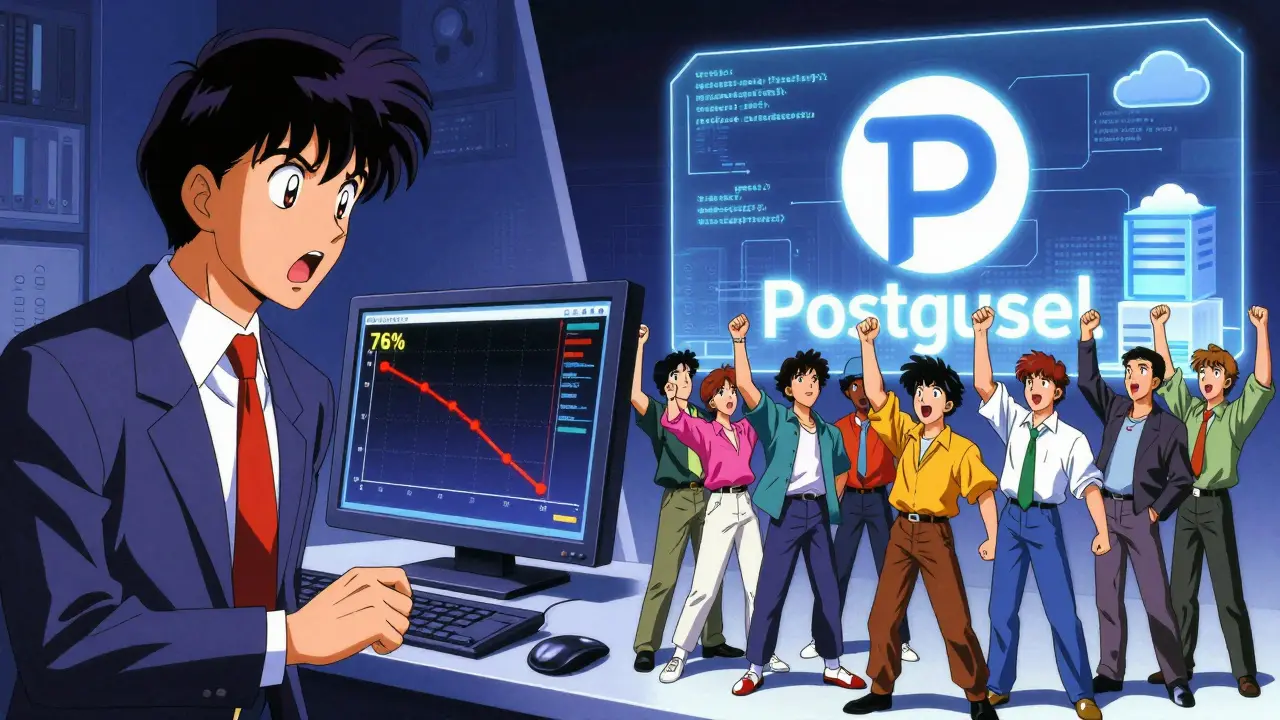
What Happens to the Original Company?
They don’t disappear. They adapt. Microsoft saw PostgreSQL and open-source databases eating into Azure SQL’s market share. Instead of fighting it, they shifted to usage-based pricing. Now, you pay only for what you use. That cut their effective price by 35% for mid-sized businesses. MongoDB didn’t try to beat Oracle on price. They offered a free tier with premium support. That’s not a discount - it’s a strategy. You get in for free. You get comfortable. Then you pay for the features you actually need. The old model - charge upfront, lock in, upsell later - is dying. The new model is: let them try, prove value, then charge for scale.It’s Getting Faster - And More Common
Ten years ago, it took 18 months after a patent expired for the first generic to appear. Now? It’s six months. In software, sometimes it’s weeks. Why? Tools are better. Cloud platforms make deployment easy. AI helps reverse-engineer APIs. Open-source libraries mean you don’t have to build from scratch. The barrier to entry has collapsed. The European Union’s Digital Markets Act in 2022 forced interoperability standards. That cut switching costs by 40-50%. Now, moving from one system to another doesn’t mean rebuilding your entire IT stack. Fortune 500 companies now have formal processes to evaluate generic alternatives within three months of their launch. In 2018, only 32% did. Now it’s 67%.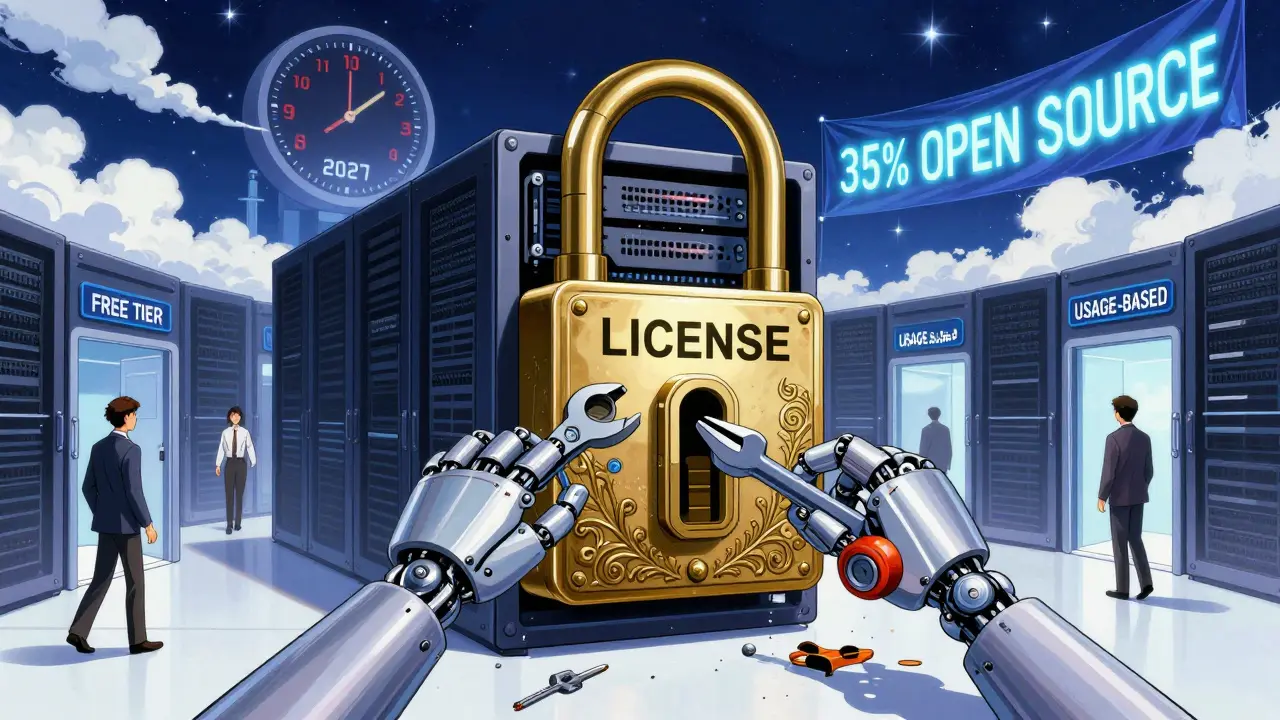
Is There a Catch?
Yes. But not the one you think. Some people say generic products are “just a delay tactic.” That’s outdated. Today’s alternatives aren’t half-baked. They’re mature. PostgreSQL runs Netflix. Reddit. Airbnb. They’re not testing the waters - they’re running the show. The real risk isn’t quality. It’s change fatigue. Migrating systems takes time. Data migration is the biggest headache - 62% of companies outsource it. And if your team is used to one interface, learning a new one feels like starting over. But the cost of waiting is higher. PTC’s research shows that if you delay your response to a generic competitor by 9-12 months, you lose up to 50% of your projected revenue. That’s not a missed sale. That’s a market collapse.What Should You Do?
If you’re a buyer: Look for first generic entries. Don’t assume the brand name is better. Check performance benchmarks. Read user reviews on G2 or Capterra. Ask: “What’s the total cost over three years?” Not “What’s the sticker price?” If you’re a vendor: Stop thinking about protecting your price. Start thinking about protecting your value. Can you offer something the generic can’t? Faster support? Deeper integrations? Custom training? If not, you’re already behind. The market isn’t broken. It’s working. Competition isn’t a threat - it’s the engine of fairness. Prices drop because customers finally have power. And that’s not going to change.What’s Next?
ARK Invest predicts open-source alternatives will capture 35% of enterprise software revenue by 2027. That’s not a prediction - it’s an inevitability. The tools are here. The customers are ready. The old rules don’t apply anymore. The next time you see a product launch with a low price, don’t assume it’s a sale. It might be the start of something bigger. The first generic entry isn’t a footnote. It’s the new normal.Why do prices drop so fast when a generic product launches?
Prices drop fast because the first generic entry breaks the monopoly. When only one company sells a product, they control the price. Once a competitor offers a similar product - even if it’s not perfect - buyers switch to save money. This forces the original seller to lower prices to stay competitive. In pharmaceuticals, this leads to an average 76% price drop within six months. In software, it’s often 40-60% at launch.
Are generic alternatives as good as the original products?
In most cases, yes. First-gen generics typically match 80-90% of the original’s core functionality. For example, PostgreSQL delivers nearly all the features enterprises need from Oracle databases, at a fraction of the cost. Performance benchmarks show they’re often just as fast and reliable. The main differences are in support depth, documentation, and niche features - not core performance.
Do generic products have poor support?
Not anymore. Early generic products did struggle with support, but today’s market leaders offer 24/7 support with response times within 15% of major vendors. Companies like MongoDB and Red Hat built their business on premium support for open-source tools. Community forums, documentation, and third-party consultants have also filled the gap. Support quality is now a competitive differentiator - not a weakness.
Is switching to a generic product risky?
The biggest risk isn’t the software - it’s the transition. Data migration, staff training, and integration with existing systems can take 3-6 months and require outside help (62% of companies outsource this). But once live, 81% of organizations keep using the alternative. The real danger is waiting too long. Delaying your response to a generic competitor can cost you 50% of your projected revenue, according to PTC.
Why are companies moving away from license-based pricing?
Because customers won’t pay for it anymore. License fees were profitable when buyers had no alternatives. Now, with open-source and SaaS options offering the same functionality at 60-80% lower cost, companies are forced to change. Vendors now use usage-based pricing, freemium tiers, and subscription models to stay relevant. It’s not about lowering prices - it’s about aligning cost with value delivered.
Will this trend keep going?
Absolutely. The time between a product’s launch and its first generic competitor has dropped from 18 months in 2010 to just 6 months in 2023. Cloud platforms, open-source tools, and regulatory changes like the EU’s Digital Markets Act are making it easier and cheaper to enter the market. By 2027, open-source alternatives could capture 35% of enterprise software revenue. The era of high-margin, no-competition pricing is over.

Comments (15)
Gregory Rodriguez February 4 2026
So let me get this straight - we’re celebrating the death of monopolies like it’s a holiday? I mean, sure, Apple didn’t go broke when MP3 players got cheap, but the real winners are the VC-backed startups who rode the wave of ‘open source’ while the original creators got ghosted. This isn’t fairness. It’s piracy with a PowerPoint presentation.
Jennifer Aronson February 6 2026
The data presented here is compelling, particularly the 76% price drop in pharmaceuticals following generic entry. What’s often overlooked is the regulatory infrastructure that enables this - FDA fast-tracking, patent litigation thresholds, and the role of generic manufacturers in maintaining supply chain integrity. It’s not just market forces; it’s institutional design.
Similarly, in enterprise software, the shift isn’t merely about cost - it’s about procurement policy changes. Many large organizations now mandate open-source evaluation as part of RFPs. This institutionalizes competition, not just reaction.
The real story is how slowly incumbents adapt. Microsoft didn’t pivot because they were noble - they were cornered. Usage-based pricing emerged not as innovation, but as survival.
And yet, we still romanticize the ‘underdog’ alternative. The truth? Most first-gen generics are built on stolen IP, borrowed infrastructure, and community labor. They win not because they’re better, but because the system lets them.
Johanna Pan February 6 2026
Man, i just read this whole thing and i’m like… wow. i’ve been using postgresql for years and never thought about how it killed oracle’s profits. it’s wild how the same tech that’s running netflix is also saving my company 200k a year.
and the support? legit. we had a production issue at 3am, posted on stack overflow, and got a fix from a guy in russia by 4am. no ticket system, no upsell, just… help.
also, i think the whole ‘lock-in’ thing is overrated. companies act like they’re stuck, but really they’re just lazy. migration isn’t hard if you start early.
lance black February 8 2026
Price crash. No monopoly. Market works.
Pamela Power February 8 2026
Let’s be honest - this isn’t innovation. It’s exploitation. The ‘generic’ alternatives don’t build anything. They reverse-engineer, copy, and then sell the same thing for pennies while the original team works 80-hour weeks to keep the lights on. This isn’t capitalism - it’s a legalized heist dressed up as ‘consumer choice.’
And don’t even get me started on the ‘community support’ myth. You think a Reddit thread replaces a dedicated enterprise support team? Try running production on a volunteer forum when your CFO asks why the system went down. Spoiler: it’s not pretty.
Kate Gile February 10 2026
I’ve seen this play out in my org. We switched from a proprietary BI tool to a free, open-source alternative. The first month was rough - training, data mapping, a few sleepless nights. But by month three, our team was more productive. We weren’t paying for features we never used. We weren’t stuck on a vendor’s roadmap.
And honestly? The UI is cleaner now. The updates come faster. The community is more responsive than any corporate support portal I’ve dealt with.
This isn’t about ‘killing’ companies. It’s about forcing them to earn their price tag.
Dina Santorelli February 11 2026
Ugh. Another ‘market forces are magic’ post. Real talk - the reason generics win isn’t because they’re better. It’s because the original companies got lazy. They stopped innovating, started charging for ‘premium support’ that didn’t exist, and treated customers like ATMs.
And now we’re supposed to cheer because someone else built a copy? No. We should’ve demanded better from the start.
Also, who even uses PostgreSQL anymore? It’s just a relic. Everyone’s moving to vector databases now. This whole post feels like someone stuck in 2018.
anjar maike February 12 2026
so i live in india and we use a lot of these open source tools because the pricing of western software is insane here. i remember when we tried oracle - 12k per year just to run 3 servers. then we switched to postgresql and saved 95%. no one even noticed the switch. just faster performance. 🤯
also, the community in india is huge now. we have local meetups, discord servers, even paid consultants who help migrate. it’s not ‘cheap’ - it’s accessible.
Elliot Alejo February 13 2026
The data doesn’t lie - 81% of companies stick with the generic after six months. That’s not luck. That’s proof that the original vendors were overcharging for decades. This isn’t a market disruption. It’s a correction.
And yes, migration is hard. But so is paying $50k/year for software that does 60% of what you need. The real cost isn’t the switch - it’s the inertia.
Stop treating competition like a threat. Treat it like feedback.
Cole Streeper February 15 2026
You think this is about competition? Nah. This is all part of the globalist agenda. Big tech and foreign governments are pushing open-source to undermine American innovation. Who benefits? China. Russia. They don’t pay R&D. They steal. And now they’re using this ‘generic’ narrative to bury U.S. companies.
PostgreSQL? Built on American code. Then exported. Now it’s ‘open.’ But who owns the servers? Who controls the updates? You think it’s neutral? Think again.
This isn’t fairness. It’s economic warfare.
Bella Cullen February 15 2026
i read like 3 paragraphs and got bored. why does it have to be so long? just say the price drops because someone else makes it cheaper. done.
also, who cares about oracle? i use mysql. it’s fine.
Jenna Elliott February 17 2026
They’re not ‘generic alternatives.’ They’re leeches. Companies that didn’t invest a dime in R&D, didn’t hire engineers, didn’t take risks - and now they’re undercutting the people who did. This isn’t capitalism. It’s socialism with a GitHub profile.
And don’t give me that ‘customers have power’ crap. They’re not choosing - they’re being manipulated by consultants who get kickbacks from open-source vendors.
Wait till the whole system collapses from underfunded support and zero accountability. Then we’ll see how ‘fair’ this really is.
Cullen Bausman February 18 2026
It’s not about the product. It’s about the principle. The original creators built something. They took the risk. They endured the failures. And now, some anonymous developer on a laptop in Bangalore copies it, hosts it on AWS, and calls it ‘open.’
This isn’t innovation. It’s entitlement. The system rewards theft disguised as progress.
Where’s the accountability? Where’s the respect for intellectual labor?
It’s not a market. It’s a graveyard.
Sam Salameh February 19 2026
Look - I get it. Free stuff is great. But let’s not pretend this is some American dream. The reason these generics exist is because we let overseas companies and governments fund them with taxpayer money. Open-source isn’t magic. It’s subsidized.
Meanwhile, American engineers are getting laid off while their code gets repackaged and sold by foreign startups. That’s not progress. That’s betrayal.
Support local innovation. Pay for what you use. Don’t let the world turn innovation into a charity case.
Arjun Paul February 20 2026
Everyone here is missing the point. The real power shift isn’t in pricing - it’s in control. When a company owns the software, they own your workflow. Your data. Your future upgrades. When you use open-source, you own it. You control the updates. You audit the code. You don’t need permission.
That’s why this trend is unstoppable. Not because it’s cheaper. Because it’s liberating.
And if you think that’s not worth a 76% price drop - you’ve never worked in tech.