| Target Area | What it Does | Common Examples |
|---|---|---|
| Cell Wall | Pops the bacteria like a balloon | Penicillins, Cephalosporins |
| Proteins | Stops the bacteria from building machinery | Azithromycin, Doxycycline |
| DNA/RNA | Prevents the bacteria from copying its blueprint | Ciprofloxacin, Levofloxacin |
| Metabolism | Blocks essential vitamins (like folate) | Sulfamethoxazole |
The Wall Breakers: Beta-Lactams and Glycopeptides
Bacteria are under immense internal pressure. To keep from bursting, they build a sturdy outer shell called a cell wall, primarily made of a mesh-like substance called peptidoglycan. This is where some of the most famous drugs come in. Beta-lactams are a broad group of antibiotics, including penicillins and cephalosporins, that trick the bacteria into stopping their wall construction. They use a clever bit of molecular deception; they mimic the building blocks the bacteria need, binding to proteins called Penicillin-Binding Proteins (PBPs). Once they latch on, the wall becomes weak and full of holes. Because of the high osmotic pressure inside the cell, the bacteria eventually pop and die. This is why these drugs are called "bactericidal"-they actually kill the cell. Within this group, Cephalosporins are often categorized by "generations." First-generation drugs, like cefazolin, are great for skin infections. Third-generation options, such as ceftriaxone, are much better at punching through the tougher membranes of Gram-negative bacteria, including some tricky species like Pseudomonas aeruginosa. When the wall is too thick or modified, doctors might turn to glycopeptides like vancomycin, which act like a heavy-duty sealant to stop wall synthesis in its tracks.The Factory Shutdown: Protein Synthesis Inhibitors
If a bacterium can't build proteins, it can't function, grow, or reproduce. This is the strategy used by several major classes of antibiotics. They don't pop the cell; instead, they jam the machinery. They target the ribosome-the protein factory of the cell. Macrolides, such as azithromycin, bind to the larger 50S ribosomal subunit. Think of this as jamming the conveyor belt so the protein can't move forward. Tetracyclines, like doxycycline, take a different approach by binding to the 30S subunit, effectively blocking the "delivery trucks" (tRNA) from bringing raw materials to the factory. Then you have Aminoglycosides (e.g., gentamicin), which are incredibly powerful but a bit riskier. They don't just stop the factory; they make it produce "typos" in the proteins, leading to malfunctioning cells. However, because these drugs need oxygen to get inside the bacteria, they are useless against anaerobic bacteria (those that live without air).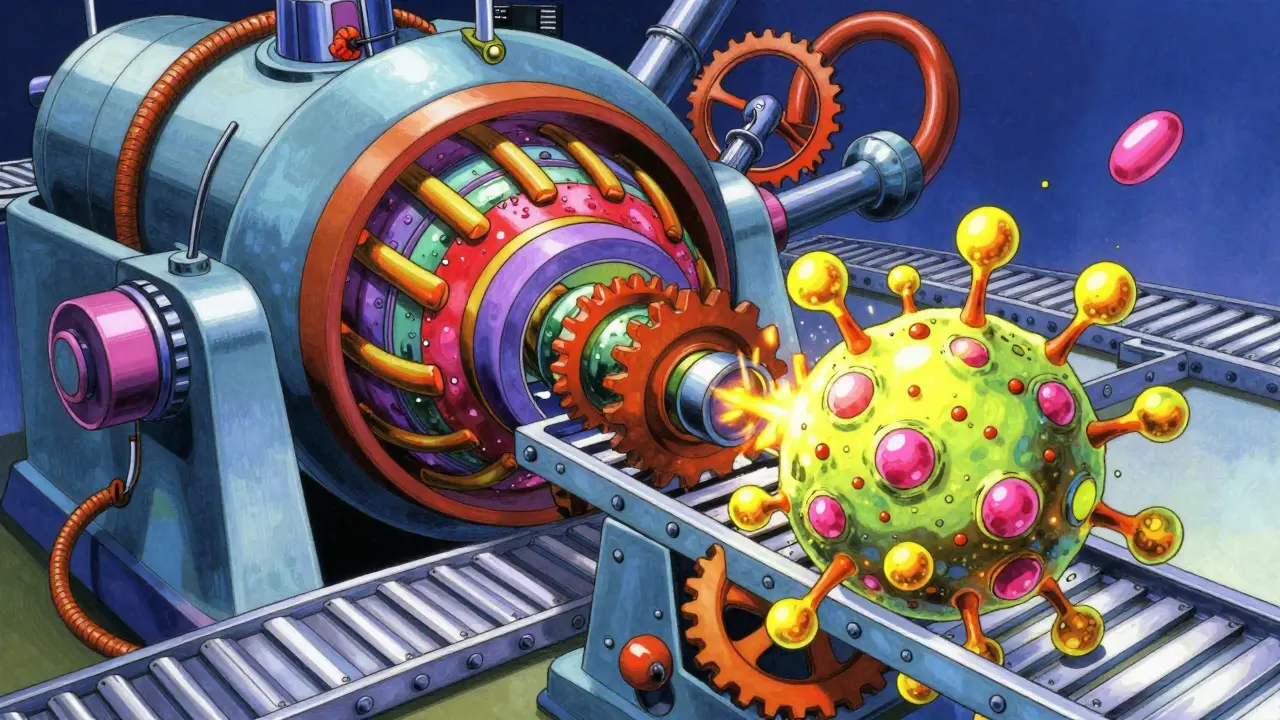
The Blueprint Blockers: Nucleic Acid Inhibitors
To survive and multiply, every bacterium must copy its DNA. If you stop the copying process, the bacteria can't divide. This is the core mechanism of Fluoroquinolones, such as ciprofloxacin. These drugs target enzymes called DNA gyrase and topoisomerase IV. Imagine DNA as a long, coiled telephone cord. As the cell tries to read the cord, it gets tangled. The enzymes usually act like a comb to untangle it. Fluoroquinolones stop this "combing" process, causing the DNA to become a tangled mess that cannot be replicated. While highly effective, these drugs are used more cautiously today due to rare but serious side effects like tendonitis.The Metabolic Saboteurs: Antimetabolites
Some bacteria are like picky eaters-they need specific nutrients to survive. Sulfonamides, often found in combination as Bactrim, target the production of folic acid. Bacteria must synthesize their own folate to make DNA. Sulfonamides mimic a chemical the bacteria use in this process, tricking the cell into absorbing the drug instead of the real nutrient. This starves the bacteria of the materials needed for growth. Unlike penicillins, these are often "bacteriostatic," meaning they don't kill the bacteria instantly but freeze them in place, allowing your own immune system to come in and clean up the mess.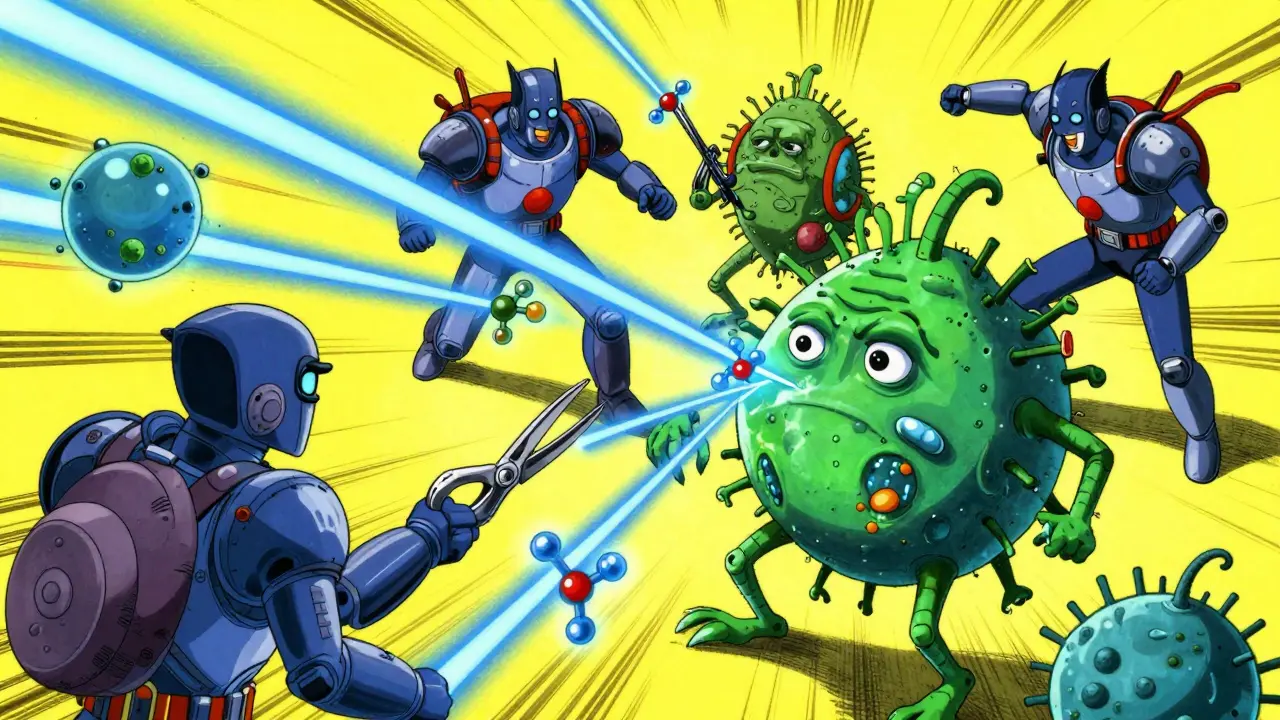
The Danger of Resistance: Why the Right Choice Matters
Bacteria are not passive victims; they evolve. Some have developed enzymes called beta-lactamases that act like tiny scissors, cutting the antibiotic molecule before it can even touch the cell wall. This is why a drug that worked for you five years ago might not work today. When doctors use "broad-spectrum" antibiotics, they are using a shotgun approach to kill many types of bacteria at once. The problem is that this also kills the "good" bacteria in your gut. This can leave a vacuum that is often filled by Clostridioides difficile (C. diff), a dangerous bacterium that causes severe colitis. This is why narrow-spectrum agents-drugs that target only a specific type of bacteria-are preferred whenever possible. Modern medicine is now seeing resistance rates for common bugs like E. coli exceeding 50% in some regions when treated with fluoroquinolones. To fight this, researchers are developing "siderophore" cephalosporins like cefiderocol, which trick bacteria into pulling the drug inside by pretending to be iron, an essential nutrient for the bacteria.Can I take antibiotics for a common cold?
No. Colds, influenza, and most sore throats are caused by viruses. Antibiotics only target biological structures found in bacteria (like cell walls or specific ribosomal subunits). Taking them for a virus won't make you feel better and can actually lead to antibiotic resistance.
What is the difference between bactericidal and bacteriostatic?
Bactericidal antibiotics (like Penicillins) kill the bacteria outright, often by destroying their physical structure. Bacteriostatic antibiotics (like Tetracyclines) stop the bacteria from growing or dividing, essentially putting them in a "coma" so your immune system can eliminate them.
Why do some antibiotics cause stomach upset?
Most antibiotics cannot tell the difference between the harmful bacteria causing your infection and the beneficial bacteria in your microbiome. By killing off the healthy flora in your gut, the balance of your digestive system is disrupted, often leading to diarrhea or nausea.
Why must I finish the entire course of antibiotics?
If you stop early, you may have killed the weakest bacteria, but the strongest ones-those with slight mutations that make them more resistant-might survive. These survivors then multiply, creating a new infection that is much harder to treat with the same drug.
Are there side effects to long-term antibiotic use?
Yes. Long-term use can lead to toxicity in organs (such as nephrotoxicity with aminoglycosides) or severe opportunistic infections like C. diff. Some classes, like tetracyclines, can also cause tooth discoloration in young children or skin sensitivity to sunlight.

Comments (8)
Sue Stoller April 24 2026
This is such a great way to explain things!! 🌟 Learning about how these meds work makes me feel so much more empowered about my health! Keep spreading the knowledge! ✨💖
RAJESH MARAVI April 25 2026
lol typical oversimplfication... like we all just blindly follow the 'finish the course' rule even tho some modern studies say shorter courses work just fine for some things. basically this is just a textbook copy paste and totally ignors the actual nuances of pharamacology!!! 🙄
Caroline Duvoe April 25 2026
already knew all this 🙄 basic bio 101 stuff but whatever 💅
Mike Arrant April 27 2026
You're all just skimming the surface here. If you actually cared about your gut, you'd be talking about the systemic destruction of the microbiome and how most of you are probably walking around with leaky gut because you take a Z-pak every time you sneeze. Most of you don't even know how to eat a real probiotic to fix the mess these drugs leave behind. It's honestly sad how dependent people are on a pill instead of actually fixing their immune systems with a proper ancestral diet and fasting. You can't just 'pop a pill' and expect your body to be a temple. You need to be looking at the holistic picture, not just reading a chart of how a cell wall pops like a balloon. It's child's play compared to actual health optimization. Wake up and stop trusting the pharmacy to be your only source of wellness. Your gut flora is basically a wasteland at this point. Get some fermented foods in you and stop being so naive about how 'targeted' these drugs really are. They're carpet bombs, not snipers.
Anastasios Kyriacou April 28 2026
too long didnt read basically just dont take em for a cold lol
Odicha ude Somtochukwu April 29 2026
It is truly commendable to see such clear educational material presented here!!! The emphasis on the danger of resistance is particularly vital for our global health community... we must all strive for a more informed approach to medicine!!!
Mayur Pankhi Saikia May 1 2026
The sheer lack of depth here is... amusing...!!! One does not simply explain Ciprofloxacin without mentioning the specific molecular kinetics involved... it's almost quaint that this post thinks a 'telephone cord' analogy is sufficeent for an adult audience... truly amateurish!!!
Amy Fredericks May 2 2026
I think it's wonderful that we have different perspectives here. While some find it basic, for many people, this is the first time they're seeing it explained so simply. Let's be supportive of everyone's learning journey!