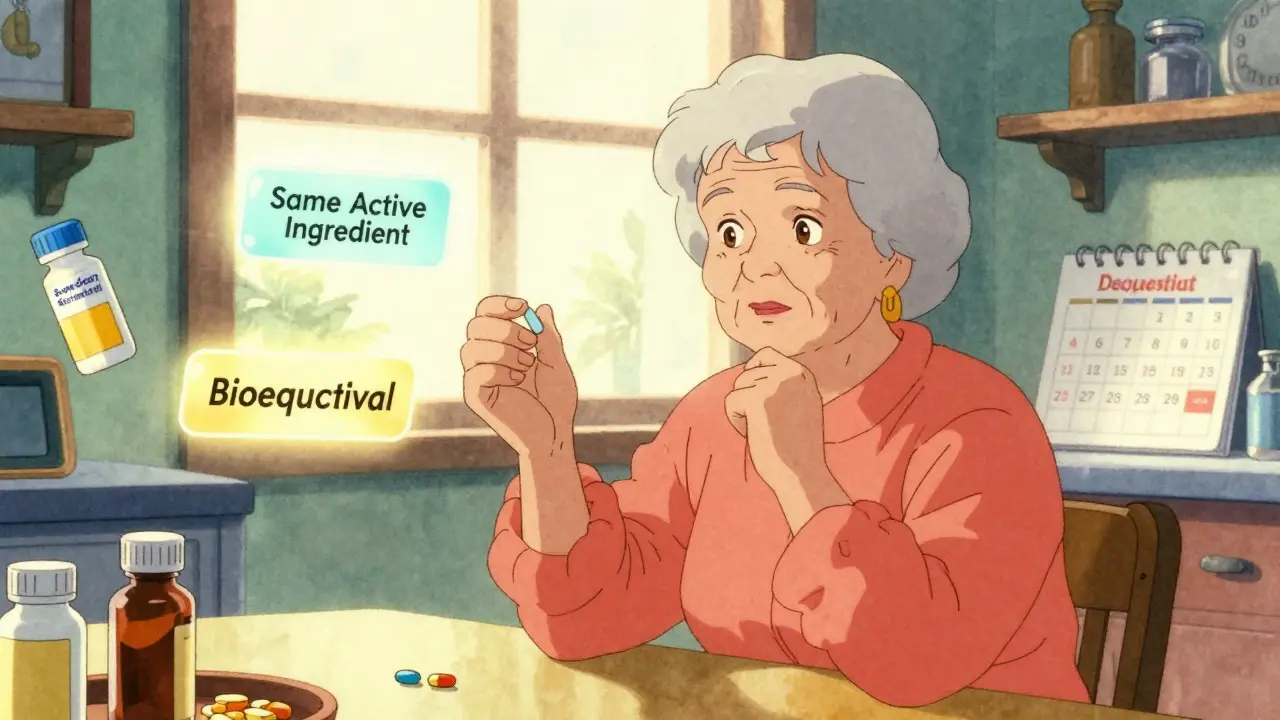
When older adults switch from brand-name drugs to generics, it’s not just a cost-saving move-it’s a health decision. Many seniors save hundreds of dollars a year by switching, but not everyone feels comfortable with the change. Some worry the generic version won’t work as well. Others notice the pill looks different and think something’s wrong. These fears aren’t just in their heads. They’re rooted in real physiological changes, confusing experiences, and gaps in communication. Understanding what’s actually happening-and what’s just perception-is key to making safe, smart choices.
Why Generics Are Safe-But Not Always Simple
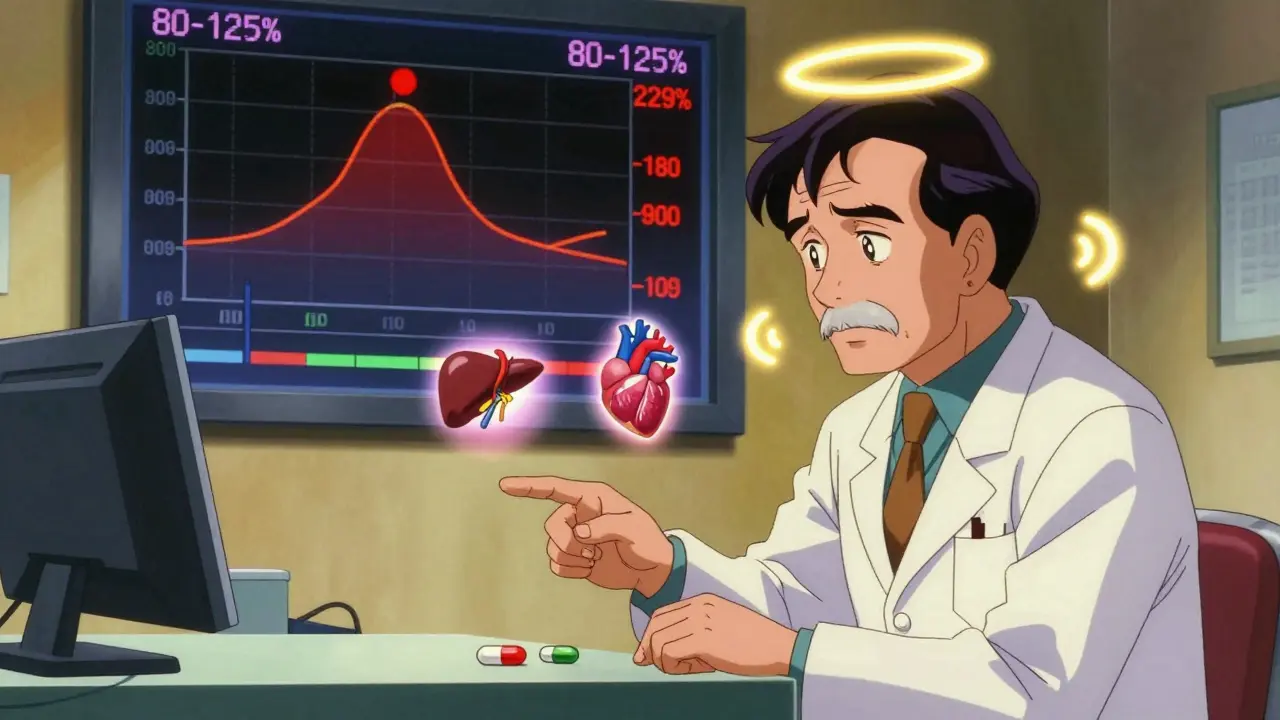
Generic drugs must meet the same strict standards as brand-name drugs. The FDA requires them to have the same active ingredient, strength, dosage form, and route of administration. They also must be bioequivalent, meaning they deliver the same amount of medicine into the bloodstream within a narrow range (80-125% of the brand). That’s not a guess-it’s science. For most people, including many older adults, this works perfectly.
But aging changes how the body handles medicine. Kidneys slow down. The liver processes drugs more slowly. Body fat increases while muscle mass decreases. These shifts mean even tiny differences in how a drug is absorbed or cleared can matter more in someone over 75 than in a 40-year-old. For drugs with a narrow therapeutic index-where the difference between a helpful dose and a harmful one is small-these changes become critical.
Warfarin, used to prevent blood clots, is one of the most studied examples. A 2021 study of nearly 135,000 patients found switching from brand-name warfarin to a generic version led to an 18.3% higher chance of an emergency room visit within 30 days. That’s not because generics are unsafe-it’s because warfarin’s effect depends on precise blood levels. Even small shifts in absorption can push someone into danger. The American Geriatrics Society now recommends against automatic substitution for elderly patients on warfarin unless INR levels are checked closely after the switch.
The Real Risk: Polypharmacy and Confusion
Most elderly patients aren’t taking just one medication. They’re taking five, ten, sometimes more. Nearly half of Medicare beneficiaries take five or more drugs daily. That’s called polypharmacy-and it’s the biggest driver of dangerous side effects in older adults.
When you’re on multiple medications, switching one to a generic can create ripple effects. A new pill shape or color might make someone confused. They might think it’s a different drug. They might skip it. Or worse-they might take it along with another pill they think is the same, leading to accidental overdose.
Over-the-counter drugs make this worse. Four of the top 10 drugs used by seniors-ibuprofen, aspirin, acetaminophen, and diphenhydramine-are available without a prescription. Many come in multi-ingredient formulas. One study found 26% of aspirin use and 45% of acetaminophen use in older adults involved accidental double-dosing because patients didn’t realize they were already taking those ingredients in other pills.
Health literacy plays a huge role. About one in three adults over 65 struggle to understand basic medical instructions. If a pharmacist says, “This is the same medicine, just cheaper,” and the patient sees a different-looking pill, they may not believe it. They may stop taking it. Or worse-they may stop taking their brand-name drug and not refill the generic, thinking it didn’t work.
What Seniors Are Actually Experiencing
Surveys show mixed results. Some seniors report no difference at all. A 2023 AARP analysis found 82% of Medicare beneficiaries on blood pressure meds saw no change when switching to generics-and saved an average of $327 a year.
But others notice something. On Reddit’s r/geriatrics, over 70% of 147 commenters who switched from Synthroid (brand levothyroxine) to generic versions reported symptoms returning: fatigue, weight gain, brain fog. Some even went back to the brand. While no large study has proven generics are less effective for thyroid medication, the consistency of these reports suggests something’s going on-possibly related to absorption differences in older, slower digestive systems.
Another study of 2.2 million older adults found more than half of medication-related problems involved OTC drugs or confusion about what was being taken. For many, the problem wasn’t the generic-it was the lack of clear explanation.
When Generics Can Be Risky
Not all drugs are created equal when it comes to switching. Experts warn against automatic substitution for:
- Warfarin (blood thinner)
- Levothyroxine (thyroid hormone)
- Lithium (mood stabilizer)
- Phenytoin (seizure control)
- Cyclosporine (organ transplant rejection)
These drugs have a narrow therapeutic window. A small change in blood level can cause harm-or make the drug useless. The FDA now requires extra testing for generics of these drugs, but that doesn’t mean every pharmacy switch is monitored. If you’re on one of these, ask your doctor: “Is this switch safe for me? Do I need blood tests after the change?”
What Providers Should Do
Doctors and pharmacists aren’t always the ones pushing the switch. Often, it’s the insurance plan or pharmacy benefit manager. That’s where the risk lies-patients are changed without being consulted.
The best practice? Have a conversation. A 2024 JAMA study showed that when clinical pharmacists spent 15-20 minutes with elderly patients during medication reviews, they reduced inappropriate drug use by 37%. That’s not just about removing bad drugs-it’s about explaining why a generic is okay.
Use visual aids. Show the patient the brand pill and the generic side by side. Say: “This is the same medicine. The only difference is the color and the name on it. Your body will get the same amount of drug.”
Use the “teach-back” method. Ask: “Can you tell me what this pill is for and why you’re taking it now?” If they can’t, you haven’t explained it well enough. Studies show this simple technique improves adherence by 42%.
Computerized systems that flag potential issues help too. When a doctor prescribes a new drug, a smart system can warn: “Patient on 8 medications. Switching to generic levothyroxine. Check TSH in 6 weeks.”
What Seniors Can Do
If you’re an older adult being switched to a generic:
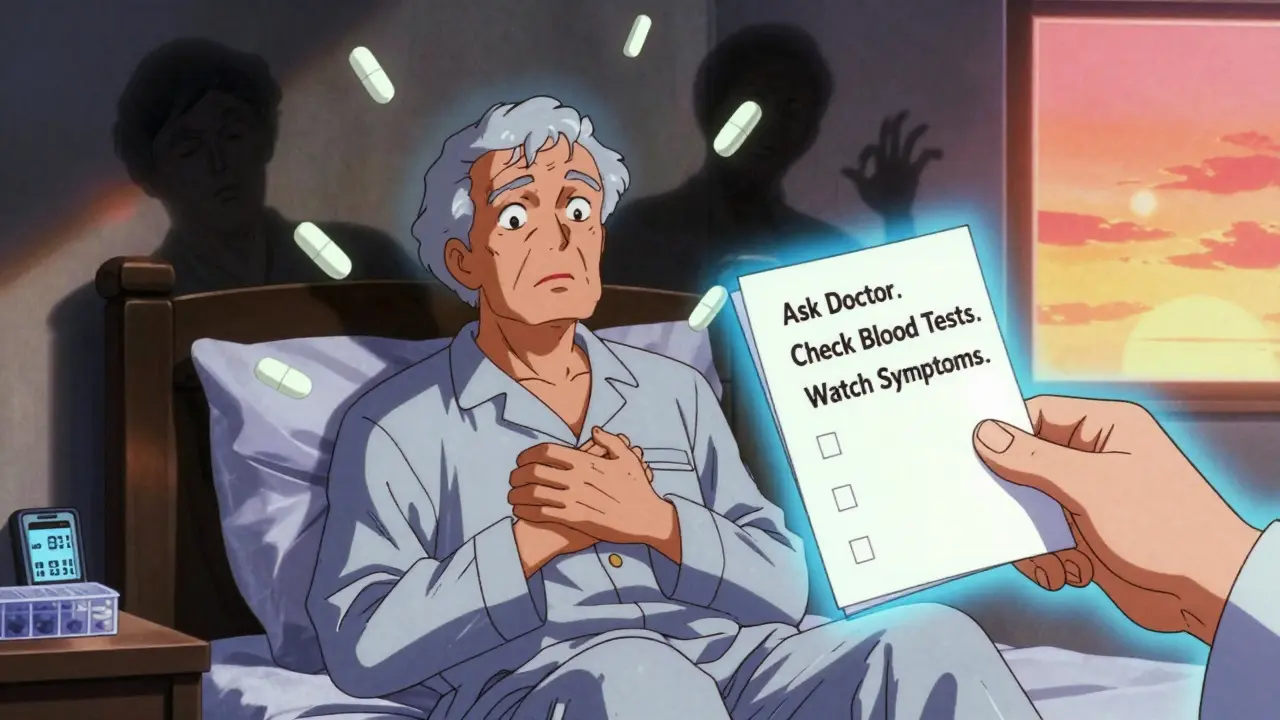
- Ask: “Is this the same as my old pill?” Don’t assume it is.
- Check the pill’s appearance. Take a photo of your old pill and the new one. Compare them.
- Ask your pharmacist: “Will I need blood tests after this switch?”
- Watch for changes in how you feel-energy, mood, balance, appetite-in the first 2-4 weeks.
- If something feels off, don’t just stop taking it. Call your doctor.
- Keep a list of all your medications-prescription and over-the-counter-and bring it to every appointment.
Remember: Saving money matters. But feeling well matters more. If you’re not sure, ask for a trial. Some pharmacies let you keep your brand-name drug for a few weeks while you adjust.
The Bigger Picture
Generics are used in 89% of all Medicare prescriptions. That’s up from 72% in 2010. The system is designed to save money-and it works. The average Medicare beneficiary saves $602 a year by using generics.
But savings mean nothing if people stop taking their meds because they’re scared or confused. The goal isn’t just to switch more people to generics-it’s to switch them safely. That means better education, better communication, and better follow-up.
Future guidelines, like the updated American Geriatrics Society Geriatric ED Guidelines (December 2024), will push for pharmacist-led medication reviews in emergency rooms and clinics. New NIH studies are tracking older adults on generics for up to two years to see if long-term outcomes differ.
For now, the message is clear: Generics are safe for most. But for older adults, especially those on multiple drugs or narrow-therapeutic-index medications, a one-size-fits-all switch isn’t enough. Personalized care-not automatic substitution-is what keeps seniors healthy.
Are generic drugs really as good as brand-name drugs for elderly patients?
Yes, for most medications, generics are just as effective and safe. The FDA requires them to have the same active ingredient and deliver the same amount of medicine into the bloodstream as the brand-name version. But for certain drugs-like warfarin, levothyroxine, and lithium-small differences in how the body absorbs them can matter more in older adults. That’s why close monitoring is needed after switching.
Why do some seniors feel worse after switching to a generic?
It’s often not the drug itself-it’s the change. Older adults may notice a different pill color, shape, or size and think it’s a different medicine. Some experience real changes in how their body handles the drug due to aging kidneys or liver. Others stop taking it because they’re confused or scared. In the case of thyroid medication, many report symptoms returning after switching from Synthroid to generic, though studies haven’t proven the generic is less effective. The issue may be absorption differences in older digestive systems.
Which medications should never be switched to generics without doctor approval?
Drugs with a narrow therapeutic index require extra caution: warfarin (blood thinner), levothyroxine (thyroid hormone), lithium (mood stabilizer), phenytoin (seizure control), and cyclosporine (transplant drug). Even small changes in blood levels can cause serious side effects. Always talk to your doctor before switching these, and ask if you need blood tests after the change.
Can over-the-counter drugs cause problems when switching to generics?
Yes-and often more than prescription drugs. Many seniors take multiple OTC meds like ibuprofen, aspirin, or acetaminophen without realizing they’re already in their prescription pills. This leads to accidental overdose. One study found 45% of acetaminophen use in seniors was unsafe because of hidden ingredients. Always check labels and tell your pharmacist everything you take.
How can I make sure I’m taking my meds safely after a switch?
Take these steps: 1) Ask your pharmacist to show you the old and new pills side by side. 2) Write down what each pill is for. 3) Watch for new symptoms in the first few weeks. 4) Use a pill organizer labeled clearly. 5) Bring your full medication list to every doctor visit. 6) If something feels off, call your doctor before stopping the medicine.

Comments (9)
Cameron Hoover December 22 2025
Look, I get why people are nervous-my grandma switched to generic levothyroxine and started nodding off at the dinner table. But here’s the thing: she didn’t tell anyone until her TSH was through the roof. A little communication goes a long way. Talk to your pharmacist. Take a picture of the pill. Write it down. It’s not magic, it’s medicine.
And yeah, saving $300 a year? That’s a big deal when you’re on a fixed income. Don’t let fear cost you more than the drug itself.
Stacey Smith December 24 2025
Generics are fine. The FDA doesn’t lie. If you’re having issues, it’s because you’re not following directions or you’re on too many pills. Stop blaming the drug and start taking responsibility.
Adrian Thompson December 26 2025
Let me guess-Big Pharma paid the FDA to say generics are ‘bioequivalent.’ Meanwhile, your grandma’s heart is racing because the generic has a different filler that’s laced with microchips to track her. They don’t want you to know the real reason they push generics: so your meds can be recalled without them having to pay you back.
And don’t get me started on how the same pill from different pharmacies looks different. That’s not manufacturing-it’s control. They want you confused so you won’t notice when they swap out the active ingredient for sugar and lies.
Southern NH Pagan Pride December 26 2025
the fda standards are a joke. i’ve seen generics that look like they were made in a basement with a 3d printer and some old pill molds. and the fillers? who knows what’s in them. i read a study once-i think it was on a .gov site-that said some generics have trace amounts of heavy metals because the manufacturing plants are outsourced to countries that don’t care about purity. i’m not saying it’s all of them, but i’m not taking my thyroid med from a factory in bangladesh either.
my aunt took generic synthroid and started hallucinating. they blamed it on ‘aging’ but i know better.
they’re all watching. they want you dependent on cheap drugs so you won’t question the system.
Jackie Be December 26 2025
OMG YES I JUST SWITCHED MY DAD TO GENERIC WARFARIN AND HE STARTED FEELING LIKE A ZOMBIE FOR TWO WEEKS BUT THEN WE CALLED THE PHARMACIST AND THEY SAID TO CHECK HIS INR AND IT WAS OFF BY 0.5 AND THEY ADJUSTED IT AND NOW HE’S FINE
SO DON’T PANIC BUT ALSO DON’T IGNORE IT
JUST TALK TO SOMEONE AND KEEP TRACK
AND BUY A PILL ORGANIZER LIKE YESTERDAY
John Hay December 26 2025
My mom’s been on generics for 8 years. No issues. But I get it-when you’re 78 and taking 12 pills, every little change feels like a threat. The real problem isn’t the generic. It’s the system that swaps them without warning. No one sits down with you. No one shows you the pill. No one asks if you’re okay.
It’s not about the drug. It’s about respect.
Doctors and pharmacists need to stop treating seniors like vending machines. We’re not just a script to refill. We’re people.
Ben Warren December 28 2025
It is an incontrovertible fact that the pharmacokinetic variability inherent in generic formulations-particularly those exhibiting minor differences in dissolution profiles-can precipitate clinically significant deviations in serum concentration-time curves among geriatric populations with diminished hepatic and renal clearance. The FDA’s 80–125% bioequivalence window, while statistically acceptable for population-level outcomes, is manifestly inadequate for individualized pharmacotherapy in patients with polypharmacy and multimorbidity.
Furthermore, the absence of mandatory post-switch therapeutic drug monitoring protocols for narrow-therapeutic-index agents constitutes a systemic failure of clinical governance. The current paradigm prioritizes cost-efficiency over patient safety, and this is not merely suboptimal-it is ethically indefensible.
Until mandatory pharmacist-led medication reconciliation with pre- and post-switch INR/TSH monitoring is codified into federal guidelines, the widespread substitution of generics in elderly populations remains an uncontrolled experiment with potentially lethal consequences.
Hannah Taylor December 30 2025
my cousin took generic lithium and started crying for no reason and then her hair fell out. the dr said it was stress. but i looked up the ingredients and one of them is the same as in some chinese laundry detergent. i’m not joking. the fillers are not regulated. they could be putting anything in there. i’m not letting anyone i love take a generic unless it’s the exact same brand made by the same company. and even then… i’m suspicious.
mukesh matav December 31 2025
My uncle in India switched to generic statins. No problems. But he’s also not on 10 other pills. Maybe it’s not the generic. Maybe it’s the pile of meds. Keep it simple. Fewer drugs. Better sleep. More walks. That helps more than any pill.