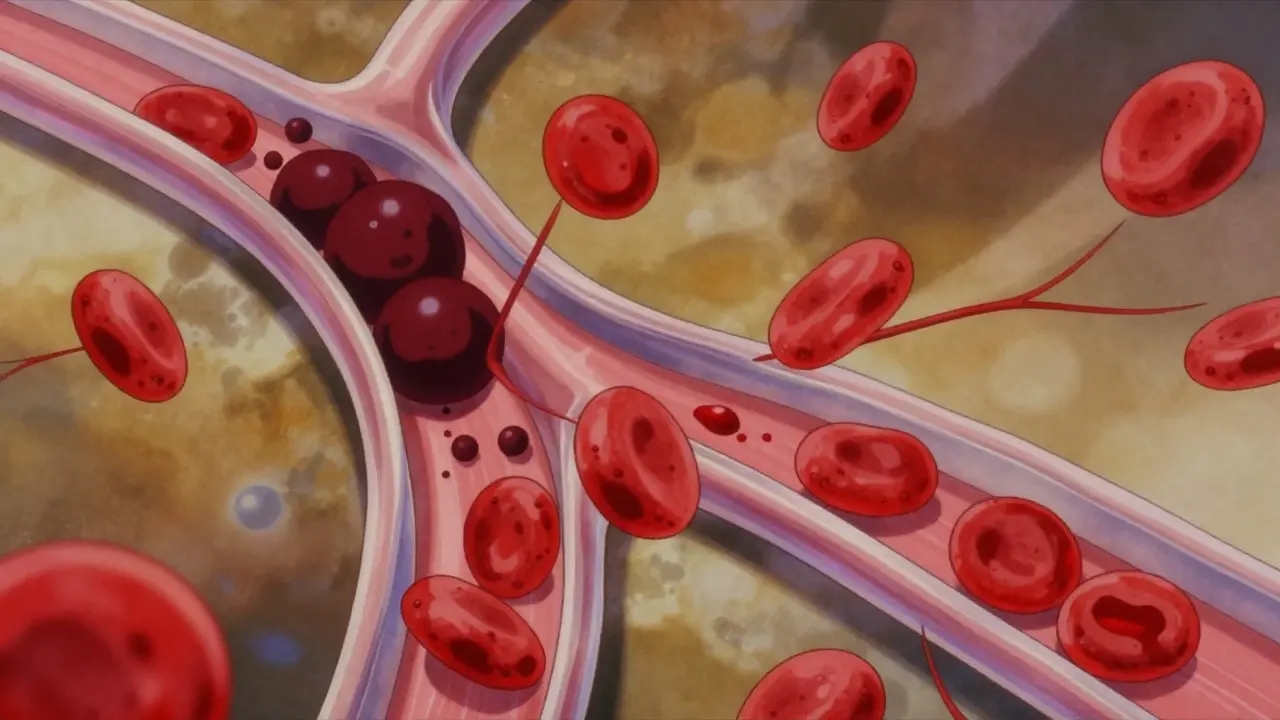
Why Blood Clots Demand Careful Management
Living with a diagnosis involving blood clots often feels like walking a tightrope. On one side lies the danger of a new clot blocking vital arteries; on the other, the risk of dangerous bleeding from the medication used to prevent them. The core goal here is balance. When doctors talk about managing conditions like atrial fibrillation or deep vein thrombosis, they are looking at a delicate equilibrium where your blood flows smoothly without stopping completely.
Anticoagulation therapy refers to the medical treatment designed to reduce your blood's ability to clot, lowering stroke and embolism risks. Also known as blood thinners, these drugs are essential for millions of people globally. They interfere with the coagulation cascade-the chain reaction your body uses to stop bleeding-preventing it from going haywire inside your vessels.
This guide cuts through the complexity of warfarin versus newer drugs. You need to know what these medicines actually do, why monitoring matters, and how to stay safe when taking them long-term.
The Landscape of Clotting Disorders
Before we dive into the pills, understanding the problem helps clarify why specific treatments exist. Most patients encounter these meds due to two main conditions: Venous Thromboembolism (VTE) or Atrial Fibrillation (AFib).
Venous Thromboembolism (VTE) encompasses both deep vein thrombosis (DVT) and pulmonary embolism (PE). These occur when clots form in the veins and travel to the lungs. In contrast, AFib causes irregular heartbeats that let blood pool in the heart chambers, creating clots that can travel to the brain and cause strokes. Recent data suggests approximately 2.7 million Americans live with AFib alone, making the management of these risks critical for public health.
Warfarin: The Veteran of Clot Prevention
If you've been around medicine for long, you know Warfarin by reputation. Introduced in the 1950s, it set the standard for decades. While technology has advanced, this drug remains a cornerstone for specific scenarios.
Warfarin is a vitamin K antagonist. It works by depleting Vitamin K, which your liver needs to produce clotting factors. This makes it incredibly effective, but also unpredictable. Because diet affects Vitamin K levels, eating large amounts of leafy greens can alter how well the drug works. Consequently, patients must rely heavily on monitoring.
Monitoring is done via the INR test. The International Normalized Ratio standardizes results across labs to tell doctors how long it takes your blood to clot compared to a healthy person.
- Target Range: For most conditions, an INR between 2.0 and 3.0 is ideal.
- Mechanical Valves: Patients with mechanical heart valves often need a higher target of 2.5 to 3.5.
- Bleeding Threshold: An INR over 4.0 significantly increases major bleeding risk.
You typically need weekly checks until stable, then every few weeks. This constant interaction with healthcare providers defines the "warfarin life" for many patients.

Direct Oral Anticoagulants (DOACs): The Modern Standard
In recent years, the market shifted dramatically. Newer drugs entered the scene offering fixed dosing without daily lab work. These are collectively known as Direct Oral Anticoagulants, or DOACs.
These agents bypass the Vitamin K pathway entirely. Instead, they target specific proteins in the clotting cascade called Factors.
| Medication Name | Brand Names | Type | Dosage Frequency |
|---|---|---|---|
| Apixaban | Eliquis | Factor Xa Inhibitor | Twice Daily |
| Rivaroxaban | Xarelto | Factor Xa Inhibitor | Once Daily |
| Dabigatran | Pradaxa | Direct Thrombin Inhibitor | Twice Daily |
For most non-valvular AFib patients, current guidelines recommend DOACs over warfarin. They are preferred because they offer predictable pharmacokinetics. You take the pill, and it does the job without needing a finger prick to verify potency. This convenience leads to better adherence, which directly translates to fewer strokes.
Safety First: Risks, Reversals, and Renal Function
The flip side of preventing clots is the increased risk of bleeding. Bruising is common, but spontaneous bleeding in the gut or brain is the serious concern.
One significant difference between old and new drugs involves your kidneys. DOACs are cleared renally (through the kidneys), meaning their effectiveness depends on kidney health. Before starting these, your doctor checks your creatinine clearance.
- Severe kidney impairment usually contraindicates DOAC use.
- Routine monitoring every 6 to 12 months is necessary to track renal function changes.
What happens if a patient bleeds uncontrollably? This is where the safety net differs significantly. With warfarin, you can give Vitamin K or Fresh Frozen Plasma to reverse effects quickly. It is relatively cheap and accessible. With DOACs, reversal is harder.
Idarucizumab is the specific antidote for dabigatran. It was approved to reverse dabigatran effects rapidly, though vials cost thousands of dollars per dose, limiting emergency hospital budget availability. Andexanet alfa serves as the reversal agent for Factor Xa inhibitors (apixaban/rivaroxaban). Despite being FDA-approved, the high cost (approx. $18,000 per dose) creates barriers in some healthcare systems. This highlights the importance of choosing the right drug for your lifestyle and local access.
Navigating Procedures and Lifestyle Changes
Life doesn't stop because you're on blood thinners, but activities change. You need protocols for dental work, surgeries, or even intense contact sports.
Unlike warfarin, which requires stopping five days before a procedure due to its half-life, DOACs act faster and leave the system faster. Usually, holding medication for 24 to 48 hours suffices depending on the procedure's bleeding risk. This "fast on, fast off" characteristic is a major advantage for surgical planning.
However, never adjust your regimen without medical supervision. Missing doses increases clot risk immediately, while doubling up raises bleeding risk disproportionately. If you forget a dose of a twice-daily drug, take it as soon as you remember unless it's close to the next scheduled time. Never double the dose.
Frequently Asked Questions
Can I eat vitamin-rich foods while on blood thinners?
If you are on Warfarin, consistency is key. You don't need to avoid broccoli or spinach, but you shouldn't suddenly change your intake drastically. With DOACs, dietary restrictions regarding Vitamin K are generally unnecessary, making meal planning easier.
Why is kidney function monitored with DOACs?
Most DOACs rely on kidney filtration to leave the body. If kidney function drops, the drug builds up to toxic levels, increasing bleeding risk. Regular blood tests measure creatinine to ensure safe clearance rates.
Are DOACs always cheaper than warfarin?
Not necessarily. While generic warfarin is inexpensive, the total cost includes frequent INR testing visits. DOACs remove monitoring fees but have higher pharmacy copays. Insurance plans often determine which is cheaper for the individual.
How long do I stay on anticoagulants?
Treatment duration varies. Unprovoked blood clots or permanent atrial fibrillation often require lifelong therapy. Provoked events (like post-surgery) may only need three to six months. Your doctor calculates risk scores to decide.
What signs indicate a bleeding emergency?
Watch for unusual symptoms like vomiting blood, black tarry stools, severe headaches, or bruises appearing without injury. If these occur, seek immediate medical attention rather than waiting for your next appointment.

Comments (13)
Rod Farren April 2 2026
The pharmacokinetic profile of dabigatran is significantly different compared to the older vitamin K antagonists due to its direct thrombin inhibition mechanism. Patients often do not realize that the half-life determines the washout period before surgical interventions are performed safely. Renal clearance plays a pivotal role in the accumulation risk especially for apixaban and rivaroxaban in elderly populations. We must consider that Factor Xa inhibitors bypass the coagulation cascade upstream which allows for more predictable bleeding outcomes statistically. Monitoring strategies shift entirely from INR tracking to periodic assessment of glomerular filtration rate instead. Drug interactions become less frequent with DOACs but remain possible with strong P-glycoprotein substrates. The ARISTOTLE trial data supports lower major bleeding events relative to warfarin in atrial fibrillation contexts. Adherence rates improve when patients are relieved of frequent laboratory visits which reduces the administrative burden on providers. Reversal agents like idarucizumab offer specificity that plasma products lacked during acute hemorrhage events. Understanding molecular targeting helps explain why diet modifications are less critical than they were decades ago. Clinicians need to verify renal function prior to initiation to prevent toxic buildup in compromised organs. This approach balances stroke prevention against the inherent risks of spontaneous intracranial bleeding complications effectively.
Current guidelines reflect these shifts toward oral agents for non-valvular indications primarily.
Molly O'Donnell April 2 2026
The reversal agents listed here are absolutely critical but often overlooked in standard patient counseling sessions.
Eleanor Black April 2 2026
It is truly heartbreaking to see how many patients struggle with the daily burden of anticoagulation therapy. My own mother had to deal with warfarin for nearly two decades before switching to newer agents. She spent so much time tracking her food intake that meals became less about nutrition and more about compliance. That kind of mental load is something we rarely account for when discussing clinical efficacy. While the science behind INR targets is fascinating, the human element is equally important in treatment plans. We cannot ignore the anxiety that comes with knowing your blood is chemically altered every single day. Even small decisions like eating spinach require a level of vigilance that feels exhausting. Doctors often rush through this explanation because they prioritize the protocol over the person sitting in front of them. It creates a dynamic where the patient feels alone in managing their condition without enough emotional support. Kidney function checks add another layer of worry since declining renal health directly impacts medication safety. Seeing a sudden drop in creatinine clearance can feel like waiting for a bomb to go off rather than a routine test. We need to remember that the goal is quality of life alongside physical survival rates in these discussions. Accessibility issues regarding reversal agents further complicate the picture for those living in underserved areas. Financial toxicity is a real diagnosis that deserves the same attention as the clotting disorders themselves in modern practice. Ultimately, we must advocate for systems that support the psychological resilience required for lifelong management.
Rocky Pabillore April 4 2026
Your anecdote about your mother lacks statistical significance in the broader scope of clinical literature. Many individuals simply lack the discipline required to maintain consistent dietary habits on warfarin. The complexity you describe is often a result of poor instruction rather than the drug itself. Proper education minimizes these unnecessary lifestyle burdens for the compliant individual. We should not romanticize the struggle when better adherence protocols exist.
Sophisticated readers understand that variability is a function of execution.
Cara Duncan April 4 2026
I really appreciate how detailed this guide is for people starting out! ❤️ It makes me feel less scared about taking these meds now. 😊 The tips on dental work are super important too!
Russel Sarong April 5 2026
This enthusiasm is wonderful!! We must celebrate progress in our understanding of hemostasis! The emotional relief described here is valid!! 😲 Safety protocols matter immensely!!
Callie Bartley April 7 2026
Honestly the cost breakdown doesn't seem to favor us patients despite what the insurance claims say. I've seen friends get stuck paying full price when emergencies strike unexpectedly. It feels like the system is designed to keep people trapped in expensive cycles of testing. Nobody talks about the deductibles for emergency reversals honestly.
Owen Barnes April 8 2026
I agree teh costs r hgh but saftey is mor imptant. Warfin is teh old standard but DOACs r better in some cases. Just make shure u take ur pillz on time. Doctor said moniting kidneys is key for thse new drugs.
Arun Kumar April 9 2026
In my region access to reversal agents is quite limited compared to US healthcare standards. Many patients rely on general supportive care due to budget constraints on specialized drugs. It is vital to recognize that global accessibility varies significantly despite the availability of data. Cost effectiveness must be weighed against local infrastructure capabilities carefully. Education helps bridge gaps where technology cannot reach yet.
We should always encourage shared decision making between clinicians and communities.
Christopher Beeson April 11 2026
Life becomes a calculation of probabilities where each breath carries weight we cannot measure. The choice between bleeding and clotting defines existence for millions silently. We dance on the edge of physiology without realizing the stakes involved until disaster strikes. Medicine attempts to tame chaos with molecules yet nature remains unpredictable fundamentally. Existential dread accompanies every prescription refill quietly.
James DeZego April 12 2026
That is a heavy thought but we must stay hopeful and informed! 😄 Knowledge really is power in this situation. 🛡️ Taking charge of your health changes the outcome. 💪 Stay safe everyone!
Jenny Gardner April 13 2026
This guide! Is! Amazing!! Thank you!! Please! Share! It! Everywhere!! Accuracy! Matters!! Precision! Counts!!
Cullen Zelenka April 14 2026
I think this summary is great for new diagnoses. Staying positive helps with the treatment process. Keep checking in with your doctors regularly.