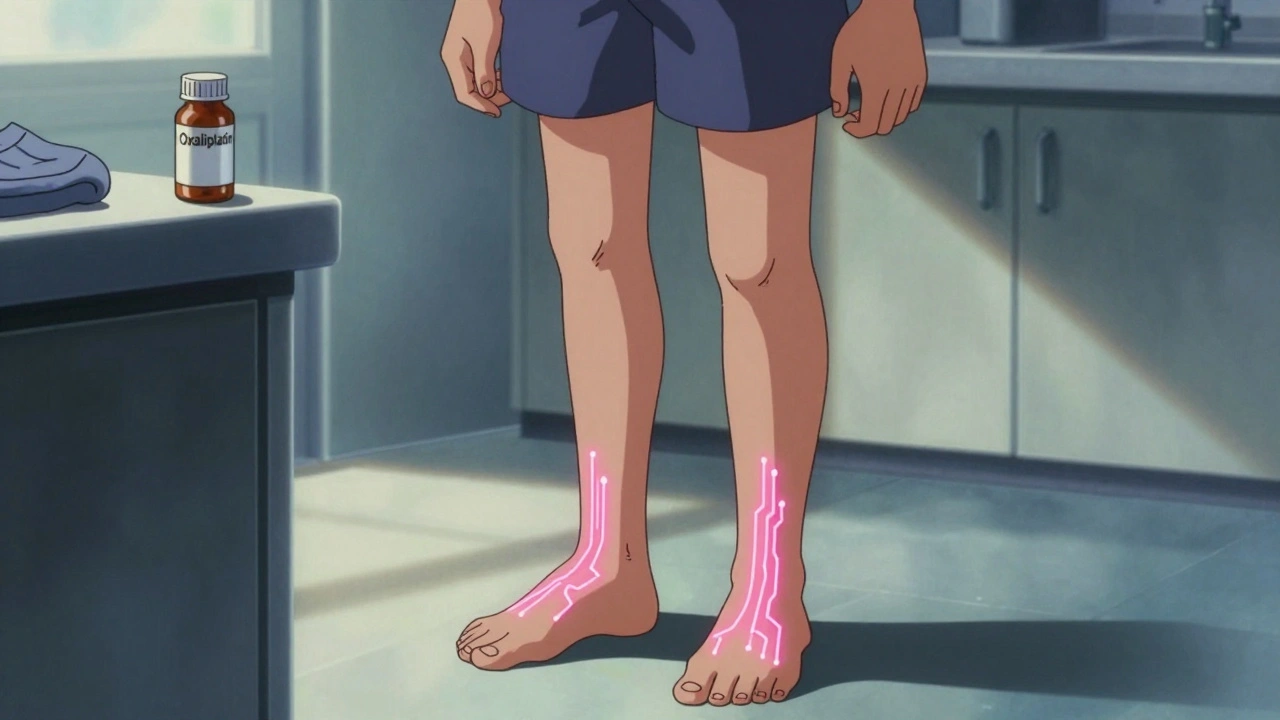
Many people start a new medication expecting relief - less pain, better control of a chronic condition, or a chance at recovery. But for some, the first sign something’s wrong isn’t a headache or nausea. It’s a quiet, creeping sensation: tingling in the toes, or numbness in the fingertips. These aren’t just annoyances. They’re early warning signs of drug-induced peripheral neuropathy - a condition that can quietly damage nerves before you even realize it’s happening.
What Does Medication-Induced Neuropathy Feel Like?
When a drug harms your peripheral nerves, the symptoms usually start in your feet and hands. That’s because the longest nerves in your body - the ones stretching from your spine to your toes and fingers - are the most vulnerable. You might feel like you’re walking on pebbles, or that your socks are bunched up when they’re not. Your fingers could feel swollen or clumsy, even though they look fine. These sensations are called paresthesia - tingling, buzzing, or pins-and-needles. Numbness means your nerves aren’t sending signals properly. You might not feel a light touch, or you might lose the sense of where your foot is in space.
This isn’t random. It follows a clear pattern: a glove and stocking distribution. That means the numbness or tingling doesn’t stop at your ankle - it creeps up your leg. Or it spreads from your fingertips to your wrists. That’s a hallmark of nerve damage caused by medications, not something like a pinched nerve or carpal tunnel. The key difference? It’s symmetric. Both feet. Both hands. Same side. Same timing.
Which Medications Cause This?
Not every drug causes this. But some are well-known culprits. Chemotherapy drugs are the biggest offenders. Oxaliplatin, used for colorectal cancer, triggers tingling in 85-95% of patients during treatment. Paclitaxel, common in breast cancer, affects 60-70%. These aren’t rare side effects - they’re expected. But that doesn’t mean they’re harmless.
Antibiotics like isoniazid (for tuberculosis) cause neuropathy in 10-20% of people at standard doses - and up to 50% if taken longer or at higher levels. Metronidazole (Flagyl), often prescribed for infections, can do the same after weeks or months of use. Even common drugs like amiodarone (for heart rhythm issues) and certain antiretrovirals for HIV (like stavudine) carry this risk.
Statins? The evidence is weak. Some people report tingling after starting cholesterol meds, but large studies suggest it’s more likely coincidence than cause. Still, if you notice new numbness after starting any new drug - even if it’s been on the market for years - it’s worth mentioning.
Why Does This Happen?
Drugs don’t attack nerves randomly. Each one has its own way of causing damage. Cisplatin and bortezomib poison the cell bodies of nerves in the dorsal root ganglia. Paclitaxel and vinca alkaloids disrupt the internal transport system of nerves - like blocking highways inside the nerve fiber. Oxaliplatin messes with sodium channels, making nerves fire erratically. Amiodarone and phenytoin can strip away the protective myelin sheath around nerves.
These mechanisms matter because they affect how fast the damage happens and whether it can be reversed. Oxaliplatin’s effects can get worse for months after you stop taking it. Paclitaxel tends to stabilize after you quit, then slowly improve. Isoniazid-induced neuropathy often responds to vitamin B6 (pyridoxine), which is why doctors prescribe it alongside the drug.

How Common Is It?
About 4% of all peripheral neuropathy cases come from medications. That sounds small - until you look at cancer patients. Among those getting chemotherapy, up to 60% develop some level of nerve damage. In the U.S., roughly 800,000 people have drug-induced neuropathy right now. That’s not a niche issue. It’s a widespread, under-recognized problem.
And it’s getting worse. Chemotherapy use is expected to rise 45% by 2030. If we don’t get better at spotting early signs, we’re looking at a surge in permanent nerve damage.
When Should You Worry?
Not every tingle is dangerous. But if you’re on a high-risk drug and you notice:
- Tingling or numbness starting in your feet or hands
- Symptoms that are symmetrical (both sides)
- Symptoms that get worse over days or weeks
- Difficulty buttoning shirts, holding utensils, or walking without stumbling
That’s not normal. That’s a signal.
Studies show that 78% of drug-induced neuropathy cases begin with these mild sensory symptoms. But 52% of patients wait three months or more before telling their doctor. Why? Because they’re told, “It’s just a side effect.” Or they think, “It’s not that bad.” Or they’re afraid to seem weak.
Here’s the truth: Early detection is the only thing that can stop this from becoming permanent.
What Happens If You Ignore It?
At first, it’s just tingling. Then comes balance problems. Then muscle weakness. Then loss of sensation so severe you don’t feel a blister forming on your foot - until it turns into an ulcer. That’s not theoretical. One study found that daily foot checks reduce ulcer risk by 45% in people with nerve damage.
Some people recover fully if the drug is stopped early. On PatientsLikeMe, 73% of users who stopped their medication at the first sign of symptoms reported near-complete recovery within six months. But if you wait until your toes are completely numb, or your hands are too weak to grip a cup, the damage may be irreversible.
Doctors don’t always catch it. Only 35% of oncology clinics use formal screening tools for neuropathy, even though guidelines from the American Society of Clinical Oncology have recommended them since 2021. That means you’re often your own best advocate.
What Can You Do?
Step one: Tell your doctor immediately if you notice new tingling or numbness. Don’t wait. Don’t downplay it. Say: “I think this might be from my medication.”
Step two: Ask about monitoring. Is there a tool like the Total Neuropathy Score or the EORTC QLQ-CIPN20 questionnaire being used? These aren’t fancy gadgets - they’re simple checklists that help track changes over time.
Step three: Ask about alternatives. Can the dose be lowered? Can the drug be switched? Can you take a protective agent like vitamin B6 or acetyl-L-carnitine? A 2023 trial showed acetyl-L-carnitine reduced paclitaxel-induced neuropathy severity by 40%.
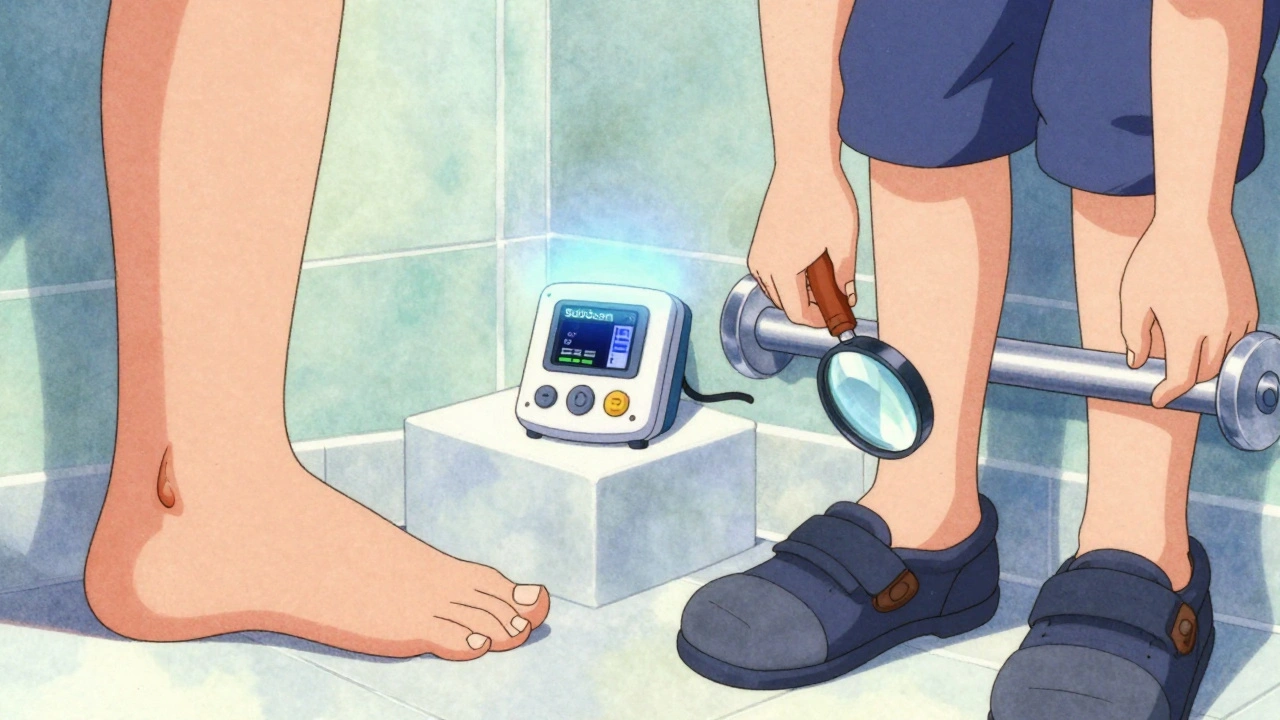
Step four: Protect yourself. If your feet are numb, check them daily for cuts or blisters. Wear supportive shoes. Remove tripping hazards from your home. Install grab bars in the bathroom. These aren’t just safety tips - they’re medical necessities.
What’s New in Detection?
There’s hope. In 2021, the FDA cleared the SudoScan device - a simple footpad that measures sweat response to detect early small-fiber nerve damage. It’s non-invasive, takes 3 minutes, and catches problems before you even feel them. Some academic hospitals are already using it.
Future tools may include genetic testing. Researchers are finding that certain gene variants make people far more likely to develop neuropathy from specific drugs. Within five years, doctors may run a quick DNA test before prescribing chemo - not to scare you, but to choose the safest option for your body.
Final Thought: Your Nerves Can’t Wait
Medications save lives. But they can also quietly harm. Tingling and numbness aren’t something you should “tough out.” They’re your body’s way of saying: Something’s wrong here.
If you’re on a drug known to cause nerve damage - and you feel anything unusual in your hands or feet - don’t wait for your next appointment. Call your doctor today. Ask if it’s the medication. Ask if it’s reversible. Ask what you can do next.
The sooner you act, the better your chances of keeping your nerves - and your independence - intact.
Can medication-induced tingling go away on its own?
Yes - but only if the medication causing it is stopped or adjusted early. In many cases, symptoms improve within weeks to months after discontinuing the drug. However, if nerve damage progresses too far, the changes can become permanent. Early intervention is key.
Is tingling from statins real, or just a myth?
The link between statins and neuropathy is weak and controversial. Large studies haven’t found strong evidence that statins directly cause nerve damage. Most reports of tingling are likely coincidental or due to other factors like age, diabetes, or vitamin deficiencies. Still, if symptoms appear after starting a statin, it’s worth discussing with your doctor.
Can I keep taking my chemo if I have tingling?
Sometimes. Many cancer patients can continue treatment with dose adjustments or protective agents like vitamin B6 or acetyl-L-carnitine. Studies show 60-70% of patients can safely continue chemotherapy with modified dosing. The goal isn’t always to stop - it’s to manage the risk while treating the cancer.
How long does it take for symptoms to appear after starting a drug?
It varies. For chemotherapy drugs like oxaliplatin, tingling can start after just one or two doses. For antibiotics like metronidazole or isoniazid, symptoms usually appear after 1-3 months of use. Some drugs, like amiodarone, may take years. The longer you’re on the drug, the higher the risk.
Are there tests to confirm drug-induced neuropathy?
Yes. Nerve conduction studies and electromyography (EMG) can detect early changes, especially reduced amplitude in the sural nerve. Newer tools like SudoScan measure sweat response to detect small-fiber damage before symptoms become obvious. A thorough medical history and symptom timeline are often the most important diagnostic tools.
Should I stop my medication if I feel tingling?
Never stop a prescribed medication on your own. Contact your doctor immediately. They may recommend reducing the dose, switching drugs, adding a protective supplement, or monitoring more closely. Stopping abruptly can be dangerous - especially with chemotherapy or heart medications.

Comments (10)
Grant Hurley December 2 2025
Been on metronidazole for 6 weeks and my fingers feel like they’re wrapped in cling film. Didn’t think much of it until I dropped my coffee mug. Now I’m googling ‘why do my hands feel drunk’ and boom - this post. Thanks for the clarity.
Lucinda Bresnehan December 4 2025
As a nurse who’s seen this happen to cancer patients, I can’t stress this enough: if you feel tingling in your toes after starting chemo, SAY SOMETHING. I had a patient ignore it for 4 months. By the time she came back, she couldn’t walk without a cane. Early = reversible. Late = permanent. Please don’t be her.
Declan O Reilly December 4 2025
So we’re saying the body’s whispering ‘hey bro, this drug is glitching your wiring’ and we’re all just shrugging like it’s a bad wifi signal? 😅 I mean, if your phone vibrated like that you’d reboot it. Why do we treat our nerves like they’re on a 2008 Android?
Shannon Gabrielle December 5 2025
Oh wow another ‘your meds are slowly turning you into a ghost’ post. Next up: ‘I think my antidepressant is turning my legs into spaghetti’ 🤡
ANN JACOBS December 7 2025
Thank you for this incredibly thorough and compassionate breakdown. As someone who has watched a loved one endure the silent erosion of nerve function due to chemotherapy, I can attest that the emotional toll is just as devastating as the physical. The fact that medical professionals often overlook these early signs speaks to a systemic failure in patient-centered care. We must advocate not just for survival, but for quality of life - even if it means pausing treatment to preserve sensation. Your call to action is not just timely - it is sacred.
patrick sui December 7 2025
From a neuropharmacology standpoint, the oxaliplatin-induced sodium channel dysregulation is particularly fascinating - it’s not just neurotoxicity, it’s acute voltage-gated ion channel perturbation. The cold-triggered paresthesia? That’s TRPM8 modulation. And the delayed progression post-treatment? That’s likely axonal transport collapse. We need more clinicians who get this. Also - SudoScan is underutilized. It’s not magic, it’s biophysics. 🤓
Dennis Jesuyon Balogun December 8 2025
You people are so obsessed with tingling you forget some of us are fighting to live. My brother is on chemo for stage 4. He gets numbness. He still shows up. He still laughs. You think he cares if his toes feel like they’re asleep? He cares if he sees his daughter graduate. Stop turning every side effect into a TED Talk. Some of us don’t have the luxury of ‘early detection’ - we just have the drug or the grave.
Matt Dean December 9 2025
Ugh. Another ‘listen to your body’ post. Newsflash: your body is a liar. I’ve had neuropathy from diabetes, alcohol, and stress - none of it was from meds. Stop blaming pharmaceuticals for every weird feeling. People are just anxious and looking for reasons. Also, statins are fine. Stop the fearmongering.
Conor Forde December 10 2025
So let me get this straight - we’re being told to panic because our feet feel like they’re wearing invisible socks? Meanwhile, my dog just ate a whole bag of pretzels and I’m the one who’s supposed to be worried about my *sural nerve amplitude*? 😂 I’m not saying it’s not real - I’m saying we’ve turned medical advice into a Netflix docu-drama. Also, ‘acetyl-L-carnitine’? That’s just fancy sugar water with a PhD. But hey - if it makes you feel better, go for it. Just don’t call it science unless you’ve got a double-blind RCT.
Sean McCarthy December 11 2025
Don't stop your meds. Call your doctor. That's it.