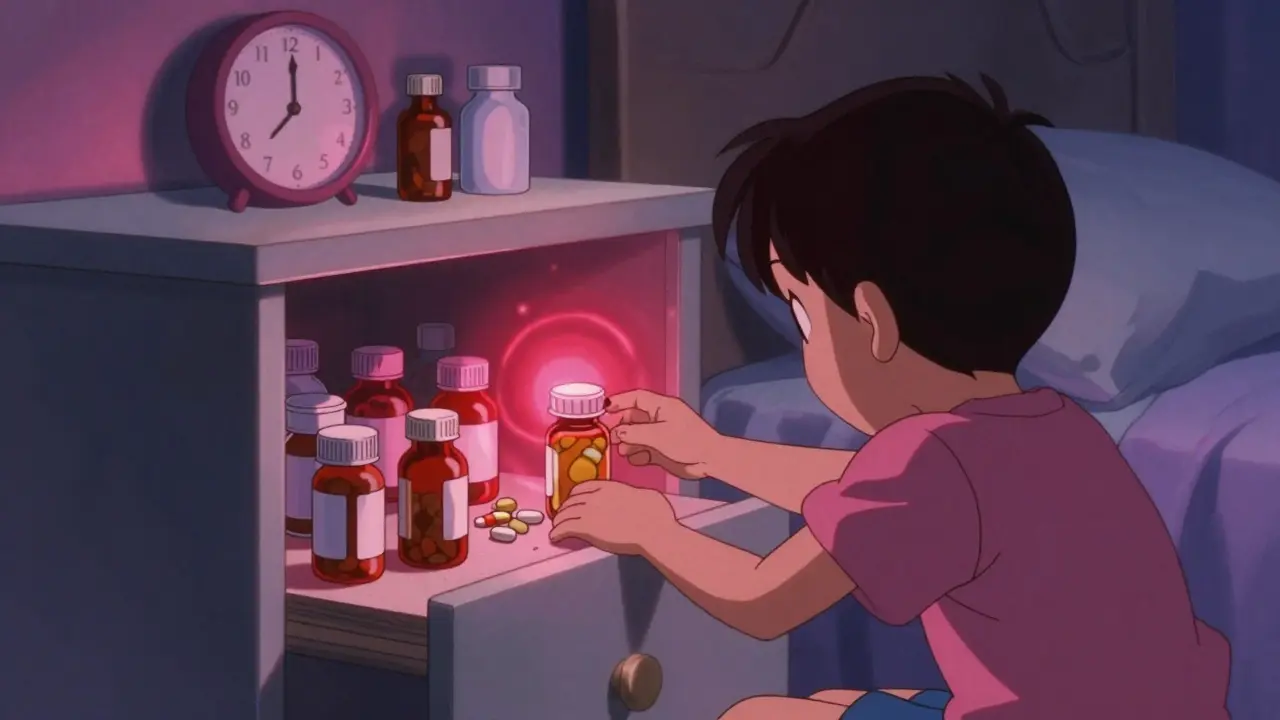
Every year, thousands of overdoses happen not because someone took too much, but because someone else found the medicine and didn’t know what it was. A child. A teenager. A guest. Even a well-meaning relative trying to help. The problem isn’t always misuse-it’s access. And the simplest way to stop it? Lock it up.
Why Storage Matters More Than You Think
If you’re prescribed opioids like oxycodone, hydrocodone, or fentanyl patches, you’re not just managing pain-you’re holding a potential danger in your home. The CDC says 53% of people who misuse prescription opioids get them from friends or family. Not dealers. Not strangers. People who had them sitting out in a nightstand, a bathroom cabinet, or a kitchen drawer. Children are especially at risk. Each year, around 60,000 kids end up in emergency rooms after swallowing pills they found. Most of those pills came from a home where the medication wasn’t locked away. And it’s not just kids. Teens, elderly relatives, or even visitors with substance use issues can access unsecured meds. One unlocked bottle can change a family’s life forever.What Counts as High-Risk Medication?
Not all prescriptions need the same level of security. High-risk meds include:- Opioid painkillers (oxycodone, hydrocodone, morphine, fentanyl)
- Sedatives like benzodiazepines (alprazolam, diazepam)
- Sleep aids (zolpidem)
- Stimulants for ADHD (adderall, methylphenidate)
The Gold Standard: Locked, Original, High Up
There are three rules that make storage effective. Get all three right, and you cut the risk of accidental overdose by over 80%.- Keep them in the original bottle. Never transfer pills to a pill organizer, snack bag, or empty candy jar. Labels tell you what’s inside, the dosage, and the expiration date. Removing them makes it impossible to know what you’re dealing with-and easy for someone to mistake it for something else.
- Use a locked container. A simple lockbox works. Look for ones that meet ANSI Grade 2 standards-they can resist forced entry for at least 10 minutes. Basic models cost $15-$25. Biometric or keypad ones run $50-$150. The CDC says locked storage prevents 92% of unauthorized access attempts.
- Store them high and out of reach. Kids can climb, open drawers, and pull things down. Store your meds at least 4 feet off the ground. That’s above the reach of most children under 6. A high shelf in a bedroom closet, a locked cabinet above the bathroom sink, or a wall-mounted safe are all good options.
What Doesn’t Work
You might think you’re safe if you just keep pills in the medicine cabinet. Or if you only have a few left. Or if you put them in a drawer under the sink. None of that works.- Medicine cabinets are almost always unlocked and easily accessible. Even if you think you’re the only one who uses them, someone else will find them.
- Child-resistant caps help-but they’re not foolproof. Kids as young as 2 can open them in under a minute. That’s why the cap alone isn’t enough. You still need the lock.
- Hidden spots like under the mattress or behind a book? Those are easy to find. If you think it’s hidden, someone else will too.
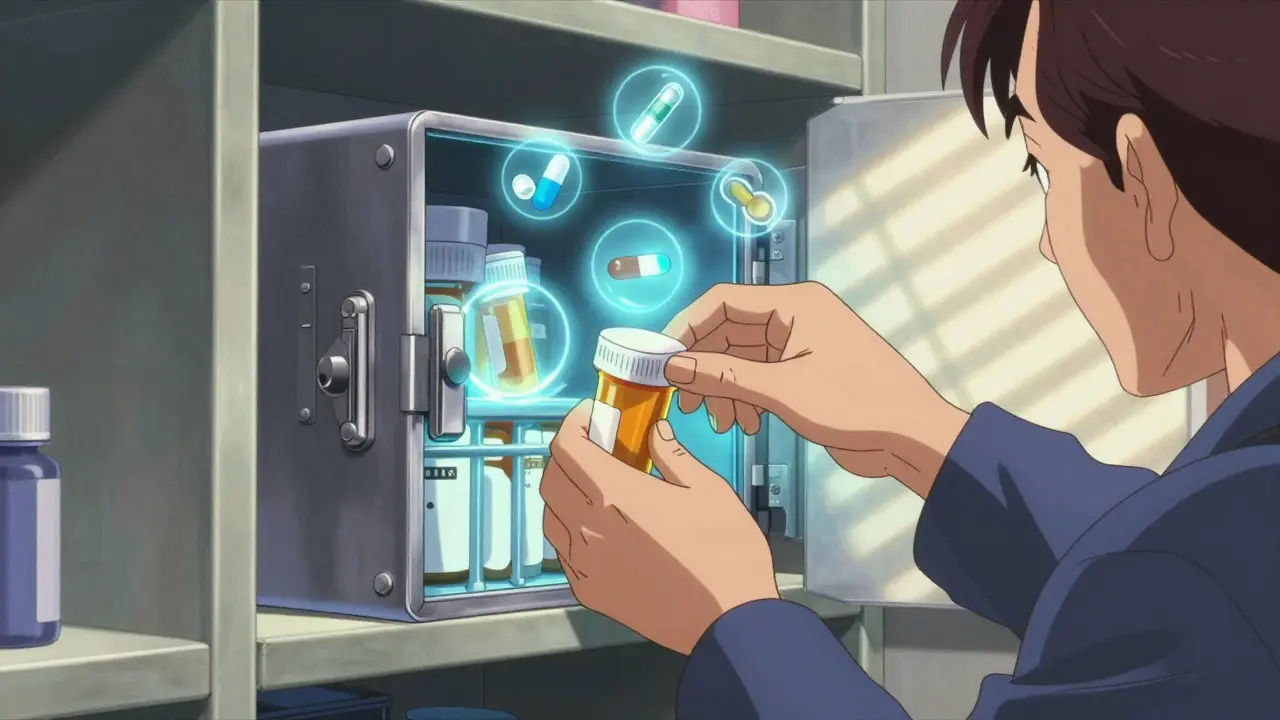
What About Accessibility? I Can’t Open Child-Proof Caps
This is real. Many older adults or people with arthritis can’t twist off child-resistant caps. Some lockboxes are hard to open too. That’s why newer solutions exist.- Emergency-release lockboxes let you set a 4-digit code. You can open them without strength or dexterity. The Med-ic Safe Locking Pill Organizer is one example-costs around $35.
- Pharmacist assistance can help. Some pharmacies will replace child-resistant caps with easy-open ones if you have a medical need. Just ask.
- Smart dispensers like Hero Health or MedMinder can lock pills and dispense them on schedule. They send alerts if a dose is missed. But they’re expensive ($99-$149) and need Wi-Fi. Only about 3% of people use them.
Tracking Your Pills
It’s not enough to lock them up-you need to know how many are left. Why? Because if you’re missing pills, someone else might be taking them. The CDC recommends a simple daily habit: write down the number of pills each morning. For example: “42 tablets remaining at 8:00 AM.” Do it in a notebook, a notes app, or even a sticky note on the lockbox. This isn’t about distrust. It’s about awareness. If you notice a drop in count and didn’t take them, you can act fast-call your doctor, change the lock, or talk to your family.What If I Don’t Need the Meds Anymore?
Never flush them. Never throw them in the trash. Never give them to someone else. The DEA runs National Prescription Drug Take Back Days twice a year-April and October. You can drop off unused meds at pharmacies, hospitals, or police stations. There are over 14,600 authorized collection sites across the U.S. If you can’t wait for a take-back day, some pharmacies offer mail-back envelopes. Check with your pharmacy. If all else fails, mix pills with coffee grounds or cat litter, seal them in a plastic bag, and throw them in the trash. It’s not ideal-but it’s better than leaving them out.Real Stories, Real Consequences
One Reddit user, u/PainPatient2021, wrote: “My doctor never told me to lock up my oxycodone. My 16-year-old found them in my nightstand and overdosed-thank God Narcan worked.” Another, u/SecureMom, shared: “The Walgreens lockbox saved my toddler from accessing grandma’s fentanyl patches. She pulled three drawers down trying to get it.” These aren’t rare. The Washington Poison Center recorded 1,247 cases in 2022 involving children under 6. 89% of those happened because the meds were left in plain sight.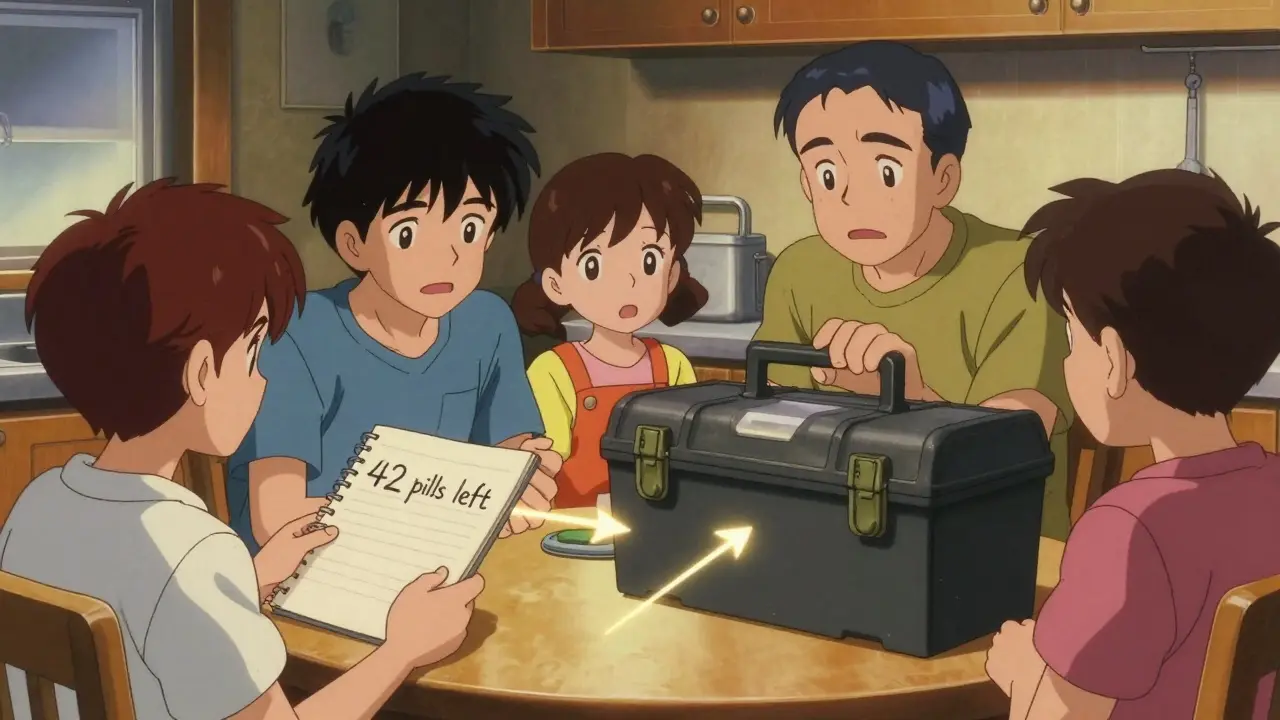
Who’s Responsible?
You might think, “My doctor should’ve told me.” And you’re right. But the CDC found only 37% of doctors actually talk to patients about safe storage when prescribing opioids. That’s not enough. You’re the one who brings the pills home. You’re the one who controls the lockbox. You’re the one who can make the difference. It’s not about blame. It’s about action.Getting Started: A 5-Minute Plan
You don’t need a full day. Here’s what to do right now:- Find every high-risk medication in your home-yours and anyone else’s.
- Put them back in their original bottles with caps tight.
- Buy a $20 lockbox from CVS, Walgreens, or Amazon.
- Place it on a high shelf in your bedroom or closet.
- Write down the pill count tomorrow morning.
What If I Can’t Afford a Lockbox?
Cost is a barrier for 41% of low-income households. But there are options.- Ask your pharmacy if they have free lockboxes. CVS partnered with MedMinder to give them out to 150,000 patients.
- Check with local health departments or nonprofits. Some offer them for free or at low cost.
- Use a locked drawer in a filing cabinet or a toolbox. It’s not ideal, but better than nothing.
Final Thought: Safety Isn’t a One-Time Task
Storing high-risk meds safely isn’t a checkbox. It’s a habit. It’s checking the lockbox every morning. It’s asking visitors not to leave pills behind. It’s talking to teens about what’s in your medicine cabinet. The opioid crisis didn’t start with dealers. It started with unsecured bottles in living rooms across America. You can be part of the solution. Not by fighting addiction-but by keeping it out of reach.What if my child opens the lockbox?
Lockboxes designed to ANSI Grade 2 standards are built to resist forced entry for at least 10 minutes. Most children under 6 can’t open them. If your child did, check for signs of ingestion immediately. Call Poison Help at 1-800-222-1222. They’re available 24/7 and handled over 2 million calls in 2022, with 92% resolved without hospital visits.
Can I use a regular lockbox from the hardware store?
Yes, if it’s sturdy and requires a key or code to open. Avoid flimsy plastic boxes. Look for metal or heavy-duty plastic. The key is that it can’t be easily broken into or pried open. A simple padlocked toolbox works better than an unlocked drawer.
Do I need to lock up non-opioid medications too?
Yes. Benzodiazepines, sleep aids, and ADHD stimulants can be dangerous if misused. Even over-the-counter meds like melatonin or cough syrup can cause harm in large doses. If it’s prescribed or can cause serious side effects when taken incorrectly, lock it up.
How often should I check my pill count?
Daily. Just five minutes each morning. Write down the number of pills left. If you notice a drop you didn’t expect, talk to your doctor or pharmacist. Missing pills are often the first sign someone else is using them.
What if I live with someone who uses drugs?
This is a serious situation. Lock your meds in a separate, secure box. Consider talking to a counselor or support group. The National Helpline (1-800-662-HELP) offers free, confidential advice. Your safety and your family’s safety come first. You’re not responsible for someone else’s choices-but you are responsible for protecting your medicine.

Comments (8)
Ashley Porter January 26 2026
Just read this and immediately checked my medicine cabinet. Turns out my husband’s fentanyl patches were in the bathroom drawer. Yikes. Ordered a Med-ic Safe lockbox today-$35 well spent. The CDC stats on accidental pediatric ingestions? Chilling. We’re not just storing meds, we’re preventing trauma.
Henry Jenkins January 26 2026
There’s a systemic failure here. Doctors prescribe these controlled substances like they’re Advil, then dump the responsibility onto patients without context or follow-up. The 37% stat is criminal. But also-lockboxes aren’t a panacea. What about households with multiple users, shared spaces, or cognitive impairments? We need standardized protocols, not just individual vigilance. Maybe a national mandate for safe-storage counseling at point-of-prescription? The infrastructure exists. The will doesn’t.
Nicholas Miter January 27 2026
my grandma cant open those childproof caps n the lockbox was too hard for her too. found a trick-ask the pharmacy to swap the caps for easy-open ones. they’ll do it if you say you got arthritis. also, i use a locked toolbox from home depot. not fancy but it works. just put it on the top shelf in the closet. no one thinks to look there. also, write down the count. even if its just on a sticky note. small things save lives.
TONY ADAMS January 28 2026
bro why are you locking up your pills? if someone steals them they deserve what they get. stop coddling addicts. just leave em out and let the weak ones get what’s coming. also my cousin took my adderall once and said it was the best day of his life. so… maybe stop being so paranoid?
George Rahn January 28 2026
Behold the moral decay of a society that treats pharmaceuticals like unsecured currency. We have abandoned the sanctity of personal responsibility in favor of infantilizing the populace with lockboxes and behavioral nudges. The opioid crisis is not a storage problem-it is a collapse of character, a failure of familial discipline, and the erosion of the very notion of consequence. To lock away medicine is to admit defeat before the battle has even been joined. Let the weak perish. Let the unprepared learn. Only then shall virtue be rekindled.
Ashley Karanja January 29 2026
so much of this resonates. i’m a caregiver for my mom with dementia and we had to lock up her benzos after she started taking them at 3am thinking they were vitamins 😭. the daily pill count habit? life-changing. i use a notes app with a reminder at 8am every day. also-emoji for emotional safety: 🛡️💊. if you’re reading this and you’re not locking yours up, please just do it. it’s not about distrust, it’s about love. and if you can’t afford a lockbox, ask your pharmacist. they’ve got your back more than you think. we’re all just trying to keep each other alive.
rasna saha January 30 2026
i live in india and we dont have lockboxes here. but i use a small metal lunchbox with a padlock. its not perfect but better than leaving pills on the table. my sister takes blood pressure meds and we keep them on top shelf in kitchen cupboard. kids cant reach. simple. no tech needed. thanks for sharing this-people need to hear it.
Skye Kooyman January 31 2026
just locked mine up