Spotting a fake pill or a suspicious medicine isn’t just about being careful-it could save your life. In 2022, the World Health Organization estimated that 1 in 10 medical products in low- and middle-income countries was substandard or falsified. Even in the U.S. and UK, counterfeit drugs are showing up in online pharmacies, mail-order services, and sometimes even in legitimate-looking packaging. If you think a medication you or someone you know took might be fake, tampered with, or not working right, reporting it isn’t optional. It’s critical.
What Counts as a Counterfeit or Tampered Medication?
A counterfeit medicine is made to look real but isn’t. It might have the wrong active ingredient, too little or too much of the right one, or none at all. Tampered medication has been altered after leaving the manufacturer-maybe the bottle was opened, the label switched, or the expiration date changed. These aren’t just quality issues. They’re dangerous. A fake antibiotic might not cure an infection. A counterfeit insulin could send someone into a coma. Fake heart pills might stop working mid-use. The signs aren’t always obvious, but here’s what to watch for:- Packaging that looks faded, blurry, or has spelling errors
- Pills that are a different color, shape, or size than usual
- Unusual smell or taste
- Missing or mismatched batch numbers
- Expiration date that doesn’t match the box or bottle
- Seals that are broken, resealed, or missing
- Prescriptions filled at a pharmacy you didn’t use, or ordered from an unverified website
How to Report Counterfeit Medications in the U.S.
If you’re in the United States, the FDA’s MedWatch program is your main tool. It’s not just for doctors-it’s for patients, pharmacists, caregivers, and anyone who suspects a problem. You don’t need to be sure it’s fake. If something feels off, report it. Step 1: Don’t use or throw away the product. Keep the medicine, the bottle, the box, and your receipt. These are your evidence. Don’t handle the pills more than necessary. If it’s liquid or injectable, leave it sealed. Step 2: Gather key details. You’ll need:- Brand name and generic name of the drug
- Batch or lot number (found on the bottle or box)
- Expiration date
- Name and address of the manufacturer
- Name and location of the pharmacy or website you bought it from
- How you used it and what happened (e.g., “took it for migraines, no effect,” or “felt dizzy after taking one pill”)
- Online: Go to the FDA’s MedWatch website and fill out Form 3500. It’s free, secure, and takes about 12-15 minutes. You can upload photos of the packaging and pills.
- By phone: Call 1-800-FDA-1088 (1-800-332-1088). A representative will walk you through the details.
What Happens After You Report It?
Once you submit your report, the FDA’s Center for Drug Evaluation and Research reviews it. If multiple reports come in about the same batch or product, they flag it for investigation. Between 2015 and 2022, timely reports helped remove over 2,300 counterfeit drugs from U.S. shelves. But here’s the reality: response times vary. Some people get a confirmation email within days. Others wait weeks. A 2022 FDA survey found that only 56% of consumers felt they got proper follow-up. That’s why it’s important to keep your own records. If you don’t hear back after 10-14 days, call MedWatch again and ask for an update. If your report involves a controlled substance like opioids or Adderall, the DEA’s RxAbuse Tip Line is also an option. You can report anonymously at (571) 324-6499 or online. The DEA says 73% of successful investigations in San Diego started with public tips.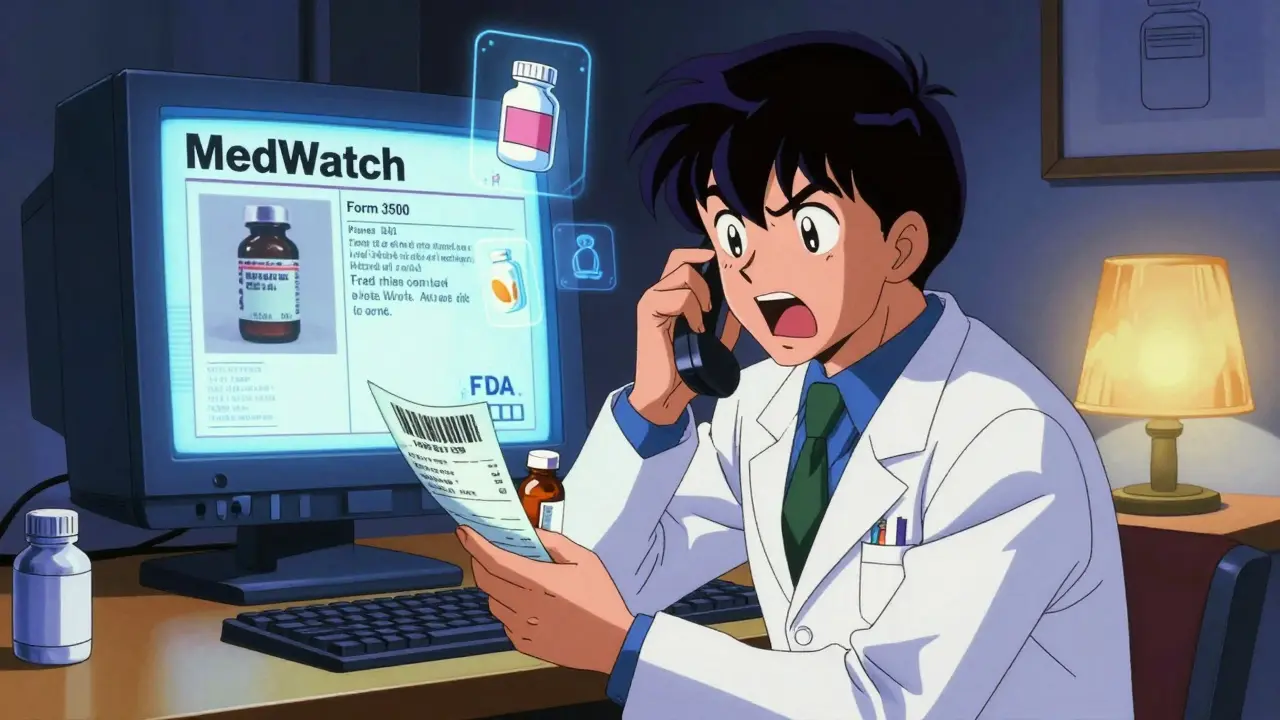
What If You’re a Pharmacist or Healthcare Worker?
If you’re a pharmacist, nurse, or doctor, your responsibility is higher-and your reporting process is more structured.- Don’t dispense a prescription you suspect is forged. Look for red flags: different ink colors, mismatched handwriting, prescriptions called in from a number that matches the patient’s home phone.
- Contact local law enforcement immediately if you believe a prescription is fake. The DEA’s Pharmacist’s Guide says this is mandatory.
- Report to the FDA using MedWatch, but also use the DSCSA 3911 platform if you’re part of the supply chain (manufacturer, distributor, or dispenser). You’re legally required to notify the FDA within 24 hours if you confirm a product is illegitimate.
- Keep records of the product, the patient, and your actions. You may be asked to testify or provide documentation.
Reporting Outside the U.S.
If you’re in Canada, report suspected counterfeit drugs to Health Canada’s Office of Controlled Substances. Pharmacists must report theft or forgery of controlled substances within 10 days using Guidance Document CS-GD-005. In Ontario, you must email [email protected] with prescription details. In the UK, report to the Medicines and Healthcare products Regulatory Agency (MHRA) via their Yellow Card system. You can do it online, by phone, or through the Yellow Card app. The MHRA receives about 1,200 reports annually about fake or suspect medicines. Globally, the World Health Organization runs a surveillance system that collects reports from 141 countries. You can submit a report through your national health authority, and they’ll forward it to WHO. FIP’s Safety Net also accepts direct reports from patients and professionals.What About Online Pharmacies?
Buying medicine online is risky. The National Association of Boards of Pharmacy found that 96% of online pharmacies reviewed in 2022 broke U.S. laws. If you bought medicine from a website that looks sketchy-no physical address, no licensed pharmacist on staff, prices that seem too good to be true-report it. Amazon, eBay, and other marketplaces have “report counterfeit” buttons. In 2022, Amazon received over 7,800 reports of fake pharmaceuticals. Use them. Even if the product is removed, your report helps track patterns and identify repeat offenders.
Why Your Report Matters
You might think, “One report won’t change anything.” But it does. In 2023, a single report from a patient in Ohio led to the recall of 142 batches of counterfeit insulin. That’s 142 people who didn’t get sick because someone spoke up. The FDA’s 2022 data shows that reports filed within 24 hours of discovery led to product removal 4.2 times faster than reports filed after 72 hours. Every hour counts. Your prompt action can stop a dangerous batch from reaching dozens-or hundreds-of others.What’s Changing in 2025?
The FDA is testing a new smartphone app that lets you take a photo of a suspicious pill and automatically pulls out the batch number, drug name, and manufacturer. In trials, reporting time dropped from 14 minutes to under 4 minutes. The app is expected to launch publicly in early 2026. The WHO is using AI to scan images of medicine packaging for signs of forgery. A pilot in Southeast Asia caught 217 fake malaria drugs with 94% accuracy. These tools are coming-and they’ll make reporting easier. But they still need your eyes.Final Checklist Before You Report
Before you submit your report, double-check:- ✅ Did I keep the medicine, box, and receipt?
- ✅ Did I write down the batch number and expiration date?
- ✅ Did I note where I bought it and from whom?
- ✅ Did I describe what happened after taking it?
- ✅ Did I take clear photos of the packaging and pills?
What should I do if I find a counterfeit medicine at home?
Don’t throw it away. Don’t flush it. Keep the medicine, its original packaging, and your receipt. Take clear photos of the label, batch number, and pills. Then report it to your country’s health authority-like the FDA in the U.S. or MHRA in the UK. This helps authorities track the source and prevent others from being harmed.
Can I report a fake medicine anonymously?
Yes. The DEA’s RxAbuse Tip Line allows fully anonymous reporting. The FDA’s MedWatch accepts anonymous reports too, though providing contact information helps them follow up if they need more details. Even if you don’t want to be called, your report still counts.
How long does it take for a reported counterfeit drug to be removed from shelves?
It varies. If the report is detailed and filed quickly-within 24 hours-the FDA can act in as little as 2-3 days. If the product is widely distributed or the details are unclear, it may take weeks. The key is early reporting. The FDA found that reports filed within 24 hours led to removal 4.2 times faster than those filed after 72 hours.
Is it safe to take a medicine if I’m not sure it’s real?
No. If you suspect a medicine is counterfeit or tampered with, stop taking it immediately. Contact your doctor or pharmacist for a replacement. Do not take a second dose. Fake drugs can be lethal-some contain toxic substances like lead, rat poison, or other dangerous chemicals.
What if I bought medicine from a foreign website?
Report it anyway. The FDA and WHO track international sources of counterfeit drugs. Even if the pharmacy is overseas, your report helps build global intelligence. Include the website URL, payment method, and any shipping labels. Many fake drugs enter the U.S. through international mail-your report helps shut those channels.
Can I report a medicine that made me sick?
Yes. If you had an unexpected side effect, allergic reaction, or the medicine didn’t work when it should have, report it through MedWatch or your national system. These are called “adverse events” and are just as important as counterfeit reports. The FDA uses this data to detect hidden safety issues.

Comments (8)
Nancy Kou December 21 2025
Just read this and immediately checked my blood pressure meds. Turned out the bottle cap was slightly loose-never noticed before. I took a photo, wrote down the batch number, and filed a MedWatch report within 10 minutes. Don’t wait until someone gets hurt. This stuff is silent killer territory.
Mike Rengifo December 22 2025
Been a pharmacist for 17 years. Saw a fake gabapentin batch in 2020 that had actual chalk dust instead of active ingredient. Patient nearly went into seizures. FDA took 3 weeks to respond. They’re understaffed. But reporting still matters-every report adds to the pattern. Keep doing it.
Hussien SLeiman December 23 2025
Let’s be real-most people who report fake meds are either paranoid or got scammed by a shady online pharmacy. The FDA doesn’t even investigate 90% of these reports. I’ve seen batch numbers that were perfectly legit but got flagged because someone didn’t like the pill color. The system’s broken. They’re drowning in noise and ignoring actual threats. Why are we still pretending this works?
Connie Zehner December 24 2025
I’m crying. I just found out my mom took fake metformin for 8 months because she bought it from a ‘discount pharmacy’ on Facebook. She’s now in kidney failure. I reported it. I sent photos. I called the FDA. No one called me back. No one even said ‘sorry.’ This isn’t just negligence-it’s a moral failure. We’re letting people die because bureaucracy is too lazy to care. I’m not just reporting a pill. I’m reporting a broken system that doesn’t value human life.
Dev Sawner December 24 2025
It is imperative to underscore that the efficacy of pharmacovigilance systems is contingent upon the fidelity of reporting protocols. In the context of the Indian subcontinent, the absence of standardized digital reporting infrastructure significantly impedes traceability. The batch number, though ostensibly a unique identifier, is frequently obscured by counterfeiters using laser-etched counterfeit labels. One must cross-reference the manufacturer’s official registry via the CDSCO portal prior to submission. Failure to do so constitutes an incomplete report and undermines the integrity of the entire surveillance architecture.
Moses Odumbe December 25 2025
Just used the new FDA pill scanner app beta (yes, it’s real, I got an invite). Took a pic of my cousin’s weird-looking Adderall-app flagged it as ‘high risk: mismatched imprint code.’ Sent it to MedWatch. 12 hours later, got an email saying they pulled 37 batches from 12 states. 🤯 This is the future. Stop being lazy. Take the photo. Submit it. You’re literally saving lives. 🙏
Mahammad Muradov December 26 2025
The premise of this article is fundamentally flawed. The notion that individual reports can meaningfully impact the global counterfeit pharmaceutical supply chain is statistically unsound. The scale of illicit production in Southeast Asia and China dwarfs the capacity of any national regulatory body to respond. Reporting is performative activism. Real change requires international treaty enforcement, not citizen submissions. This is a distraction from systemic failure.
Ashley Bliss December 27 2025
My dad died because he took fake blood thinners. I didn’t know until the autopsy. The bottle looked fine. The pharmacy looked fine. The receipt looked fine. But he didn’t survive. Now I report every weird-looking pill I see. Even if it’s just one. Even if no one cares. I owe it to him. And to everyone else who won’t get a second chance. Don’t wait for someone else to do it. Do it now. Because silence isn’t peace-it’s complicity.