
FDA Sentinel Risk Rate Calculator
Traditional reporting (FAERS) only counts adverse events. Sentinel uses denominator data—the total number of patients taking a drug—to calculate actual risk rates.
Calculated Risk Rate
Total patients: 50,000
Adverse events: 15
Result: 0.3 per 1,000 patients
The U.S. Food and Drug Administration doesn’t wait for patients to get hurt before acting. Since 2008, it’s been using FDA Sentinel Initiative-a massive, real-time data network-to catch dangerous drugs before they cause widespread harm. Unlike old-school systems that rely on doctors filing voluntary reports, Sentinel watches millions of patients every day, using electronic health records and insurance claims to spot hidden risks. It doesn’t just react. It predicts.
How Sentinel Works: No Central Database, Just Smart Queries
You might think the FDA keeps all patient data in one giant server. It doesn’t. And that’s by design. Sentinel is a distributed network. That means data stays where it is-inside hospitals, insurance companies, and clinics. The FDA doesn’t collect or store it. Instead, when a potential safety signal pops up-maybe a spike in heart attacks linked to a new diabetes drug-the agency sends out a coded query. This query travels through a secure portal to each participating data partner. Each one runs the same analysis on their own data, then sends back only the results: a number, a trend, a pattern. No names. No addresses. Just signals.This approach solves two big problems. First, it protects patient privacy. Second, it avoids the legal and technical nightmare of moving petabytes of health data across state lines. The system uses standardized tools so that whether the data comes from Kaiser Permanente or a small rural clinic, the analysis stays consistent. Partners update their data quarterly. Smaller ones might update monthly. But the system keeps rolling, always watching.
From Passive Reports to Active Monitoring
Before Sentinel, the FDA relied mostly on FAERS-the Adverse Event Reporting System. Doctors, pharmacists, and even patients could submit reports when something bad happened after taking a drug. Sounds reasonable, right? But here’s the catch: fewer than 1% of adverse events get reported. And even when they do, there’s no way to know how many people were taking the drug in the first place. Was the heart attack rare? Or was it happening in 1 in 100 users? FAERS couldn’t say.Sentinel changes that. It knows exactly how many people were prescribed a drug because it pulls from billing records. It knows their age, gender, other medications, and even hospital visits. That’s called denominator data. With it, the FDA can calculate real risk rates. In 2017, Sentinel flagged a possible link between a popular arthritis drug and a rare type of stroke. Traditional reporting had missed it. Sentinel confirmed it within weeks. The FDA updated the drug’s warning label. Patients were safer.
What Data Does Sentinel Actually Use?
Sentinel started with insurance claims-things like what drugs were prescribed, when a patient went to the ER, or if they were hospitalized. But claims data is limited. It tells you what happened, but not why. That’s why the system has been expanding into electronic health records (EHRs). EHRs include doctor’s notes, lab results, vital signs, and even symptoms patients describe. One patient’s note might say, “Felt dizzy after new pill,” which a claims code might just label as “dizziness.” Sentinel’s new tools use artificial intelligence to dig into those notes and pull out meaning.The Innovation Center, one of Sentinel’s three operating arms, is focused on four key upgrades: better data infrastructure, smarter feature extraction, stronger causal analysis, and faster detection methods. They’re testing machine learning models that can predict which patients are most likely to have a bad reaction based on their medical history. They’re also building tools to compare real-world outcomes to clinical trial results-making sure what works in a controlled study still holds up in the messy real world.

Why This Matters for Patients
Think about vaccines. After a new shot hits the market, the FDA needs to know fast if it causes rare side effects-like blood clots or nerve inflammation. Sentinel’s PRISM system (Postmarket Rapid Immunization Safety Monitoring) watches millions of vaccination records in near real-time. When a cluster of unusual cases shows up, it flags them immediately. During the COVID-19 rollout, this system helped identify the rare risk of myocarditis in young men after mRNA vaccines. The FDA didn’t pull the vaccines. But they updated guidance. Parents could make informed choices. Doctors could monitor at-risk patients. That’s the power of speed and scale.It’s not just drugs and vaccines. Sentinel also tracks medical devices-like pacemakers or joint replacements. It watches for patterns in device failures or complications. One study found a higher-than-expected rate of hip implant dislocations in patients over 80. That led to new surgical guidelines. No lawsuits. No media frenzy. Just quiet, data-driven improvement.
Challenges and Limitations
Sentinel isn’t perfect. It still struggles with messy data. Not all EHRs are created equal. Some hospitals use different coding systems. Some don’t record symptoms at all. Missing data is a constant problem. And while it can spot trends, proving cause-and-effect is harder. Just because a drug and a side effect appear together doesn’t mean one caused the other. That’s why Sentinel works with academic partners to run “emulated trials”-simulating real clinical studies using real-world data to test hypotheses more rigorously.It also can’t catch truly rare events. If a side effect happens in 1 in 100,000 people, you’d need data from hundreds of millions of patients to be sure. Sentinel’s network covers about 200 million people-huge, but not infinite. For ultra-rare reactions, traditional reporting and global collaboration still matter.
Who Uses Sentinel?
It’s not just the FDA. Pharmaceutical companies use it to monitor their own drugs after launch. Academic researchers run studies through the Innovation Center. International regulators-like the European Medicines Agency-study Sentinel’s methods to build their own systems. Even Medicare uses Sentinel data to assess drug safety in older adults, a group often left out of clinical trials.The system’s structure makes it uniquely suited for collaboration. Unlike private databases owned by tech companies, Sentinel is a public infrastructure. Its rules are open. Its tools are documented. And its findings are shared. That transparency builds trust.
The Future: AI, Global Networks, and Real-Time Alerts
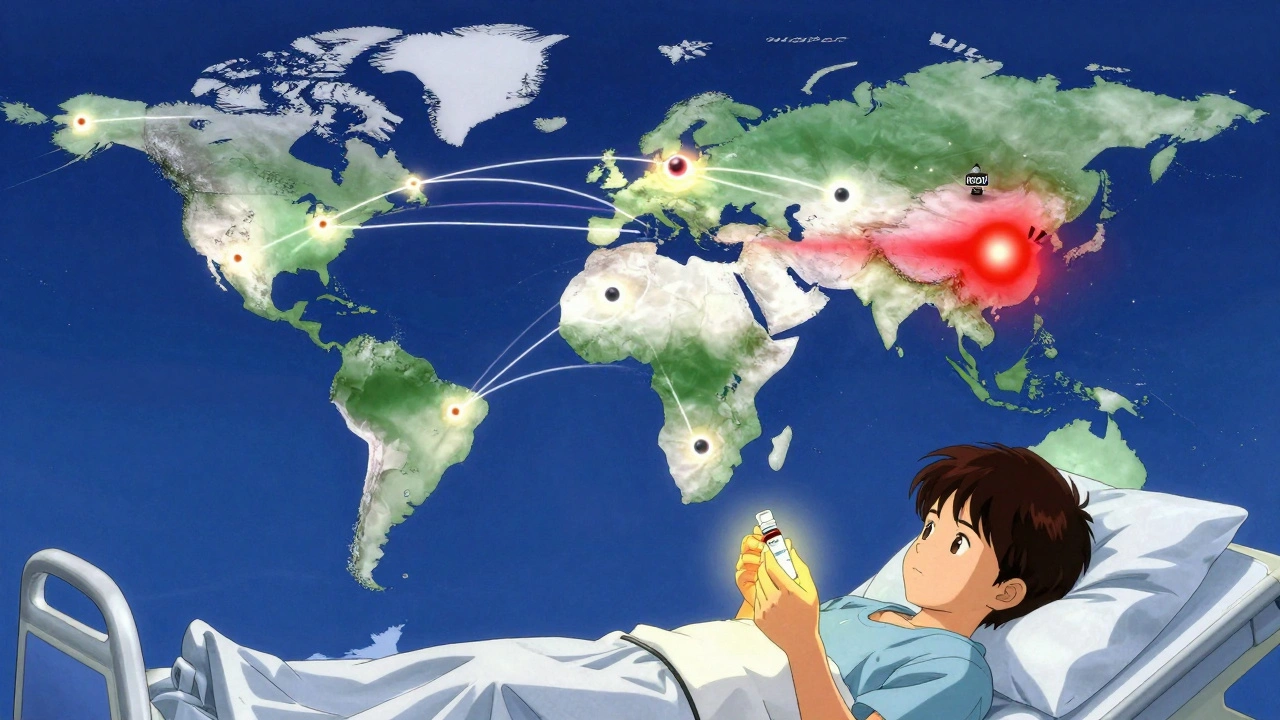
Sentinel is evolving fast. In 2023, the FDA announced $304 million in new funding for what’s being called Sentinel 3.0. The goal? To make safety monitoring faster, smarter, and more predictive. One project is training AI to read unstructured clinical notes like a seasoned doctor-pulling out symptoms, timing, and severity from free-text entries. Another is connecting Sentinel to international health databases so alerts can cross borders. If a drug causes liver damage in Germany, Sentinel in the U.S. could know within days.Eventually, the vision is a global learning health system. Where every time a drug is used, data feeds back into the system to improve safety for the next patient. It’s not science fiction. It’s already happening.
How a Safety Alert Gets Triggered
It doesn’t start with a patient complaint. It starts with data. Here’s how it usually unfolds:- A pattern emerges in FAERS or a published study suggesting a possible risk.
- The FDA’s Office of Surveillance and Epidemiology reviews the signal and decides if it’s worth investigating.
- If yes, they draft a query-like “How many patients over 65 had a stroke within 30 days of starting Drug X?”
- The query is sent to all data partners via the secure portal.
- Each partner runs the same analysis on their own data and returns anonymized results.
- The FDA aggregates the results, checks for data quality, and validates the signal.
- If confirmed, they issue a safety communication, update labeling, or launch a full study.
This entire process can take weeks-not years. That’s the difference between reactive and proactive safety.
Is the FDA Sentinel Initiative only for drugs?
No. Sentinel monitors all FDA-regulated products, including vaccines, biologics, and medical devices like pacemakers, insulin pumps, and joint replacements. It’s designed to track any product used by patients after it reaches the market.
Does Sentinel collect personal health information?
No. Sentinel never collects or stores individual patient records. Data stays with the original provider-hospitals, insurers, clinics. The FDA only receives aggregated, anonymized results from queries. No names, Social Security numbers, or addresses are ever shared.
How is Sentinel different from the UK’s Clinical Practice Research Datalink?
The UK’s CPRD is a centralized database where health data is transferred and stored in one location. Sentinel is distributed-data stays where it is, and only analysis results are shared. This makes Sentinel more scalable and better aligned with U.S. privacy laws, but it adds complexity in ensuring consistent data standards across partners.
Can researchers outside the FDA use Sentinel?
Yes. Academic researchers, industry scientists, and other federal agencies can submit proposals to use Sentinel through the Innovation Center. They must follow strict protocols, but the system is designed to support independent research that improves public health.
How long does a Sentinel safety analysis take?
Most analyses take between 4 to 12 weeks, depending on complexity. That’s far faster than traditional epidemiological studies, which can take years to design, recruit, and complete. Sentinel’s speed is what makes it revolutionary for postmarket surveillance.
What Comes Next?
The next five years will focus on two things: depth and reach. Deeper data from EHRs means better detection of subtle side effects-like cognitive changes or mood disorders tied to medications. Broader reach means connecting with global partners to create a real-time international safety net. Sentinel isn’t just a U.S. tool anymore. It’s becoming the blueprint for how the world monitors drug safety.Every time a new medication is approved, there’s a question no one can fully answer: What happens when millions of people start taking it? Sentinel gives us the best answer we’ve ever had. It turns data into safety. And in medicine, that’s everything.

Comments (14)
Carole Nkosi December 5 2025
This system is just another corporate surveillance fantasy wrapped in medical jargon. They say they don't store data but they're still watching everything-every pill you take, every hospital visit, every symptom you whisper to a doctor. Privacy is a myth when your life is just a data point in someone else's algorithm. We're not being protected-we're being pre-emptively judged.
Stephanie Bodde December 6 2025
This is actually so cool!! 🙌 I've been on meds for years and never knew there was this whole invisible safety net watching out for us. It gives me peace of mind knowing someone's actually paying attention to what happens after the pill is approved. Thank you, FDA, for not waiting for tragedy to act!
Philip Kristy Wijaya December 8 2025
So let me get this straight the government outsources medical surveillance to private insurers who may or may not have accurate records and then calls it science? This isn't innovation this is bureaucratic theater with a fancy name and a taxpayer funded PR campaign. If you want real safety stop approving drugs in the first place instead of playing detective with broken data
Ada Maklagina December 9 2025
Neat system. I wonder how many false positives it flags just because someone had a bad day and went to the ER.
Harry Nguyen December 10 2025
Of course the FDA is all about safety now. After they spent 20 years letting Big Pharma push opioids and antidepressants like candy. Now they want a gold star for not letting a few more people die? Spare me the virtue signaling. This system exists because the public finally stopped trusting them not because they became ethical
Katie Allan December 12 2025
I find this profoundly hopeful. For the first time in decades we have a system that doesn't rely on human error or silence to protect us. It's not perfect but it's a radical shift from reactive to preventive care. Imagine if every public health tool worked this way-vaccines, food safety, air quality. We could build a world where harm is anticipated not just reacted to.
James Moore December 13 2025
Let's be honest here-the entire Sentinel Initiative is a glorified statistical fishing expedition with a bureaucratic stamp of approval. They're using machine learning to find patterns in noise, and then they're calling it science. You can't prove causation from claims data, and yet they're changing labeling based on correlations that could be coincidental, confounded, or just plain wrong. This isn't medicine-it's data worship dressed in a lab coat.
Kylee Gregory December 14 2025
It's interesting how this system balances innovation with caution. On one hand, you have the power to catch rare side effects before they become crises. On the other, you have the risk of overreacting to statistical blips. I think the real win here is the collaboration-not just between agencies but between institutions that normally don't share data. That cultural shift might be more important than the tech itself.
Chris Brown December 16 2025
This is exactly why we need to stop letting the FDA approve drugs based on corporate-sponsored trials with cherry-picked results. Now they're using the same flawed data to 'monitor' safety? That's like using a leaky bucket to put out a fire. The real problem is the approval process-not the surveillance system. Fix the source before you polish the mop.
Laura Saye December 18 2025
The granularity of EHR integration is a game-changer. When you can extract symptom narratives from free-text clinical notes-like 'felt dizzy after new pill'-you're not just counting codes, you're listening to patients. That qualitative layer, when combined with quantitative signals, transforms passive reporting into active patient advocacy. It’s medicine becoming more human again.
Krishan Patel December 20 2025
Everyone talks about Sentinel like it's a miracle but no one mentions that most rural clinics still use paper charts. This system only works for the urban insured. Meanwhile, poor people, elderly in nursing homes, undocumented immigrants-they're invisible to Sentinel. So who's really being protected? The ones with insurance? That's not safety. That's privilege with an algorithm.
sean whitfield December 20 2025
They say they're not collecting data but they're collecting everything. The real power isn't in the numbers-it's in the ability to predict behavior. What if they start flagging people who take too many pills? Or who visit too many doctors? This isn't safety. This is social credit for your meds
luke newton December 22 2025
I know someone who got a rare side effect from a drug and the FDA did nothing for two years. Now they're patting themselves on the back for a system that probably would've missed it anyway. This feels like performance accountability. They're not fixing the system-they're just making it look like they are.
Carole Nkosi December 22 2025
You think this is protecting people? It's just making the system look efficient while the real issues-drug pricing, lack of transparency, corporate influence-stay untouched. They're solving a symptom while the disease grows.