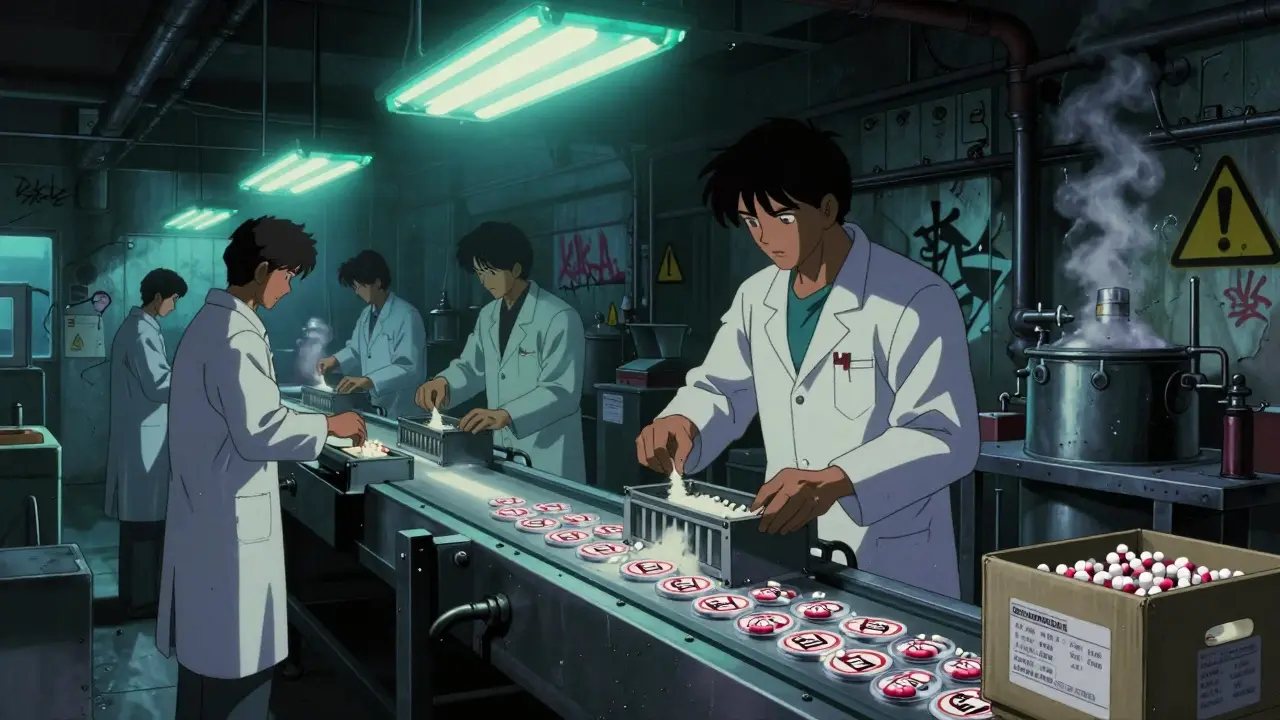
Every year, millions of people around the world take generic drugs because they’re affordable, effective, and widely available. But what if the pill in your hand isn’t what it claims to be? Fake generic drugs are not just a problem in faraway countries-they’re slipping into supply chains everywhere, even in places with strict regulations. These counterfeit products look real. They have the same color, shape, and packaging as the real thing. But inside? They might contain no active ingredient, the wrong chemical, or even toxic substances. And they’re getting harder to spot.
How Counterfeit Drugs Are Made
Counterfeit drugs don’t come from labs with advanced equipment and licensed scientists. Most are made in hidden factories, often in Southeast Asia, Eastern Europe, or parts of Africa. These operations use cheap, readily available chemicals. Sometimes they copy the exact formula of a real drug. Other times, they use fillers like chalk, talc, or even rat poison to bulk up the product. The goal isn’t to help patients-it’s to make money fast.Modern counterfeiters have gotten smarter. Ten years ago, you could spot a fake by the blurry logo or mismatched font. Today, they use commercial-grade printers and digital design tools to replicate packaging with 95% accuracy. Holograms, color-shifting inks, and even QR codes are copied perfectly. In 2023, Europol seized a shipment of fake cancer drugs with AI-generated holograms that passed visual inspection by trained pharmacists.
One of the most dangerous trends is the use of chemically similar but inactive ingredients. For example, a counterfeit version of the blood pressure drug losartan might contain a substance that looks like the real active ingredient under a microscope-but doesn’t lower blood pressure. Patients take it daily, thinking they’re protected, while their condition worsens silently.
How Fake Drugs Get Into Legitimate Supply Chains
You’d think hospitals and pharmacies only get drugs from trusted suppliers. But that’s not always true. Counterfeit drugs enter the legal system through three main backdoors.First: Parallel Importation. Some countries allow drugs to be imported from other countries where they’re sold cheaper. This creates a loophole. A batch of real drugs might be diverted from a low-price market, mixed with fakes, then resold as legitimate in a high-price market. Regulators in one country don’t check what another country shipped.
Second: Grey Market Distributors. These are unauthorized middlemen who buy drugs in bulk-sometimes from overstocked pharmacies or stolen shipments-and resell them without proper documentation. In 2022, the U.S. Pharmacopeia documented a case where a grey market supplier in Texas mixed counterfeit antibiotics with real ones. The mix went to a chain of rural clinics. Dozens of patients developed antibiotic-resistant infections.
Third: Online Pharmacies. This is the biggest gateway. The National Association of Boards of Pharmacy found that 95% of online pharmacies operating without a license sell fake drugs. You can buy anything from Viagra to insulin on these sites. They look like real pharmacies. They have professional websites, customer service numbers, and even fake certifications. Many patients don’t realize they’re buying counterfeit until they get sick-or worse.
Why Generic Drugs Are the Main Target
You might wonder: why not fake brand-name drugs like Lipitor or Humira? Because those are harder to copy legally. Generic drugs are the perfect target. They’re cheaper. Their patents have expired. And manufacturers compete on price, not branding. That means corners get cut-sometimes legally, sometimes illegally.By 2022, the global generic drug market hit $438.7 billion. That’s a massive target for criminals. A single vial of counterfeit insulin can sell for $150 on the black market, even though the real version costs $25 in some countries. The profit margin is enormous.
And here’s the catch: generics are often made by smaller, less-regulated manufacturers. In 2018, a wave of recalls hit ARB blood pressure drugs because of carcinogenic impurities. The problem? Some generic makers used cheap raw materials from unverified suppliers in China. That’s not always fraud-but it shows how easily quality control breaks down.
How They Evade Detection
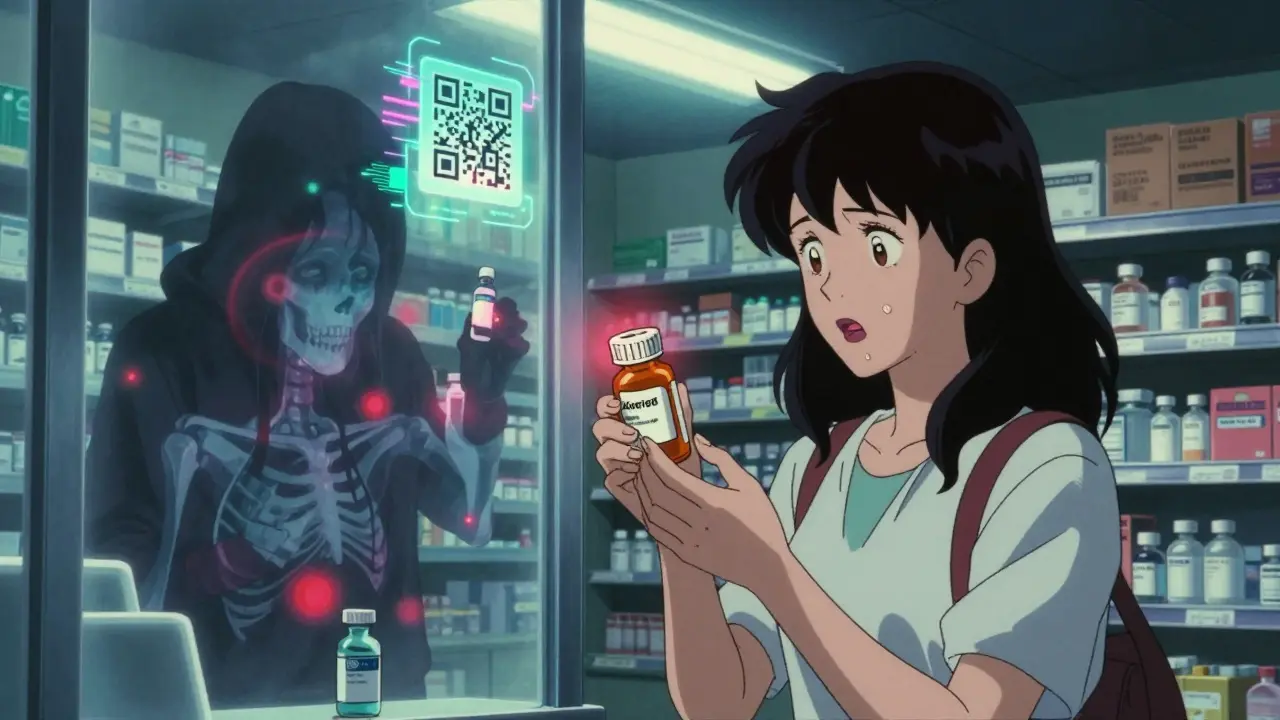
Most drug inspections focus on paperwork and batch numbers. But counterfeiters have learned to fake those too. They steal legitimate batch codes, reuse expired labels, or even bribe warehouse staff to stamp fake products as real.Only 40% of countries have any kind of track-and-trace system that follows a drug from factory to pharmacy. Of those, only 22 countries have fully working systems. That means in most places, once a drug leaves the manufacturer, no one knows where it’s been.
Even advanced tools like blockchain verification are still in pilot stages. MediLedger’s system, which uses blockchain to log every transfer, showed 97.3% accuracy in trials-but it’s only used by a handful of big pharma companies. Most small distributors can’t afford it.
And now, AI is making it worse. In early 2023, Europol uncovered a ring using AI to generate fake packaging that adapts to regional variations. A counterfeit pill sold in Germany looked slightly different than the same fake sold in Poland, because the AI adjusted the label design based on local market data. Human inspectors couldn’t tell the difference.
What Happens When You Take a Fake
The consequences aren’t theoretical. In 2008, contaminated heparin from China entered the U.S. supply chain. It killed 149 people. In 2021, a study in Africa found that 70% of counterfeit antimalarial drugs contained less than 20% of the required artemisinin. Patients didn’t get better. They died-or passed the disease on because they weren’t cured.Cardiovascular drugs are another big target. A 2022 survey of 1,200 pharmacists across 45 countries found that 68% had seen suspected fake generics. One pharmacist in Nigeria reported patients coming in with chest pain after taking fake atorvastatin. Their cholesterol hadn’t dropped. They thought the medicine wasn’t working. It wasn’t medicine at all.
Online buyers report similar stories. On Reddit, a user named u/PharmaWatcher bought what they thought was Lipitor. The pills had a different scoring line and were slightly lighter in color. They sent them to a lab. The active ingredient was missing. The pills were just starch and dye.
What’s Being Done to Stop It
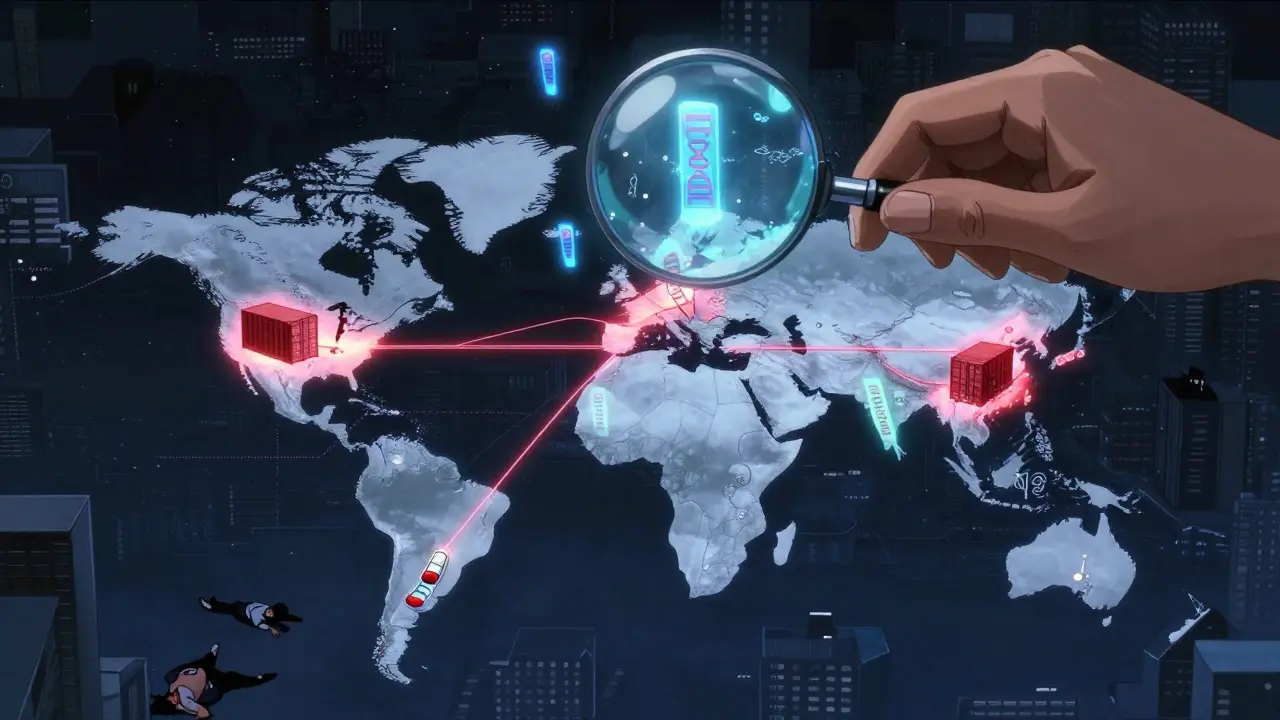
Some progress is being made. The EU’s Falsified Medicines Directive, which came into full effect in 2019, requires all prescription drugs to have unique identifiers and tamper-evident seals. Since then, counterfeit penetration in Europe has dropped by an estimated 18%.In the U.S., the Drug Supply Chain Security Act (DSCSA) requires full traceability by 2023. But enforcement is uneven. Many small pharmacies still don’t have the tech or training to scan and verify each package.
Companies like Pfizer have spent over $200 million since 2004 on anti-counterfeiting efforts. Their program works with customs, law enforcement, and pharmacies to track and seize fake drugs. They’ve stopped over 302 million counterfeit doses from reaching patients.
But these efforts are expensive. Adding a DNA tag or chemical tracer to each pill costs 2 to 5 cents. For a company selling a $0.10 generic drug, that’s a 50% cost increase. Most can’t afford it-especially in low-income countries where counterfeit drugs are most common.
What You Can Do
You can’t stop counterfeits alone. But you can protect yourself.- Buy from licensed pharmacies only. If you’re buying online, check if the pharmacy is verified by the National Association of Boards of Pharmacy (NABP). Look for the VIPPS seal.
- Check the packaging. Compare it to previous bottles. Is the font different? Is the seal broken? Are the pills a different color or shape?
- Ask your pharmacist. If something looks off, ask them to verify the batch number. They have access to manufacturer databases.
- Report suspicious drugs. If you suspect a fake, tell your doctor or local health authority. The WHO and FDA both have reporting systems.
There’s no foolproof way to spot every fake. But being alert reduces your risk. And every report helps authorities track down the source.
What’s Next
Without global coordination, the problem will only grow. The OECD predicts that by 2030, counterfeit drugs could make up 5-7% of the global market-up from 1% today. The biggest risks? Online sales and low-income countries with weak oversight.Technology might help. AI-powered image recognition tools are being tested to scan pills in real time. Some hospitals are testing handheld spectrometers that can detect chemical composition in seconds. But these tools won’t reach the people who need them most.
The real solution? Global standards. Uniform serialization. Better training for pharmacists. And accountability for every link in the supply chain-from the factory floor to the pharmacy counter.
Until then, the safest thing you can do is know where your medicine comes from-and never assume it’s real just because it looks right.

Comments (10)
Isaac Jules January 5 2026
This is bullshit. The FDA is asleep at the wheel. We're letting foreign labs pump out poison and calling it 'generic'. I've seen pills that look like they were printed on a 2005 inkjet. And the worst part? The same companies that make the real stuff are outsourcing to these shitholes to cut costs. Wake the fuck up, America.
Indra Triawan January 7 2026
Isn't it ironic? We seek cheap medicine to heal, yet we've built a system where the cheapest option is often the most lethal. We are all complicit-buying without questioning, trusting labels like they're sacred texts. The soul of medicine is being replaced by the algorithm of profit. We don't just lose health-we lose trust. And trust, once broken, can't be refilled with a prescription.
Joann Absi January 8 2026
OH MY GOD. I just found out my blood pressure pills were fake 😭 I bought them from a 'trusted' online pharmacy because they were 70% cheaper. I thought I was saving money. Turns out I was saving my heart... for a heart attack. 🇺🇸 WE NEED TO BAN ALL FOREIGN GENERIC MANUFACTURERS. THIS IS A WAR. AND WE'RE LOSING. #FakeDrugsKill #MakeMedicineGreatAgain
Melanie Clark January 9 2026
Did you know that the Chinese government has been knowingly exporting substandard pharmaceutical ingredients for over a decade because they prioritize economic growth over human life This is not negligence this is systematic betrayal and the FDA is complicit because they are funded by the same corporations that outsource to these factories The system is designed to fail us and the only thing you can do is stop trusting any pill that wasn't made in a US facility with FDA audited equipment and even then I wouldn't trust it
Harshit Kansal January 9 2026
Man I work in a rural clinic in India and we get these fake meds all the time. Pills with no logo, weird smell, sometimes they crumble in your hand. We tell patients to bring back the bottle if they feel worse. Most don't. They just think the medicine didn't work. We need better training and more support. It's not just a US problem.
Brian Anaz January 10 2026
China is flooding the market with poison pills and the government lets it happen because it's cheaper. We're paying for this with lives. No more outsourcing. No more loopholes. If you want real medicine, buy American. Period.
Vinayak Naik January 11 2026
Y'all don't get it-counterfeits aren't just bad pills, they're a symptom of a broken system. Big Pharma got greedy, regulators got lazy, and now we're all playing Russian roulette with our prescriptions. I once got a fake metformin that tasted like burnt plastic. Took me three months to figure out why my sugar was spiking. Don't be that guy. Check your batch codes. Ask questions. Your life's worth it.
Saylor Frye January 12 2026
It's fascinating how the commodification of healthcare has rendered pharmaceuticals into fungible commodities, stripped of their ontological weight as therapeutic agents. The epistemological rupture between perception and reality in drug authenticity is a postmodern tragedy-where packaging supersedes pharmacology, and trust becomes a performative artifact. One must ask: are we treating patients or merely managing consumer expectations?
Dana Termini January 13 2026
I'm not saying everyone's out to get you, but this is terrifying. I used to buy generics without a second thought. Now I check every bottle like it's a bomb. I call the pharmacy, compare photos online, even ask my doctor to verify. It's exhausting. But I'd rather be paranoid than dead. We all need to do better.
Rachel Wermager January 15 2026
Based on the DSCSA and EU FMD frameworks, the traceability gap persists due to non-uniform implementation of GS1 standards across tier-2 and tier-3 distributors. The absence of serialized data at the unit-dose level in 78% of global supply chains enables batch-code spoofing and diversion. Without mandatory blockchain-based digital twins for every pharmaceutical unit, counterfeit penetration will continue to scale exponentially. The 2023 MediLedger pilot demonstrated 97.3% efficacy-but adoption remains constrained by CAPEX and legacy ERP incompatibility. Regulatory harmonization is not optional-it's the only viable mitigation vector.