When you take a pill, you probably don’t think about where it was made. But if you’re a patient relying on that medication, the country behind its production matters more than you realize. Two nations dominate global pharmaceutical manufacturing: China and India. Together, they supply most of the world’s generic drugs and active pharmaceutical ingredients (APIs). But their paths, risks, and how the U.S. Food and Drug Administration (FDA) watches them couldn’t be more different.
Why China Leads in Volume, But Not Trust
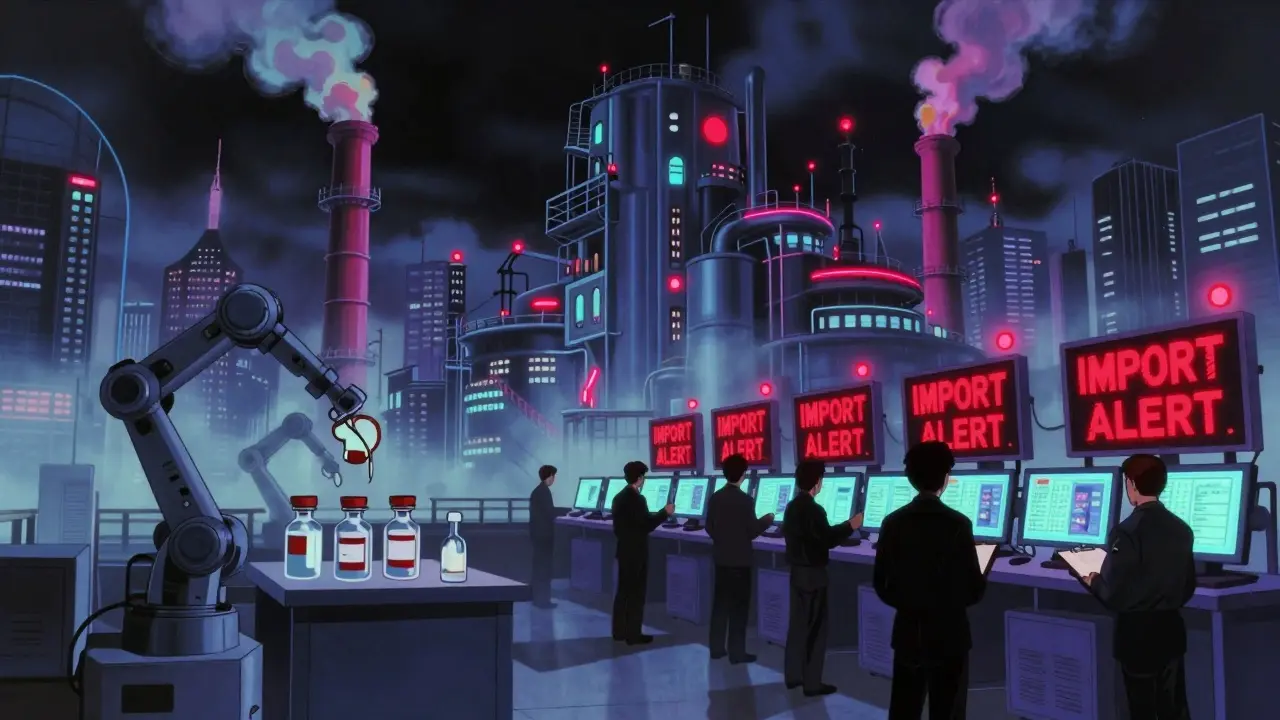
China makes about 80% of the world’s generic APIs. That’s not a guess-it’s a fact backed by DrugPatentWatch’s 2023 data. The scale is staggering. Factories in Jiangsu, Zhejiang, and Shanghai churn out billions of doses of antibiotics, blood pressure meds, and painkillers every year. The cost? Often half what it is in the U.S. or Europe. That’s why so many drugmakers outsourced production there in the 2000s. But volume doesn’t equal reliability. The FDA has flagged Chinese facilities for quality issues for over a decade. In 2023, 37% of Chinese pharmaceutical plants faced import alerts-meaning the FDA blocked shipments because of contamination, falsified records, or poor sanitation. Compare that to India’s 18%. It’s not just about one bad batch. It’s about inconsistent standards. Smaller Chinese suppliers, especially those outside major cities, often cut corners to meet price targets. The FDA’s inspections in China have increased since 2020, not because the country got worse, but because the U.S. stopped trusting the old assumptions.India’s Edge: Compliance Over Capacity
India doesn’t make as much as China, but it makes what the FDA trusts. Over 100 Indian manufacturing sites are FDA-approved-more than double China’s 28. Why? Because Indian companies built their business on compliance. After the 1970 Patents Act allowed local generic production, India’s pharma sector focused on meeting Western standards to export. Today, that’s their biggest selling point. Companies like Dr. Reddy’s, Sun Pharma, and Alembic don’t just follow GMP rules-they bake them into their systems. Bain & Company’s 2024 report found Indian plants using digital monitoring tools to catch errors before they happen. That’s not just good practice; it’s a competitive advantage. During FDA inspections from 2020 to 2023, Indian facilities received 30% fewer Form 483 observations (the official notice of violations) than Chinese ones. This is why global pharma companies are shifting toward the “China+1” strategy. Instead of relying only on China, they’re adding India as a backup. It’s not about replacing China-it’s about reducing risk. One U.S. procurement executive told Bain: “We can’t afford another supply shock because a Chinese factory failed inspection.”The Hidden Weakness: India’s Dependence on China
Here’s the twist: India can’t make its own APIs at scale anymore. About 72% of India’s bulk drug imports come from China, up from 66% in 2022. That’s a dangerous dependency. India produces finished pills, but the raw chemical ingredients? Mostly from China. Think of it like baking bread. India has the ovens, the bakers, the packaging. But the flour? Still imported. If China cuts off API exports-due to trade tensions, a factory shutdown, or a regulatory crackdown-India’s entire drug supply chain could stall. The U.S. and EU don’t care if the final tablet was made in Hyderabad. If the API came from a Chinese plant with an import alert, the whole shipment gets blocked. India’s government knows this. That’s why it launched the $3 billion Production-Linked Incentive (PLI) scheme in 2020. The goal? Build domestic API manufacturing. But progress is slow. Setting up a compliant API plant takes years, not months. And China still has the edge in cost and infrastructure for bulk chemicals.
How the FDA Watches Both Countries
The FDA doesn’t just review paperwork. It sends inspectors-often unannounced-to manufacturing sites. In 2023, the agency conducted over 400 inspections in India and around 200 in China. The reports are public. You can see exactly what went wrong. In China, the most common violations? Inadequate cleaning procedures, missing data logs, and unverified test results. One inspection report from a Shanghai facility noted that employees were manually altering chromatography data to hide impurities. That’s not a typo. That’s fraud. In India, violations are rarer-but they happen. The most frequent issues are around documentation delays and minor deviations in batch records. No one’s falsifying data on purpose. But when a plant is running 24/7, paperwork can slip. The FDA treats these as fixable, not fatal. The difference? China’s problems are systemic. India’s are operational. That’s why the FDA gives Indian companies more chances to correct issues before banning imports.Who Wins When Regulations Clash?
For U.S. drugmakers, the choice isn’t just about price. It’s about predictability. A 2022 survey by PharmaBoardroom found 12% of companies preferred India as a manufacturing partner. Only 9% chose China. Why? Because when you’re responsible for patient safety, you can’t afford surprises. India’s strength is in finished dosage forms-tablets, capsules, injections. China’s is in APIs and complex biologics. China’s biopharmaceutical market grew at 19.3% annually between 2015 and 2024. India’s biosimilars market is growing faster-22% CAGR-but it’s starting from a much smaller base. The future? India will keep winning in generics because it’s the only country that combines compliance, English-speaking workforce, and cultural alignment with Western regulators. China will hold on to APIs and scale-but only if it keeps improving. The FDA won’t let bad quality slide forever.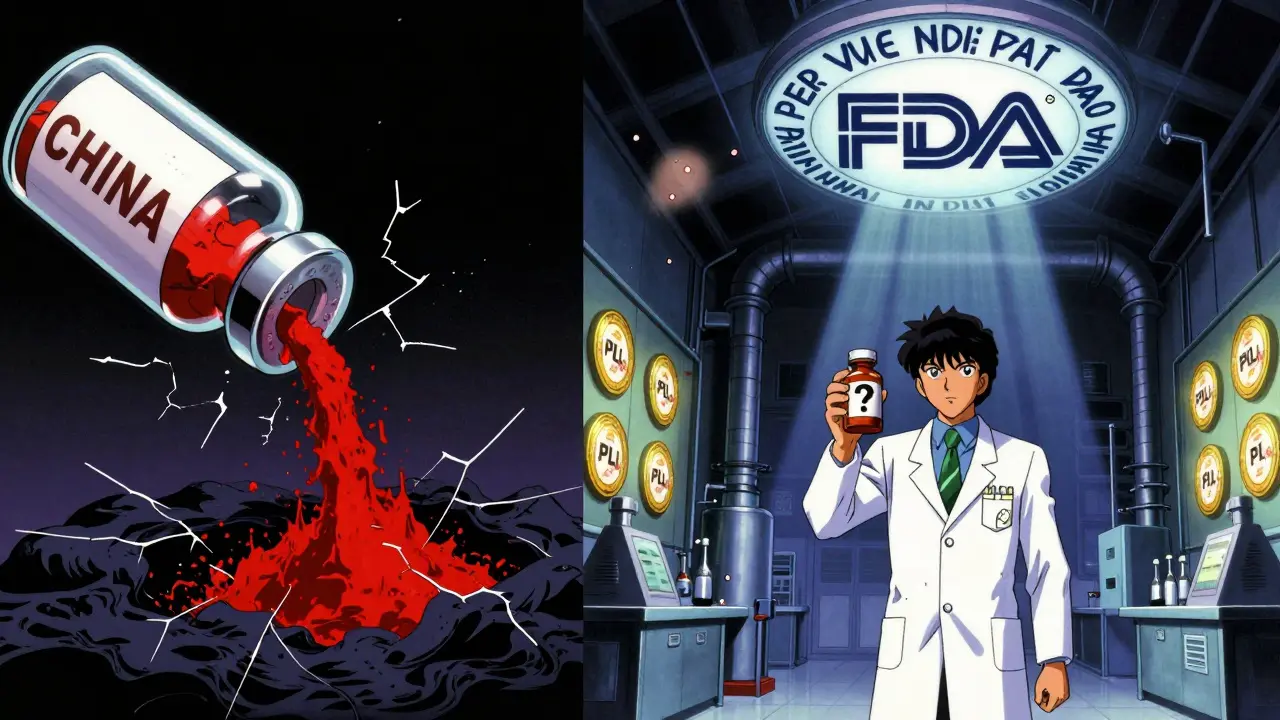
What This Means for Patients and Pharmacies
You might not see the difference on the label. But behind every generic pill, there’s a story. If it’s made in India, it’s more likely to pass FDA checks without delay. If it’s made in China, there’s a higher chance it’s sitting in a warehouse while inspectors review data. That doesn’t mean Chinese-made drugs are unsafe. Many are perfectly fine. But the risk is higher. And when a drug gets pulled from shelves because of contamination, patients are the ones who suffer. Pharmacies and hospitals are starting to ask suppliers: “Where’s the API from?” More are demanding dual sourcing-some tablets from India, some from China-to avoid disruption. It’s not ideal. But it’s safer.The Road Ahead: Can India Break Free From China?
India’s long-term success depends on one thing: becoming self-sufficient in APIs. Right now, it’s like a car with a great engine but no fuel. The government is pushing PLI incentives hard. Investors are stepping in. But building API plants that meet FDA standards isn’t like building a call center. It takes billions, years, and deep technical expertise. China won’t give up its lead easily. It’s investing in AI-driven manufacturing and advanced biologics. But its reputation is fragile. One major scandal could send global buyers running for good. India’s path is clearer: keep improving compliance, invest in domestic API production, and move into higher-value drugs like biosimilars and cell therapies. If it does, it could hit $350 billion in pharmaceutical exports by 2047, according to Bain & Company. But if India stays dependent on China for its raw materials? That’s not resilience. That’s vulnerability.Why does the FDA inspect Indian and Chinese drug factories more than U.S. ones?
The FDA inspects foreign facilities more because the U.S. doesn’t control their quality standards. Domestic plants follow the same rules but are easier to monitor. Foreign factories, especially in countries with weaker enforcement, carry higher risk. The FDA’s job is to protect U.S. patients-even if that means flying inspectors halfway around the world.
Are drugs made in China unsafe?
No, not all drugs made in China are unsafe. Many meet global standards. But the risk of quality issues is higher than in India. The FDA has issued more import alerts against Chinese facilities, and past scandals involved falsified data and contamination. That doesn’t mean every batch is bad-but it means you can’t assume safety without verification.
Why is India’s API dependency on China a problem?
Because if China stops exporting APIs-due to trade bans, factory closures, or political tension-India can’t make its own generic drugs fast enough. That means shortages in the U.S., Europe, and developing countries. It’s a single point of failure in a global supply chain that’s supposed to be resilient.
Does the FDA prefer India over China?
The FDA doesn’t have a preference-it has data. Indian facilities consistently have fewer violations. More inspections pass without major findings. That’s why India has over 100 approved plants versus China’s 28. It’s not bias. It’s results.
Can I tell if my medicine is made in China or India?
On the label? Usually not. The country of origin isn’t required to be listed for generic drugs. But some pharmacies and online retailers now disclose this info. If you’re concerned, ask your pharmacist or check the manufacturer’s website. You can also search FDA inspection reports by company name to see where their facilities are located.
What’s the biggest risk in the global drug supply chain right now?
It’s not one country-it’s dependence. Relying too much on one region for critical ingredients, whether it’s China for APIs or India for finished drugs, creates fragility. The smartest companies are building redundancy: sourcing from multiple countries, investing in domestic production, and using real-time quality tracking. The future belongs to those who plan for disruption, not just cost savings.

Comments (13)
Tim Bartik December 16 2025
China’s got the volume but zero accountability. I don’t care how cheap their pills are-if I’m taking something that could’ve been made in a garage with a 1998 laptop running fake HPLC data, I’d rather pay double and sleep at night. 🇺🇸💪Daniel Thompson December 16 2025
The FDA's inspection protocols are rigorously documented and publicly accessible. The statistical disparity in Form 483 observations between Indian and Chinese facilities is not anecdotal; it is empirically validated across a decade of regulatory data.Alexis Wright December 18 2025
Let’s be real-this isn’t about quality control. It’s about empire. China built its dominance on exploitation: labor, environment, regulatory arbitrage. India? They’re playing the long game, mimicking Western compliance like a student copying the teacher’s notes. But here’s the twist: neither country truly owns the chain. They’re both just middlemen for Big Pharma’s greed. We’re all just pawns in a game where profit trumps patient safety. 🤡Natalie Koeber December 20 2025
I heard the FDA’s inspections are rigged. Like, they only go to plants that already passed a secret pre-screen. And China? They’re totally being framed so the US can push ‘Made in India’ propaganda. Plus, aren’t most of those ‘Indian’ drugs just repackaged Chinese stuff with a new label? 😒Wade Mercer December 21 2025
If you’re okay with your medicine being made in a facility where data gets manually altered, you’re not just naive-you’re complicit. This isn’t a supply chain issue. It’s a moral failure. And we’re all paying for it with our health.Dwayne hiers December 22 2025
The 72% API dependency on China is a systemic vulnerability in India’s pharma model. While India excels in finished dosage form (FDF) manufacturing under cGMP, the upstream supply chain remains a single point of failure. The PLI scheme is a step, but capex for API plants exceeds $500M per facility with 3–5 year lead times. Dual-sourcing isn’t optional-it’s a risk mitigation imperative.Jonny Moran December 23 2025
I get why people are nervous about China, but let’s not forget-India’s success isn’t magic. It’s the result of decades of engineers, chemists, and regulators working hard to meet global standards. We should be cheering them on, not treating them like a backup plan. They’re doing the heavy lifting so we can get affordable meds. Let’s not forget to say thanks.Sarthak Jain December 24 2025
As someone from India, I see this daily. We make the pills, but we still buy the soul of them from China. PLI is good, but we need more than cash-we need labs, skilled chemists, and real R&D. Also, why does everyone act like FDA inspections are some holy grail? They miss stuff too. Just saying.Sinéad Griffin December 25 2025
China = evil empire. India = hero. 🇮🇳❤️🇺🇸 Let’s just boycott all Chinese meds and make America great again with pills made by robots in Texas! 💥💊 #BuyAmerican #PharmaPatriotjeremy carroll December 26 2025
Honestly, I didn’t even know where my blood pressure meds came from until I read this. Kinda wild. But hey-maybe we should just make more here? I mean, we’ve got the brains. Why not? 🤔Edward Stevens December 27 2025
So let me get this straight-we’re worried about China’s data falsification… but we’re fine with India making 72% of their ingredients from China? That’s like worrying about your chef using expired salt… while your entire kitchen is owned by the salt company. 🤦♂️Daniel Wevik December 28 2025
This isn’t about blame-it’s about building resilience. We need diversified sourcing, real-time supply chain visibility, and investment in domestic API capacity. The FDA’s data proves what works. Now we need policy that matches the science, not just the headlines. We can do better than this fragile system.Rich Robertson December 30 2025
I’ve worked in pharma logistics for 15 years. The truth? Most patients don’t care where the pill came from-until it’s not there. The real win isn’t China vs. India. It’s transparency. If we could scan a QR code on every bottle and see the full supply chain-from API source to final tablet-we’d all sleep better. Maybe that’s the next revolution.