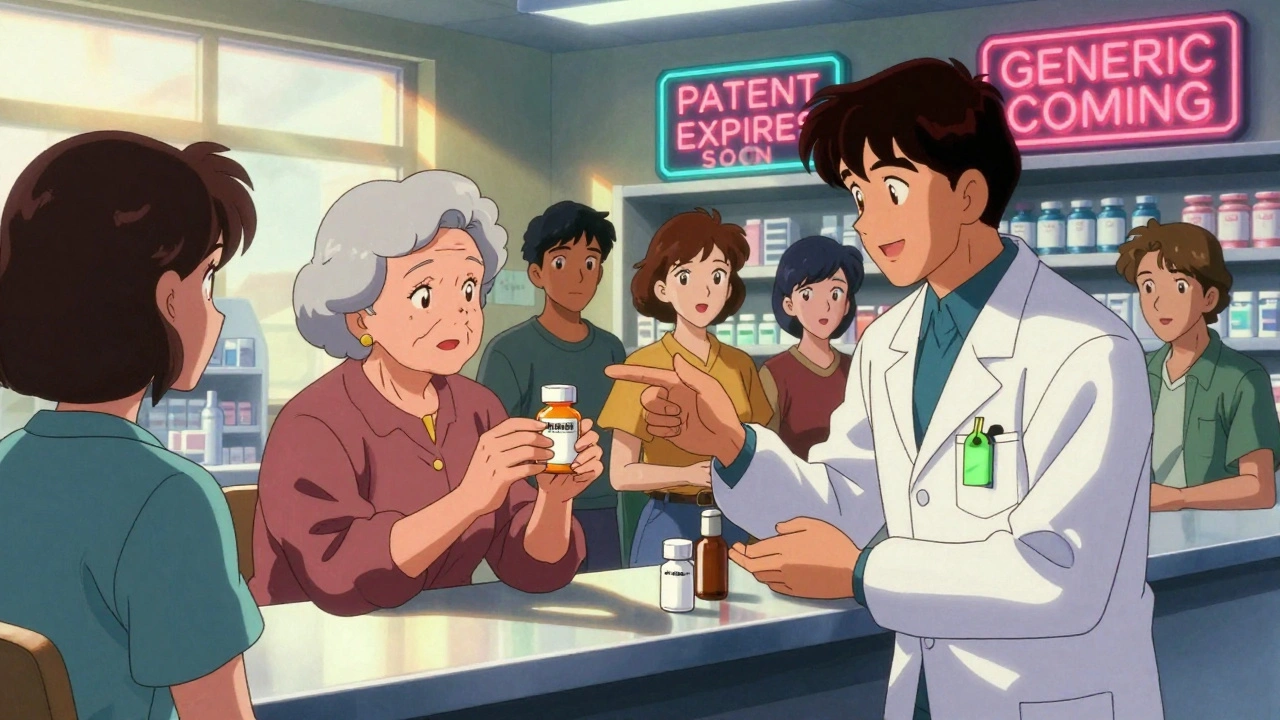
Patent expiry isn’t just a legal event-it’s a turning point for your health and your wallet
Every year, dozens of top-selling prescription drugs lose their patent protection. That means cheaper generic versions can hit the market. For patients, that could mean paying 80% less for the same medicine. For hospitals and insurers, it’s a chance to save millions. But here’s the catch: patent expiry doesn’t automatically mean lower prices or smooth transitions. Without planning, patients get switched to unfamiliar pills, pharmacies run out of stock, and savings vanish behind complex rebate deals.
Right now, over $90 billion in brand-name drug sales are at risk of expiring between 2025 and 2029. That’s not a future problem-it’s happening now. Drugs for diabetes, arthritis, high cholesterol, and even cancer are losing patent protection in the next two years. If you or someone you know takes one of these medicines, you need to act before the switch happens.
Why generic drugs don’t always mean instant savings
When a patent expires, generic versions are supposed to be cheaper. And they usually are-often 80-85% lower than the brand-name price within a year. But in the U.S., that savings doesn’t always reach the patient.
Why? Because drug pricing isn’t simple. Brand-name companies often set up rebate deals with pharmacy benefit managers (PBMs). These deals make the brand drug look cheaper to insurers, even when it’s not. When generics arrive, those rebates disappear, but the insurer may not pass the savings on to you. You might still pay the same copay-even though the pharmacy paid far less for the generic.
Plus, not all generics are the same. Some are made by different manufacturers, with different fillers or coatings. For most people, that doesn’t matter. But for patients on tight-dose medications-like blood thinners or epilepsy drugs-even small differences in how the drug is absorbed can cause side effects. A 2022 Kaiser Family Foundation survey found 37% of patients reported new symptoms after switching to a generic, even though the FDA says they’re bioequivalent.
What healthcare systems are doing (and what they should be doing)
Hospitals and health systems that plan ahead save big. A 2023 analysis of 150 health systems showed those who started planning 24 months before patent expiry saved 22% more than those who waited until 12 months out. That’s an extra $900,000 per drug on average.
Successful systems do four things early:
- Track expirations-They use software like Symphony Health’s PatentSight to monitor over 1,400 patent expiration dates each year in the U.S. alone.
- Build a team-Pharmacists, doctors, finance staff, and contract managers meet regularly to review which drugs are expiring and what generics are coming.
- Update formularies-They decide which generic to prefer *before* the patent expires, so prescriptions switch smoothly.
- Prepare patients-They send out clear letters and hold Q&A sessions so patients know what to expect, why the change is happening, and how to report side effects.
Smaller clinics struggle with this. A 2022 survey found 58% of medical groups didn’t have enough staff or tools to track multiple expirations at once. If you’re a patient at a small practice, don’t wait for them to act-ask your doctor or pharmacist about your meds.
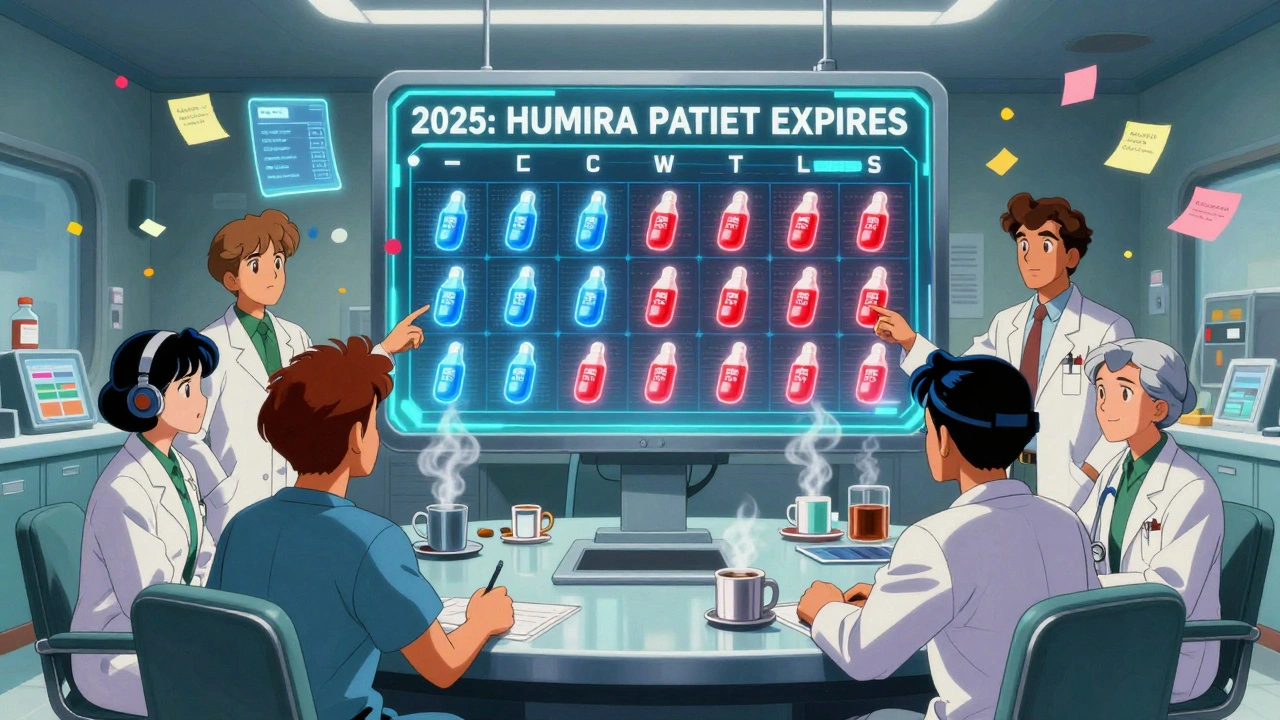
Biologics and biosimilars: The next big wave
Not all drugs are created equal. Small-molecule pills (like atorvastatin or metformin) are easy to copy. But biologics-injectable drugs made from living cells, like Humira or Enbrel-are far more complex. Their copies aren’t called generics; they’re called biosimilars.
Biosimilars take longer to develop, cost more to make, and face more regulatory hurdles. As a result, they don’t drop in price as fast. While small-molecule generics hit 90% market share within a year, biosimilars only reach 38% after two years. And in autoimmune diseases like rheumatoid arthritis, adoption is even slower-just 18% in some cases.
Why? Doctors are cautious. Patients are worried. And insurers haven’t pushed hard enough to switch. But that’s changing. By 2028, IQVIA predicts biosimilars will capture 45% of the biologics market, saving $150 billion cumulatively. If you’re on a biologic, ask now: Will my drug lose patent protection soon? What biosimilars are approved?
How to protect yourself as a patient
You don’t need to be an expert to prepare. Here’s what you can do today:
- Check your meds-Look up your prescription on Drugs.com or the FDA’s Orange Book. Search for the brand name and see if there’s an “expiration date” listed for patent protection. If it’s within the next 18 months, get ready.
- Ask your pharmacist-When you refill your prescription, ask: “Is there a generic coming? Will I be switched? What’s the difference?”
- Don’t assume your copay drops-Just because the drug is cheaper doesn’t mean your out-of-pocket cost will fall. Call your insurer and ask: “If my drug switches to a generic, will my copay change?”
- Report side effects-If you feel different after switching to a generic-more fatigue, dizziness, or nausea-tell your doctor. It’s not “all in your head.” Differences in inactive ingredients can affect how your body handles the drug.
- Know your rights-Under Medicare Part D, you can request a formulary exception if your new generic isn’t working. You don’t have to accept a switch if it harms your health.
The hidden traps: Patent thickets and pay-for-delay
Big drug companies don’t just wait for patents to expire. They fight to delay them. One common trick? Filing dozens of secondary patents on tiny changes-like a new coating, a different pill shape, or a slightly slower-release version. This is called a “patent thicket.” Nearly 80% of the top 100 selling drugs have over a dozen patents each.
Another tactic? “Pay-for-delay.” That’s when the brand-name company pays a generic maker to stay off the market. The FTC says these deals cost U.S. consumers $13 billion a year. While new laws like the 2023 CREATES Act are cracking down, they’re still happening.
What does this mean for you? Even if a patent is supposed to expire in June, the generic might not show up until October-or never. That’s why planning can’t just be about the calendar date. You need to know if the drug is likely to face delays.
What’s changing in 2025 and beyond
The rules are shifting. The Inflation Reduction Act of 2022 lets Medicare negotiate prices for drugs after patent expiry-starting in 2026. That could affect 10-20 drugs per year, forcing companies to lower prices faster.
The FDA is also speeding things up. Its new GDUFA III rules aim to cut approval times for complex generics from 18 to 12 months. And Congress is debating the Pharmaceutical Patent Reform Act, which could shorten the 180-day exclusivity window for the first generic maker-making it harder for one company to monopolize the market after expiry.
Meanwhile, AI tools are helping health systems predict expirations more accurately. Systems using AI now forecast patent dates with 89% accuracy-up from 65% just two years ago.
Bottom line: Don’t wait for the switch
Patent expiry is inevitable. But the impact isn’t. If you’re on a chronic medication, especially one costing over $100 a month, you’re in the crosshairs of this wave. The difference between planning ahead and doing nothing could be hundreds or even thousands of dollars a year.
Start now. Find out what drugs you take are nearing expiry. Talk to your pharmacist. Ask your doctor about alternatives. Don’t let confusion, inertia, or corporate maneuvering cost you your health-or your money.
What happens to my prescription when a drug’s patent expires?
When a patent expires, generic versions can be sold legally. Your pharmacy may automatically switch you to the cheapest available generic unless you or your doctor requests otherwise. Your copay might not drop right away due to insurance rebates, so always check with your insurer.
Are generic drugs as safe and effective as brand-name drugs?
Yes, by FDA standards. Generics must deliver the same active ingredient in the same amount and work the same way. But they can have different inactive ingredients-fillers, dyes, coatings-which sometimes cause side effects in sensitive patients. If you notice new symptoms after switching, tell your doctor.
Why are biosimilars so much slower to adopt than generics?
Biosimilars are made from living cells, not chemicals, so they’re harder and more expensive to produce. Doctors are cautious because they’re not identical to the original. Insurance companies don’t always push them. And patients are often afraid to switch. All this slows adoption-even though they’re still cheaper than the brand.
Can I refuse to switch to a generic if I don’t want to?
Yes. Under Medicare and most private plans, you can request a formulary exception. Your doctor can write a letter saying the generic isn’t appropriate for you. You may pay more, but you won’t be forced to switch if it affects your health.
How do I find out when my drug’s patent expires?
Go to the FDA’s Orange Book (https://www.accessdata.fda.gov/scripts/cder/ob/) and search by brand name. You’ll see the patent and exclusivity dates. Or ask your pharmacist-they often have access to tools that track upcoming expirations.
What should I do if my generic drug causes side effects?
Stop taking it and contact your doctor immediately. Not all generics are the same-even if they contain the same active ingredient. Your doctor can switch you to a different generic or request the brand name if medically necessary. Report the issue to the FDA’s MedWatch program to help track safety concerns.
Will my insurance premiums go down because of patent expirations?
Not directly. Insurance companies save money on drug costs, but those savings don’t always translate to lower premiums. They may use the savings to cover other costs, increase profits, or fund new drug coverage. Ask your insurer how they’re using the savings from generic switches.
Next steps: What to do right now
Don’t wait for your doctor to bring it up. Take control:
- Make a list of all your prescriptions, especially if you take them daily.
- Look up each one on the FDA’s Orange Book or ask your pharmacist: “Is this drug losing patent protection soon?”
- If it’s within 12-18 months, schedule a conversation with your doctor: “What happens when the generic comes? Are there alternatives?”
- Call your insurance company and ask: “If this drug becomes generic, will my copay change? Will I be switched automatically?”
- Set a reminder for 6 months before the expected expiry date to check in again.
Patent expiry is one of the biggest cost-saving opportunities in healthcare today. But only those who plan ahead actually benefit. You have the power to make sure you’re one of them.

Comments (20)
Eddie Bennett December 8 2025
I've been on lisinopril for years. Last month my pharmacy switched me to the generic without telling me. Started getting dizzy every afternoon. Called my doc, they said it's probably the filler. Switched me to a different generic and I'm fine now. Don't assume it's all the same.Just saying: ask questions.
Mia Kingsley December 9 2025
generic drugs are just as good as brand name lol i bet you think tap water is better than bottled water tooKatherine Liu-Bevan December 10 2025
The FDA requires generics to have the same active ingredient, strength, dosage form, and route of administration. Bioequivalence is tested rigorously. But you're right - inactive ingredients vary. For most people, no issue. For those on narrow therapeutic index drugs - warfarin, levothyroxine, phenytoin - even minor differences matter. Always monitor and report changes. Your pharmacist can help identify which generic manufacturer you're getting.Courtney Blake December 10 2025
This is why I hate American healthcare. Big pharma buys Congress. Patients get screwed while CEOs buy private islands. And now they're even delaying generics with patent thickets? We need to nationalize drug pricing. Or just ban these companies entirely.Lisa Stringfellow December 10 2025
Everyone's acting like this is a surprise. It's not. The system is designed to confuse you. You're supposed to feel powerless. That's the point.Kristi Pope December 11 2025
I love how this post gives real tools instead of just yelling about the problem. Seriously - checking the Orange Book? Calling your insurer? Setting reminders? That’s the kind of stuff that actually helps. You don’t need to be a doctor to protect yourself. Just be a little stubborn and curious.Also, if you’re on Humira - start asking about biosimilars now. They’re way better than they were 5 years ago.
Aman deep December 13 2025
In India we get generics cheap but sometimes quality is hit or miss. Still, people survive on them. Here in US it’s wild how the same pill costs 10x more. I think system is broken not the medicine. Pharmacies should be transparent about who makes the generic. Not just say 'generic' and move on.Paul Dixon December 15 2025
My grandma switched to a generic for her cholesterol med and started forgetting her own name. Not joking. Took her three weeks to figure out something was off. Doc finally switched her back - turns out the generic had a weird coating that messed with absorption. She’s fine now. Don’t brush this off.Sylvia Frenzel December 17 2025
So let me get this straight - we’re supposed to trust a pill that’s 80% cheaper but made by a company we’ve never heard of, with unknown fillers, and no one tells us until the day we get it? And you wonder why people are scared?Vivian Amadi December 18 2025
You think this is bad? Wait till you see what happens when Medicare starts negotiating. They’ll pick the cheapest one. Period. Even if it makes you feel like a zombie. You’ll be lucky if they let you keep your brand name. They don’t care about your side effects.Jimmy Kärnfeldt December 19 2025
It’s funny how we treat medicine like it’s a commodity. But your body isn’t a factory. It doesn’t care if the pill was made in Ohio or Shanghai. It cares if it works. And sometimes, it needs the exact version it’s used to. Maybe the real issue isn’t the patent - it’s how we’ve turned healing into a spreadsheet.Ariel Nichole December 20 2025
I just checked my meds - three of them are expiring in the next 18 months. I’m going to call my doctor next week. I’ve been putting it off because I hate talking about pills. But this post made me realize: I owe it to myself to ask.john damon December 21 2025
I just found out my insulin is gonna go generic in 2026 😱 I’m crying happy tears. My insurance used to charge me $400 a month. I’m gonna start saving for a trip 🌍✈️matthew dendle December 22 2025
generic drugs are just brand name with a bad haircut lolMonica Evan December 24 2025
I work in a rural clinic. We don’t have access to fancy tracking tools. But we started keeping a simple spreadsheet: drug name, patent date, generic name, common side effects reported. We print it out and hang it by the pharmacy counter. Patients love it. Simple things work. You don’t need AI to care.Taylor Dressler December 24 2025
The biggest gap isn’t the science - it’s communication. Patients aren’t being told what’s coming. Pharmacists are overwhelmed. Doctors are overbooked. We need systems that flag high-risk patients automatically. Not just rely on someone remembering to ask.Aidan Stacey December 26 2025
My brother’s on a biologic for psoriasis. They tried switching him to a biosimilar last year. He broke out worse than ever. Took three months to get his original back. They didn’t even test him first. Just assumed. He’s still angry. And honestly? I don’t blame him.Jean Claude de La Ronde December 27 2025
In Canada we just negotiate prices directly. No rebates. No PBMs. No patent thickets. Generics hit the market fast. Prices drop. Everyone wins. Except Big Pharma. Which is why they lobby so hard to stop us. Funny how that works.Stephanie Maillet December 27 2025
I wonder... if we treated medicine like we treat food - with transparency, labeling, and traceability - would we be in this mess? Imagine if every pill had a QR code showing its manufacturer, fillers, and batch history. Would we still be afraid?Jim Irish December 29 2025
My father died last year from complications after being switched to a generic without warning. He had epilepsy. The new version didn’t work the same. We didn’t know until it was too late. This isn’t theoretical. It’s personal.