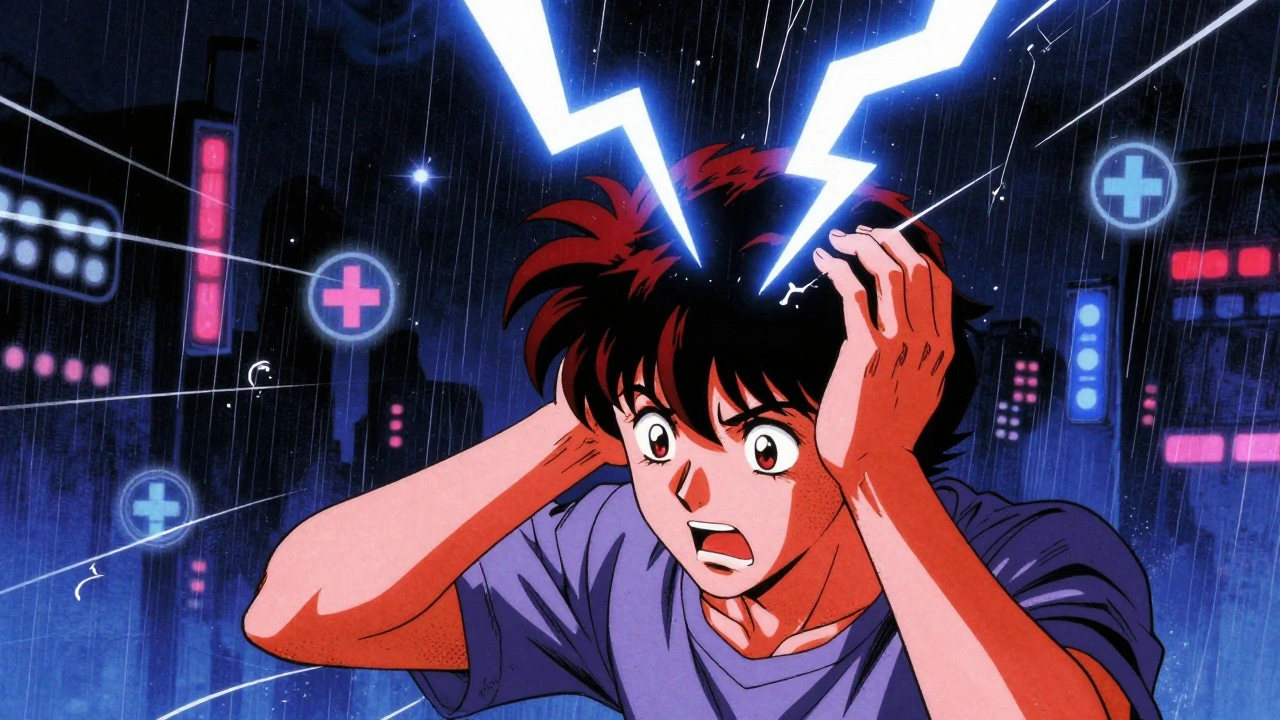
Most headaches are harmless. You’ve had them before-stress, lack of sleep, or too much coffee-and they go away with a nap or an ibuprofen. But sometimes, a headache isn’t just a headache. It’s your brain screaming for help. And if you miss the signs, the consequences can be life-changing-or fatal.
When a Headache Is a Medical Emergency
Headaches are common. The World Health Organization says about half of all adults get one each year. But only about 5% of those visiting the ER have something serious going on. The problem? Doctors miss up to 20% of those cases because the red flags aren’t recognized.
That’s why knowing the warning signs isn’t just helpful-it’s essential. You don’t need to be a doctor to spot them. You just need to know what to look for.
Thunderclap Headache: The #1 Red Flag
Imagine your head exploding. Not metaphorically. Literally. That’s what a thunderclap headache feels like. It hits like a lightning strike-maximum pain in under a minute. It doesn’t build. It doesn’t creep. It just blows up.
This isn’t a migraine. It’s not a tension headache. It’s often a ruptured brain aneurysm. In fact, 85% of subarachnoid hemorrhages-bleeding around the brain-start this way. And here’s the scary part: the first CT scan misses it in 3-5% of cases. That’s why if you have a thunderclap headache, you need an MRI within 4 hours, even if the CT looks normal.
One patient on Reddit shared: “I ignored my thunderclap headache for four hours. Thought it was the worst migraine ever. Turned out it was a ruptured aneurysm. The delay increased my chance of rebleeding by 40%.”
If you or someone you know gets a headache like this-instant, brutal, unlike anything before-call 911. Don’t wait. Don’t text your friend. Don’t try to tough it out. Get to a hospital now.
Headaches with Neurological Symptoms
Headaches that come with weakness, slurred speech, blurred vision, or confusion? That’s not a migraine. That’s a stroke-or something just as dangerous.
Stroke symptoms don’t come and go. They get worse. Fast. A 32-year-old woman on HealthUnlocked thought her blurred vision and slurred speech were anxiety. She waited 3.5 hours before going to the ER. She had a stroke. Permanent vision loss followed.
Here’s what to watch for:
- One-sided weakness or numbness (face, arm, leg)
- Difficulty speaking or understanding speech
- Sudden vision loss in one or both eyes
- Dizziness, loss of balance, or trouble walking
- Altered mental state-confusion, drowsiness, not recognizing people
These aren’t optional symptoms. They’re emergency signals. The American Stroke Association says these patients need evaluation within 3 hours. Every minute counts. Brain cells die by the millions with each passing second.
Headaches After Age 50
If you’re over 50 and you’ve never had serious headaches before, but now you’re getting them-especially if they’re new, worse than ever, or come with scalp tenderness or jaw pain when chewing-that’s giant cell arteritis (GCA).
This is an inflammation of the arteries, usually in the temples. It can cause blindness in hours if untreated. And it’s not rare. In people over 50, new-onset headaches carry a 23-fold higher risk of GCA. The 2023 American College of Rheumatology guidelines say if you have jaw pain when chewing, tender temples, and a headache, you need a blood test and steroids within 24 hours.
One patient in Sheffield told his GP he had “just a bad headache.” Two weeks later, he lost vision in one eye. By then, it was too late to save it. His doctor didn’t suspect GCA because he didn’t know the red flags.
Fever, Stiff Neck, and Headache
Headache plus fever? Could be the flu. Headache plus fever and stiff neck? That’s meningitis.
Not all meningitis is the same. Bacterial meningitis kills. Fast. And it doesn’t always look like textbook textbooks show. You might not have a high fever. You might just feel awful, light-sensitive, and unable to touch your chin to your chest.
Studies show 92% of bacterial meningitis cases have this combo: headache + fever + neck stiffness. If you see it, don’t wait for a doctor’s appointment. Go to the ER now. The IDSA guidelines say antibiotics must start within 45 minutes of triage. Every 30-minute delay increases death risk by 7.2%.
One patient on PatientsLikeMe wrote: “I had a headache, fever, and couldn’t turn my head. I went straight to the ER. They did a spinal tap. It was viral meningitis. Early treatment meant I was home in three days. No complications.”
Don’t assume it’s just a bad cold. If your head hurts and your neck won’t move, treat it like an emergency.
Headaches After Head Injury
You hit your head. You feel fine. But then the headache starts. Should you worry?
Yes-if it’s accompanied by:
- Loss of consciousness for more than 5 minutes
- Vomiting more than twice
- Confusion or memory loss
- Worsening headache over hours
The PECARN criteria show these signs predict intracranial bleeding with 68-76% accuracy. A CT scan within an hour can save your life. In rural areas, delays are common-up to 3.2 hours on average. That’s too long.
Don’t wait to see if it “gets better.” If you’ve had a head injury and your headache is getting worse, get scanned. Even if you feel okay now. Bleeding can be silent at first.
Headaches with Papilledema
Papilledema means swelling of the optic nerve-visible only through an eye exam. It’s caused by increased pressure inside the skull.
It’s rare. But if you have a persistent headache and your doctor notices swollen optic nerves, that’s a red flag for brain tumors, hydrocephalus, or idiopathic intracranial hypertension.
2023 guidelines from the American College of Radiology now recommend MRI over CT for papilledema. Why? MRI catches 22% more cases of pressure-related brain issues. If you’ve had headaches for months, and eye exams show swelling-don’t brush it off. Get the MRI.
Headaches in People with Cancer or Weakened Immunity
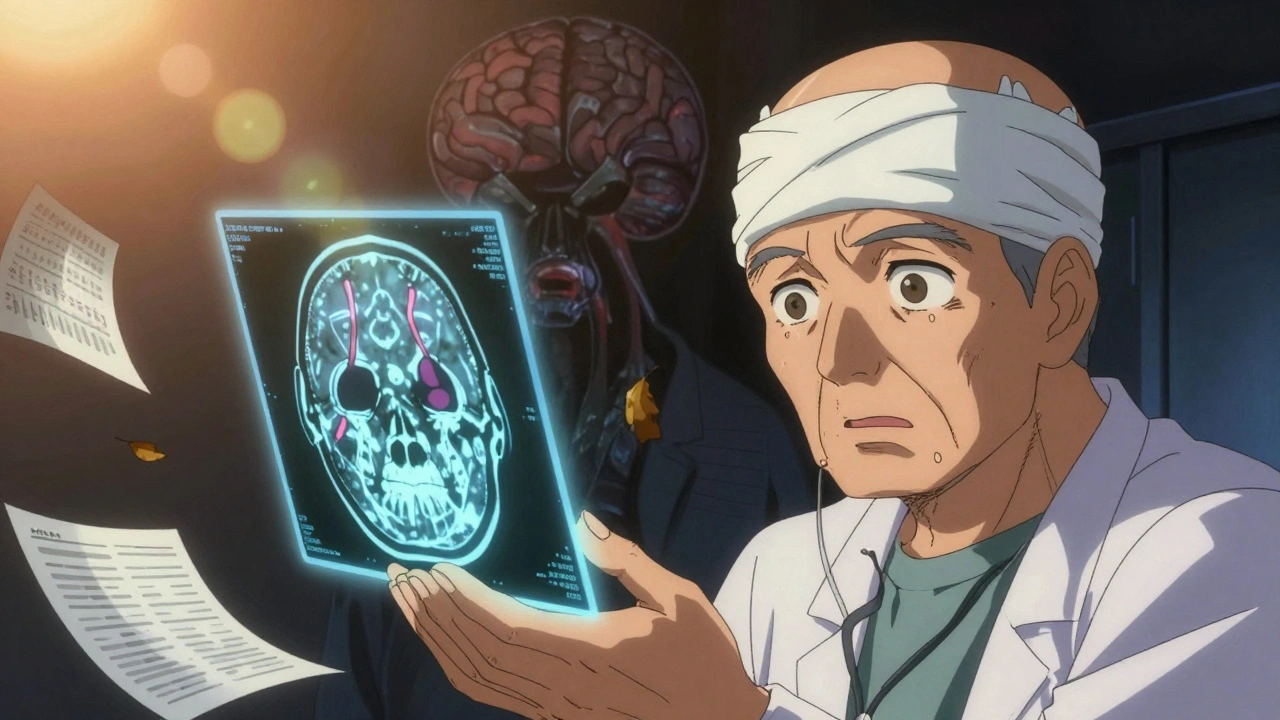
If you have cancer, HIV, or are on immunosuppressants, a headache is not something to ignore. It could be a fungal or bacterial infection in your brain.
Fungal meningitis in immunocompromised patients has a 35% death rate-even with treatment. The American College of Emergency Physicians says these patients need immediate evaluation, no matter how mild the headache seems.
And if you’ve had cancer before and now have a new headache? It could be metastasis. The Lancet Oncology study says 32% of new headaches in cancer patients signal brain spread. That’s not a coincidence. That’s a warning.
What to Do If You Spot a Red Flag
Here’s your simple action plan:
- If your headache hits like a thunderclap-call 911.
- If you have weakness, slurred speech, or vision loss-go to the ER now.
- If you’re over 50 and have a new headache with jaw pain or scalp tenderness-see a doctor within 24 hours.
- If you have fever, stiff neck, and headache-go to the ER immediately.
- If you had a head injury and your headache is getting worse-get a CT scan.
- If you have cancer or a weak immune system and get a headache-don’t wait.
And if you’re unsure? Call your doctor. Or go to urgent care. Better to be safe than sorry. Most people who survive serious neurological headaches say the same thing: “I wish I’d gone sooner.”
Why This Matters
Dr. David Dodick, who helped create the SNNOOP10 red flag system, says failure to recognize thunderclap headaches is one of the top three reasons neurologists get sued. That’s not because doctors are careless. It’s because patients don’t know what to look for.
The American Headache Society’s “Know Your Red Flags” campaign found that 68% of patients who learned the signs recognized them faster-and got care before permanent damage.
You don’t need to memorize medical jargon. You just need to know this: if your headache is different, worse, or comes with other symptoms, don’t wait.
It’s not paranoia. It’s survival.
Is a sudden, severe headache always a sign of something serious?
Not always, but it should always be treated as an emergency until proven otherwise. A thunderclap headache-peaking within 60 seconds-is the most common sign of a ruptured brain aneurysm or subarachnoid hemorrhage. While other causes like reversible cerebral vasoconstriction syndrome can mimic it, you can’t tell the difference without medical tests. If you’ve never had a headache like this before, assume it’s serious and seek immediate care.
Can a migraine have neurological symptoms like a stroke?
Yes, but there’s a key difference. Migraine aura symptoms develop slowly-over 5 to 20 minutes-and usually fade completely within an hour. Stroke symptoms hit suddenly, are often one-sided, and don’t improve on their own. If your vision blurs, your arm goes numb, or your speech slurs and doesn’t get better within an hour, treat it like a stroke. Don’t wait to see if it’s just a bad migraine.
I’m over 50 and have new headaches. Should I get scanned?
Yes-if they’re new, worse than before, or come with jaw pain, scalp tenderness, or vision changes. Giant cell arteritis is the leading cause of new headaches in people over 50. It can cause blindness in days if untreated. Blood tests (ESR, CRP) and a temporal artery biopsy can confirm it, but steroids should start within 24 hours to prevent damage. Don’t wait for a routine appointment. See a doctor right away.
What if I have a headache after a minor head bump?
If the bump was minor and you have no other symptoms-like vomiting, confusion, or worsening pain-you’re likely fine. But if you lost consciousness, vomited more than twice, feel increasingly confused, or your headache gets worse over hours, get a CT scan. Even small head injuries can cause delayed bleeding. The risk is low, but the consequences are high. When in doubt, get checked.
Can stress or anxiety cause headaches that mimic neurological red flags?
Stress can cause tension headaches or trigger migraines, but it doesn’t cause sudden neurological symptoms like weakness, speech loss, or vision changes. If you have those symptoms, anxiety is not the explanation. People often dismiss stroke symptoms as panic attacks-and that’s deadly. If your symptoms are new, focal, and don’t match your usual headache pattern, get medical evaluation. Don’t let fear of being "overreactive" delay care.
Final Thought
Your brain doesn’t complain about small things. When it does, listen. A headache is rarely the problem-it’s the messenger. And if that message includes sudden pain, weakness, fever, or confusion, the answer isn’t to wait. It’s to act.

Comments (14)
Kevin Estrada December 3 2025
bro i had a headache so bad i thought i was dying and i just took another ibuprofen and went back to sleep. turns out it was just stress... or was it??? 🤯
Katey Korzenietz December 5 2025
OMG I KNEW IT. My cousin ignored her thunderclap headache ‘cause she thought it was a migraine-lost 70% of her vision. Now she can’t drive. People are so damn careless. 🙄
Ethan McIvor December 6 2025
It’s wild how our bodies scream before they break. We’ve been trained to ignore pain, to ‘push through’… but the brain? It doesn’t bluff. When it screams, it’s not asking. It’s commanding. 🌑
Mindy Bilotta December 6 2025
Just a heads up-my dad had GCA. He thought it was just aging. Turned out his arteries were inflamed like a balloon about to pop. Steroids saved his sight. Don’t wait. Seriously.
Michael Bene December 6 2025
Look, I get it. We’re all scared of hospitals. But here’s the raw truth: if your headache feels like your skull’s being split open by a goddamn jackhammer, you don’t ‘wait and see.’ You call 911 like your life depends on it-because it does. And if you’re over 50 and your temples feel like they’re on fire? That’s not ‘getting old.’ That’s your body screaming for steroids. Stop being a coward and get checked. #NoMoreRegrets
Brian Perry December 7 2025
My buddy got hit in the head during a skateboarding wipeout. Felt fine. Went to work. Headache got worse by noon. Ended up with a subdural hematoma. Spent 3 weeks in the hospital. Dude’s lucky he didn’t die. Don’t be like him.
Chris Jahmil Ignacio December 9 2025
Let’s be real-this whole thing is a medical-industrial complex scam. CT scans cost $1500. They want you scared so you’ll pay. And don’t get me started on steroids-big pharma’s golden goose. Thunderclap headaches? Maybe it’s just caffeine withdrawal. Or dehydration. Or stress. Or your phone’s EMF radiation. The system wants you to panic so you’ll line their pockets. Wake up.
Paul Corcoran December 9 2025
Just want to say-this post saved my sister’s life. She had that weird jaw pain + headache thing after turning 52. Went to her GP, they dismissed it. She came back with vision issues. We pushed for a blood test. GCA confirmed. Steroids started within hours. She’s seeing fine now. Don’t let anyone tell you it’s ‘just aging.’ You know your body better than anyone.
Colin Mitchell December 10 2025
Hey-just wanted to say thank you for writing this. I used to brush off headaches like they were nothing. Now I know better. I told my mom about the thunderclap thing and she’s going to get checked next week. Small steps, right?
Stacy Natanielle December 10 2025
According to the WHO, 5% of ER visits for headaches are serious. But 20% of those are missed. That’s a 1% false negative rate. Statistically, that’s within acceptable clinical margins. Meanwhile, overdiagnosis leads to unnecessary radiation exposure, increased healthcare costs, and iatrogenic anxiety. Are we creating more harm than good by fear-mongering?
kelly mckeown December 12 2025
i had a headache after my bike crash last year… i thought it was fine. turned out it was a tiny bleed. didn’t know till the MRI. scared the crap outta me. please, if you’re unsure… just go. it’s better to be safe. ❤️
Tom Costello December 12 2025
Interesting how cultural attitudes toward pain shape medical outcomes. In some communities, ‘toughing it out’ is a virtue. In others, seeking help is seen as weakness. This post bridges that gap. No fluff. Just facts. Needed.
dylan dowsett December 13 2025
Wait-so if you’re over 50 and have a headache… you’re automatically at risk for giant cell arteritis? What about people who’ve had migraines since they were 18? Are we just supposed to panic every time our temples throb? This is medical gaslighting disguised as education. 😒
Susan Haboustak December 14 2025
Let’s not ignore the elephant in the room: 68% of patients who learned the signs acted faster. But what about the 32% who didn’t? Were they poor? Uneducated? Uninsured? This article doesn’t address systemic barriers to care. It just tells people to ‘act’-as if healthcare is a universal right and not a lottery.