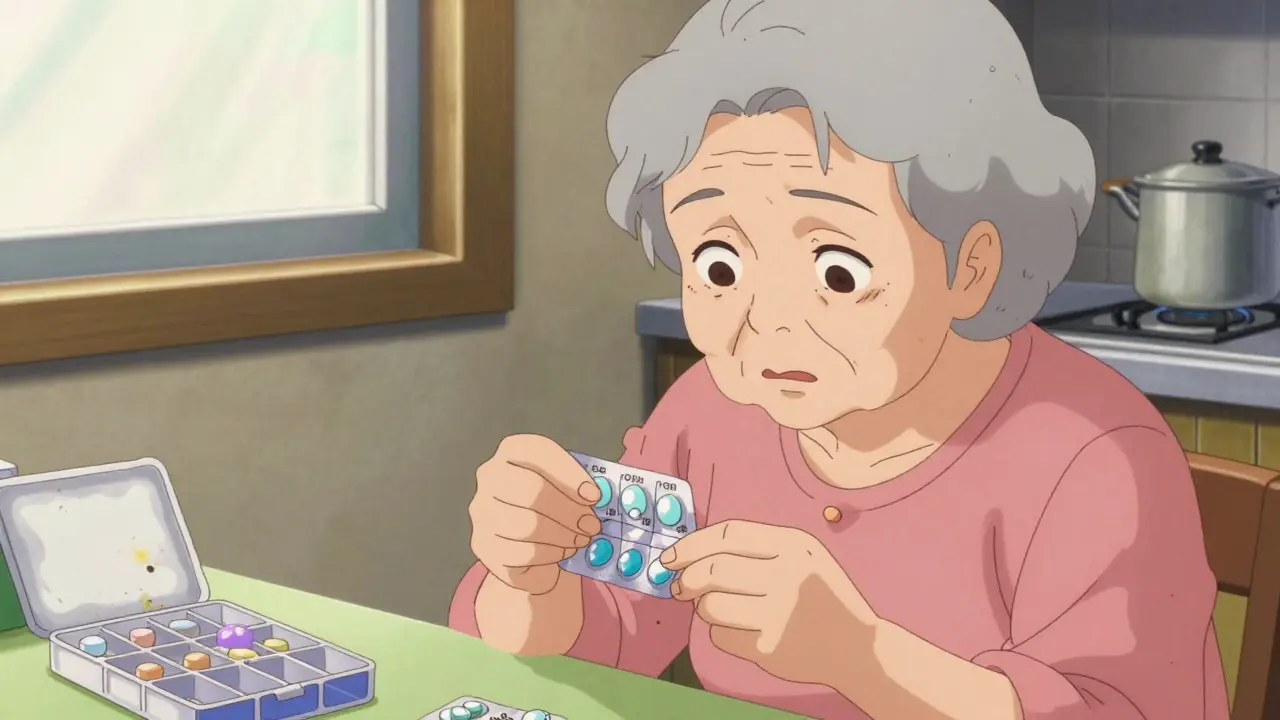
Every year, hundreds of thousands of people in the U.S. end up in the hospital because they took the wrong pill, too many pills, or missed a dose entirely. For older adults managing five, six, or even more medications, it’s not a matter of if mistakes will happen-it’s a matter of when. That’s where blister packs and pill organizers come in. They’re not fancy gadgets or expensive tech. They’re simple, proven tools that stop medication errors before they start.
What’s the real problem with pills?
It’s easy to think, "I remember my meds." But memory fades. Routines break. Life gets busy. A 2022 study found that nearly half of people with chronic illnesses don’t take their medications as prescribed. That’s not because they’re forgetful or careless-it’s because the system is broken. Imagine this: a 78-year-old with high blood pressure, diabetes, and arthritis has six different pills to take at three different times a day. They’re stored in six separate bottles. Some are big, some are small. Some have similar-looking caps. One bottle says "take with food," another says "take on empty stomach." By midweek, the labels are smudged. The pills are jumbled. Someone misses a dose. Someone takes two. Someone takes the wrong one. That’s how overdoses happen. That’s how emergency rooms get filled.Blister packs: The gold standard for safety
Blister packs are those clear plastic trays with individual bubbles, each holding one pill. They’re not new. The first patent was filed in 1950. But today’s versions are smarter. Each bubble is labeled with the day and time-Monday morning, Tuesday evening, Wednesday bedtime. You don’t have to count. You don’t have to guess. You just peel back the foil and take what’s there. A 2022 study in the American Journal of Epidemiology tracked 180 patients on multiple medications. Those using blister packs took their pills correctly 87.4% of the time. Those using regular bottles? Only 64.3%. That’s a 23% jump in adherence. In real life, that means fewer hospital visits, fewer falls, fewer bad reactions. The real power? Visual confirmation. If a bubble is still sealed, you didn’t take it. If it’s open, you did. No guessing. No double-checking. No "Did I already take this?" It’s built into the design. According to Home Instead Senior Care, blister packs reduce medication errors by 67% compared to traditional vials. That’s not marketing. That’s data from long-term care facilities where mistakes cost lives. They’re not perfect. If your meds need refrigeration, blister packs won’t work. If your doctor changes your dose, you have to get a whole new pack. But for most people on stable regimens, they’re the most reliable system out there.Pill organizers: Simple, but risky
Pill organizers are the kind you can buy at any drugstore for under $10. Seven compartments-one for each day. Some have morning, noon, evening, and bedtime slots. They’re cheap, portable, and easy to understand. But here’s the catch: you have to fill them yourself. Every week. That’s where the danger lies. A 2021 study of arthritis patients found that 37% of users made mistakes when refilling their organizers. They mixed up pills. They forgot a dose. They took the same pill twice because they couldn’t see what was left. One caregiver on AgingCare.com shared that her dad with dementia kept taking extra doses because he thought he’d missed one. Switching to blister packs stopped it cold. Organizers are fine if you’re on one or two pills and you’re sharp. But if you’re on four or more, or if your memory is fading, they’re a gamble. The visual clarity you get from a blister pack? It’s gone. You’re back to counting pills, reading tiny labels, and hoping you got it right.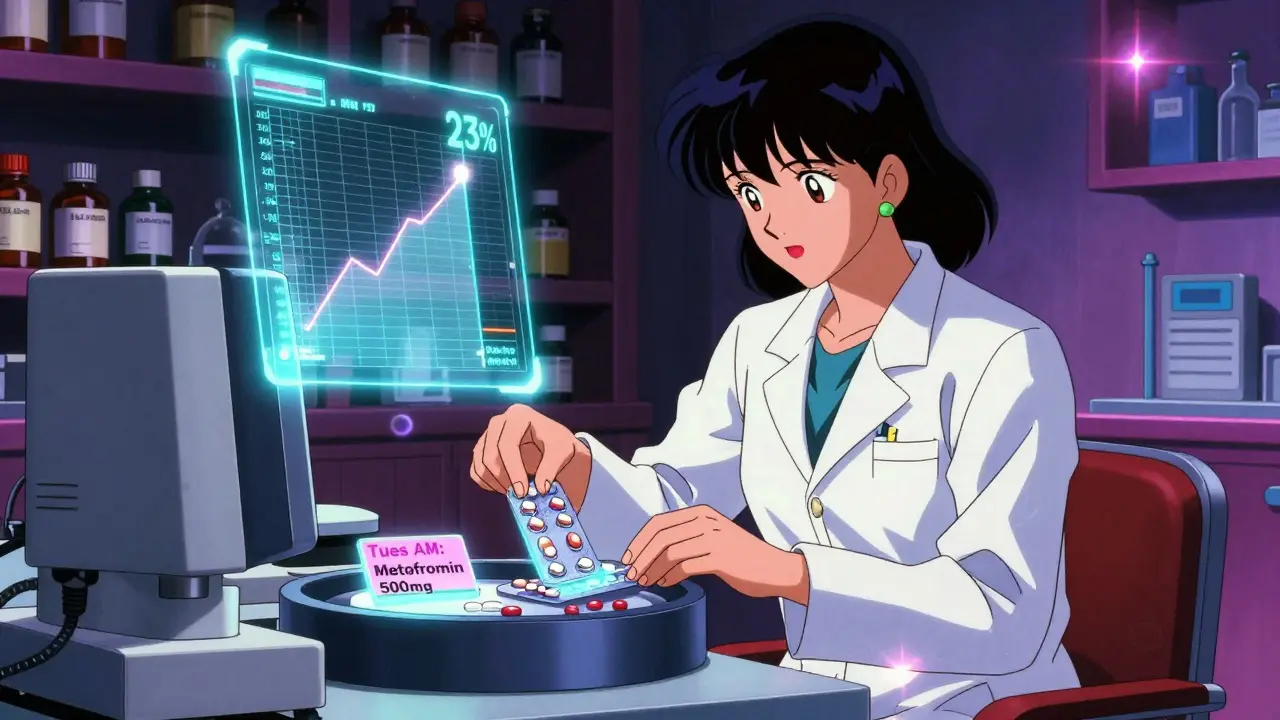
Why blister packs beat organizers every time
Let’s cut through the noise. Here’s the truth: blister packs are not just better-they’re fundamentally safer.- Blister packs are pre-filled by a pharmacy. You get them sealed, labeled, and ready. No human error in filling.
- Pill organizers rely on you (or a caregiver) to sort pills correctly. One slip-up, and you’ve created a hazard.
- Blister packs reduce medication errors by 67%. Organizers? No significant improvement in studies.
- Blister packs help patients with mild dementia. Organizers often make things worse.
- Blister packs are covered by Medicare Advantage plans. Organizers? Not usually.
How to get a blister pack
You can’t just walk into a pharmacy and ask for one. You need to work with a specialty pharmacy that does multi-dose packaging. Here’s how it works:- Call your pharmacy or ask your doctor for a referral to a medication adherence service.
- They’ll review all your prescriptions-doses, times, instructions.
- They’ll create a custom blister pack for you, usually covering 7 to 30 days.
- Each bubble is labeled with the day and time (e.g., "Tues AM: Metformin 500mg").
- You get the pack delivered to your door.
What about smart tech?
Newer blister packs now come with QR codes. Scan one, and you get a video explaining what the pill is for, how to take it, and what side effects to watch for. Others have sensors that track when you open a bubble and send alerts to your phone or your caregiver’s app. In a 2023 pilot study, these smart packs boosted adherence by 37%. But they’re not necessary for most people. The basic version-clear, labeled, sealed bubbles-works just as well. And it’s cheaper.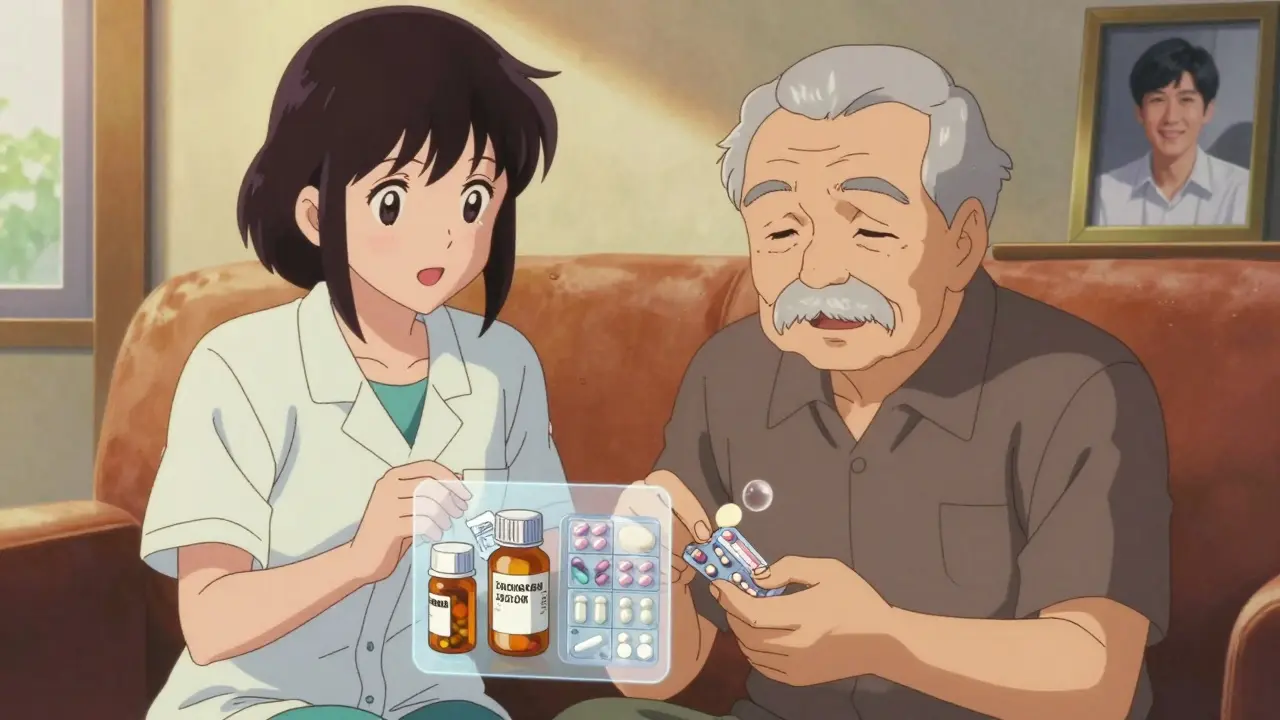
Who benefits the most?
Blister packs aren’t just for seniors. They help anyone on multiple medications:- People with heart disease, diabetes, or kidney disease
- Those taking four or more daily pills
- Patients with memory issues or early dementia
- Caregivers managing meds for a loved one
- Anyone who’s ever said, "I think I took that already..."
What to watch out for
Even the best system has limits:- Don’t use blister packs for meds that need refrigeration (like insulin or some antibiotics).
- If your meds change often (like antibiotics or new prescriptions), you’ll need to get a new pack each time. That can be a hassle.
- Some people still don’t understand why they’re taking certain pills. A 2021 FDA survey found 32% of blister pack users didn’t know the purpose of at least one of their meds. Always ask your pharmacist: "Why am I taking this?"
Final thought: It’s not about convenience. It’s about survival.
Medication mistakes don’t just cause inconvenience. They cause death. In 2022, preventable drug errors cost the U.S. healthcare system between $100 billion and $289 billion. That’s not just money. It’s lives. Blister packs aren’t magic. But they’re the closest thing we have to a fail-safe. They turn guesswork into certainty. They turn confusion into clarity. They turn a dangerous routine into a simple, safe habit. If you or someone you care for is on multiple pills, don’t wait for a mistake to happen. Ask your pharmacy about blister packs. It’s one of the simplest, cheapest, and most effective ways to prevent an overdose before it ever starts.Can I use a pill organizer instead of a blister pack?
You can, but it’s riskier. Pill organizers require you to manually fill them each week, which introduces a high chance of human error-mixing pills, missing doses, or taking duplicates. Blister packs are pre-filled and labeled by a pharmacy, eliminating that step. Studies show blister packs improve adherence by 23% more than pill organizers and reduce medication errors by 67% compared to standard bottles.
Are blister packs covered by insurance?
Yes, many Medicare Advantage plans and private insurers cover custom blister packs, especially for patients on four or more daily medications. Costs typically range from $1.50 to $3.50 per day, and some plans pay for it entirely. Check with your pharmacy or insurance provider to confirm coverage.
How do I open blister packs if I have arthritis?
Many pharmacies now offer easy-open blister packs with perforated edges, pull-tabs, or special opening tools. Ask your pharmacy for these versions if you have trouble peeling the foil. Some also sell low-cost blister pack openers online or at medical supply stores.
Can I switch from a pill organizer to a blister pack?
Absolutely. Many people make the switch after experiencing mistakes or near-misses. Talk to your pharmacist or doctor about transitioning. They’ll review your current meds, create a custom blister pack, and help you make the change safely. Most patients adapt within 1-3 uses.
Do blister packs work for people with dementia?
Yes-they’re one of the best tools for people with mild to moderate dementia. The visual layout (clear day/time labels) and sealed bubbles reduce confusion and prevent accidental double-dosing. Caregivers report fewer ER visits and less stress after switching. One study showed emergency room visits dropped to zero for a dementia patient after switching from a pill organizer to a blister pack.
What if my medication changes?
If your doctor changes a dose or adds a new pill, you’ll need a new blister pack. Unlike organizers, you can’t just swap one pill in. The pharmacy will repackage your entire regimen, usually within 2-3 days. While this requires coordination, it ensures accuracy. Some newer systems are starting to allow partial updates, but most still require full repackaging.

Comments (11)
Melissa Stansbury March 18 2026
I wish my mom had used these years ago. She took her blood pressure med and her diabetes pill at the same time, then thought she forgot one and took another. Ended up in the ER with low blood sugar and a heart palpitation. Blister packs would’ve saved us months of stress. Now I manage my dad’s meds this way-no more guessing, no more panic. Just peel and go. Simple. Life-saving.Kendrick Heyward March 19 2026
People who use pill organizers are just lazy. If you can’t be bothered to fill a box once a week, maybe you shouldn’t be managing your own meds. Blister packs aren’t magic-they’re just the *minimum* level of responsibility. I’ve seen too many elderly folks on these organizers, mixing up pills like they’re playing Solitaire. Wake up.Ryan Voeltner March 19 2026
The data presented here is compelling. A 23% increase in adherence and a 67% reduction in medication errors are not trivial numbers. When considering the economic burden of preventable hospitalizations-estimated between $100 billion and $289 billion annually-it becomes clear that systemic interventions like blister packaging are not merely convenient but ethically urgent. The fact that Medicare Advantage covers this suggests institutional recognition of its necessity.cara s March 20 2026
I used to think blister packs were overkill until my aunt, who has early-stage Alzheimer’s, started taking her neighbor’s blood thinner because she couldn’t tell the difference between the blue and white pills. We switched her to a blister pack. Within a week, she stopped asking if she’d taken her meds. She just looked at the tray. If it’s open, she did it. If it’s sealed, she didn’t. No more arguments. No more fear. It’s not about tech. It’s about design that respects cognitive limits. Why do we keep pretending people can remember what their brains can’t hold anymore?Andrew Muchmore March 22 2026
Blister packs work because they remove choice. That’s the point. Human memory is unreliable. Willpower is inconsistent. Systems that force compliance without relying on discipline are the only ones that last. Organizers ask you to be perfect. Blister packs let you be human. And that’s why they save lives.Paul Ratliff March 24 2026
my pharmacy gave me one for free after i asked. took like 3 days. no insurance hassle. just tell them you’re on 4+ meds and want the easy version. done.Stephen Habegger March 24 2026
This is one of those things that seems so obvious once you see it. Why do we make people guess when we have the tools to make it foolproof? I’m not saying everyone needs it, but if you’re on more than three meds, you owe it to yourself to ask. It’s not about age. It’s about safety.Sanjana Rajan March 25 2026
Of course blister packs are better. But let’s be real-pharmacies charge extra because they know people will pay. They don’t want you to use a $10 organizer because they make more money on packaging. And don’t get me started on how they push these smart packs with QR codes like they’re the future. Nah. Basic foil trays work fine. Stop being sold on tech that doesn’t add value.Kyle Young March 27 2026
I wonder if the deeper issue here isn’t just medication adherence, but how we treat aging as a failure of individual memory rather than a systemic design flaw. We demand that elderly people manage complex systems with deteriorating cognition, then blame them when they fail. Blister packs don’t fix aging. They fix our refusal to adapt the environment to the person. That’s the real innovation.lawanna major March 27 2026
I’ve been managing my husband’s meds since his stroke. We tried organizers. We tried alarms. We tried written lists. Nothing worked as consistently as the blister pack. It didn’t require us to remember to do anything. It just worked. And yes, it’s covered by his Medicare Advantage plan. The pharmacy even sent a technician to show us how to open the easy-peel version. That’s care. That’s dignity. I wish every family had access to this.Linda Olsson March 28 2026
I read somewhere that blister packs are part of a larger pharmaceutical control strategy. They track when you open them. They feed data back to insurers. They use that data to adjust premiums or deny coverage later. This isn’t about safety. It’s about surveillance disguised as help. I’d rather risk a missed dose than hand over my behavioral data to Big Pharma.