Tyramine Food Safety Checker
Check if your food is safe
Enter any food item to see if it's safe while taking MAOIs. The tool checks against common tyramine sources from medical research.
Try these examples
When you’re on an MAOI antidepressant, the warning about cheese is everywhere. But what if the real danger isn’t just cheddar or blue cheese? What if your miso soup, soy sauce, or even that leftover pickled beet could send your blood pressure through the roof? For over a million Americans taking MAOIs like phenelzine or tranylcypromine, the real challenge isn’t avoiding cheese-it’s learning what else is hiding in plain sight.
Why MAOIs Are Powerful-and Dangerous
MAOIs were the first antidepressants ever developed. Approved in the late 1950s, they work by blocking the enzyme that breaks down key brain chemicals like serotonin, dopamine, and norepinephrine. That’s why they’re so effective for people who haven’t responded to other treatments. But that same mechanism creates a serious risk: if tyramine builds up in your body, it forces a massive surge of norepinephrine, which can spike your blood pressure to dangerous levels-sometimes over 180 mmHg. This isn’t a mild headache. This is a hypertensive crisis. It can cause stroke, heart attack, or even death if not treated immediately.Tyramine Isn’t Just in Cheese
Most people think tyramine only comes from aged cheeses. That’s not true. Tyramine forms when proteins break down during fermentation, aging, or spoilage. The longer a food sits, the more tyramine builds up. And many everyday foods you might not suspect are loaded with it.- Dry-aged salami: 95-115 mg/kg
- Pepperoni: 80-100 mg/kg
- Smoked fish: 75-90 mg/kg
- Miso paste: 60-85 mg/kg
- Soy sauce: 45-70 mg/kg
- Sauerkraut: 50-75 mg/kg
- Kimchi: 40-65 mg/kg
- Worcestershire sauce: 25-45 mg/kg
- Fish sauce: 35-55 mg/kg
- Marmite or yeast extract: 40-60 mg/kg
- Tomato paste: 20-35 mg/kg
- Draft beer: 15-30 mg/L
- Red wine: 20-40 mg/L
- Sherry: 35-55 mg/L
- Vermouth: 50-75 mg/L
These aren’t obscure ingredients. These are common in Asian cuisine, deli meats, condiments, and even snacks. A single tablespoon of soy sauce can contain more tyramine than a slice of cheddar. And if you’re eating out, you might not even know it’s there.
What About Refrigeration?
You might think keeping food cold stops tyramine from forming. It doesn’t. Refrigeration slows down the process, but it doesn’t reverse it. A 2022 study found that tofu, which starts with only 5 mg/kg of tyramine when fresh, can jump to 25 mg/kg after just three days in the fridge. That’s why even "fresh" fermented foods can be risky if they’ve been sitting too long.And it’s not just about what’s in the container-it’s about how it’s made. Some modern fermented foods use starter cultures designed to minimize tyramine. But that doesn’t mean they’re safe. The European Food Safety Authority says these improvements have cut tyramine levels by about 30%, but individual reactions vary wildly. One person might eat kimchi with no problem. Another might end up in the ER. There’s no way to test your personal tolerance. So the only safe rule? Avoid all of them.
Hidden Sources in Everyday Meals
A 2022 survey of 347 people on MAOIs found that over two-thirds had accidentally eaten a high-tyramine food within their first six months. The top offenders? Fermented condiments (32%), overripe fruit (28%), and restaurant meats (25%).Think about it: a stir-fry with soy sauce. A sandwich with pepperoni and mustard. A bowl of ramen with miso broth. A salad with pickled beets and Worcestershire dressing. Even a glass of draft beer at a pub. These aren’t exotic foods. They’re normal. And they’re dangerous.
Restaurant workers often don’t know what’s in their own dishes. A 2023 investigation found that 7 out of 10 popular chain restaurants couldn’t tell you whether their menu items contained soy sauce or Worcestershire. If you ask, they’ll say "probably." That’s not good enough.
What Can You Actually Eat?
You don’t have to give up flavor. You just have to be smart.- Choose fresh meats, poultry, and fish-never cured, smoked, or aged.
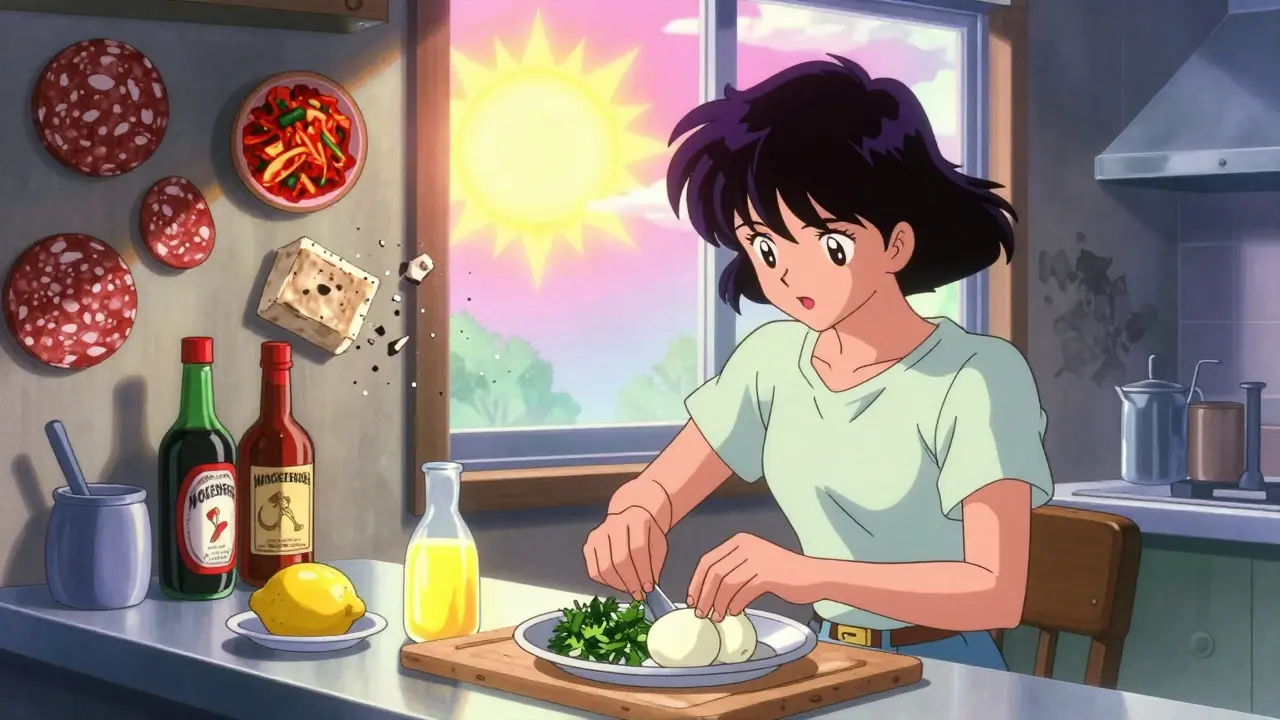
- Use fresh herbs, lemon juice, and vinegar for flavor instead of soy sauce or fish sauce.
- Opt for pasteurized, unfermented cheeses like mozzarella, ricotta, or cream cheese.
- Stick to bottled beer and wine instead of draft-less air exposure means less tyramine.
- Read labels. Look for words like "fermented," "aged," "cured," "smoked," or "yeast extract."
- Buy fresh tofu and use it the same day. Don’t store it for more than 24 hours.
- Make your own sauces. A simple vinaigrette with olive oil, vinegar, garlic, and herbs is safer than anything from a bottle.
Some people swear by small amounts of soy sauce-like a single tablespoon. But experts don’t recommend it. The risk isn’t worth it. Even if you’ve had no reaction before, your body’s sensitivity can change. One bad day is all it takes.
What About New Treatments?
There’s hope on the horizon. In 2023, the FDA approved a new enzyme supplement called TyraZyme that reduces tyramine absorption by about 58% in clinical trials. It’s not a cure, and it’s not approved for general use yet. Most doctors still advise against relying on it.Meanwhile, the transdermal patch form of selegiline (Emsam) is already a step forward. At the lowest dose, it allows up to 10 grams of tyramine per day-far more than most people would ever eat. But even that has limits. And it only works for some. For most people on oral MAOIs, the old rules still apply.
Real People, Real Risks
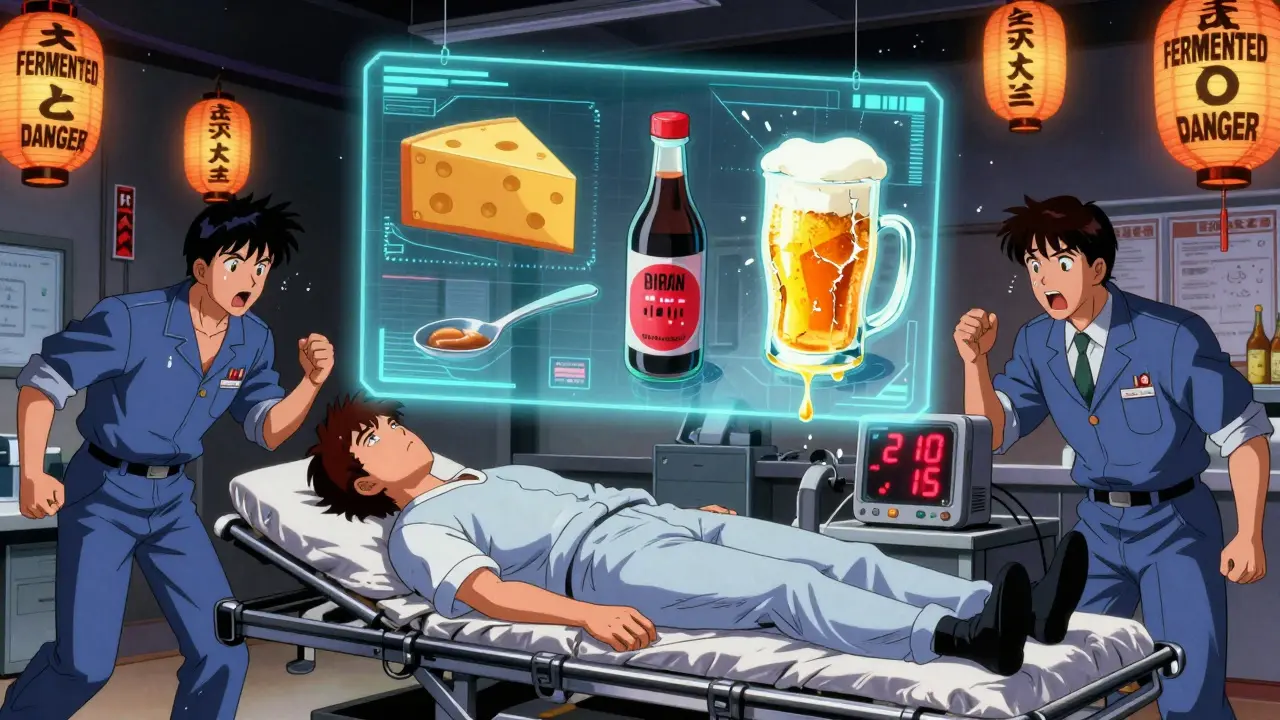
On Reddit, a user named NeurotransmitterNancy described her emergency room visit after eating miso soup. Her blood pressure hit 210/115. She didn’t know it was risky. No one told her. That’s not rare. It’s common.Many people stop taking MAOIs because the diet is too hard. One survey found that 12.4% of users quit treatment just because of food restrictions. But those who stick with it? 78% say it’s worth it. Their depression lifts. Their lives improve. The trade-off is real, but so is the reward.
How to Stay Safe
- Carry an emergency card that says you’re on an MAOI and lists forbidden foods.
- Ask your doctor for a detailed food list. Mayo Clinic’s guide is widely praised for being clear and practical.
- Learn to read labels. If it says "fermented" or "aged," skip it.
- When dining out, say: "I’m on a medication that reacts badly to fermented foods. Can you tell me what’s in this dish?"
- Join a support group. The MAOI Support Network on Facebook has over 12,000 members who share tips, recipes, and restaurant hacks.
It’s not about perfection. It’s about awareness. One slip-up can be serious. But with the right knowledge, you can live well-without risking your life.
Can I eat aged cheese if it’s low-sodium?
No. Sodium content has nothing to do with tyramine levels. Low-sodium aged cheeses like parmesan or blue cheese still contain dangerous amounts of tyramine. The problem isn’t salt-it’s fermentation. Avoid all aged cheeses entirely while on MAOIs.
Is tofu safe if I eat it fresh?
Fresh tofu has very low tyramine-about 5 mg/kg. But once it’s opened and stored in the fridge, levels can rise to 25 mg/kg in just three days. If you eat tofu, buy it fresh, use it the same day, and never store it longer than 24 hours. Don’t rely on "fresh" labels-check the date and smell it. If it smells sour, throw it out.
What about kombucha or kefir?
Both are fermented and can contain tyramine. While there’s less data on them than on soy or meat products, experts recommend avoiding them entirely. Fermentation = tyramine risk. There’s no safe amount confirmed for MAOI users.
Do I need to avoid tyramine forever?
Yes-for as long as you’re on the medication, and for at least two weeks after stopping it. Tyramine can still trigger a reaction even after you’ve stopped taking the MAOI. Your body needs time to fully clear the drug before you can safely reintroduce high-tyramine foods.
Can I drink alcohol at all?
Most alcohol is risky. Draft beer, red wine, sherry, and vermouth all contain significant tyramine. Bottled beer and white wine have lower levels, but even these aren’t guaranteed safe. The safest choice is to avoid alcohol entirely. If you must drink, stick to small amounts of clear spirits like vodka or gin with non-fermented mixers-but always check with your doctor first.
Are there any foods that are always safe?
Yes. Fresh fruits, vegetables, eggs, dairy (pasteurized only), fresh meats, rice, pasta, and plain grains are generally safe. Stick to freshly cooked meals made from scratch. Avoid anything that’s been stored, aged, fermented, or processed. When in doubt, skip it.
Why don’t doctors warn people better?
A 2022 study found that only 43.7% of primary care doctors could correctly identify three non-cheese tyramine sources. Many still think cheese is the only concern. This gap in education means patients often get incomplete or outdated advice. Always ask for a detailed dietary guide from a psychiatrist or dietitian who specializes in psychiatric nutrition.

Comments (14)
Davis teo February 18 2026
So I ate a bowl of ramen last week with miso broth and thought I was fine-turns out my BP spiked to 190/105 and I ended up in the ER. No one warned me. Not my doctor, not the waiter, not even the damn YouTube foodie who made the video. Now I carry a laminated card in my wallet that says ‘MAOI: DON’T FEED ME.’ I’m not mad, I’m just… really disappointed in society.
Michaela Jorstad February 19 2026
Thank you for sharing this so clearly. I’ve been on phenelzine for 8 years, and this is the first time I’ve seen a breakdown that actually makes sense. I started making my own sauces-olive oil, lemon, garlic, fresh herbs-and it changed my life. No more panic over every grocery trip. You’re not alone. And yes, tofu? Eat it the day you buy it. Period.
Caleb Sciannella February 20 2026
It is of paramount importance to recognize that the pharmacological profile of monoamine oxidase inhibitors necessitates a comprehensive understanding of dietary tyramine dynamics, particularly in the context of modern food processing and global culinary practices. The assertion that cheese is the primary vector is not only misleading but potentially life-threatening, as evidenced by the documented tyramine concentrations in fermented condiments such as soy sauce (45–70 mg/kg) and fish sauce (35–55 mg/kg). Furthermore, refrigeration, while it may decelerate microbial proteolysis, does not halt tyramine accumulation, as demonstrated by the 2022 longitudinal study on tofu storage. Therefore, a paradigm shift in patient education is not merely advisable-it is imperative.
Oana Iordachescu February 22 2026
Did you know the FDA doesn't require tyramine labeling? 😏 That's because Big Fermentation™ lobbies hard. I read a leaked memo from 2021: they knew about the risks since 2017 but called it "low probability"-until 14 people died in a single month. Now they're pushing "TyraZyme" like a miracle cure. But here's the thing: if they really cared, they'd ban high-tyramine imports. Instead, they're letting restaurants serve soy sauce like it's ketchup. #Conspiracy
Arshdeep Singh February 22 2026
bro u just don’t get it. you think it’s about food? it’s about control. they want you scared of soy sauce so you’ll stay dependent on meds. think about it. who profits? the pharma bros. who loses? you. your freedom. your tacos. your kimchi. they don’t want you happy-they want you obedient. wake up.
James Roberts February 24 2026
So let me get this straight: I can’t have soy sauce… but I can have a whole damn bottle of ketchup? Because tomatoes are "safe"? 😂 I’m pretty sure ketchup has more sugar than my ex’s apologies. And yet here we are, terrified of miso but fine with high-fructose corn syrup and artificial preservatives. We’re not avoiding danger-we’re avoiding the right kind of danger. Also, I just ate 3 tablespoons of soy sauce. My blood pressure is fine. I’m fine. I’m a miracle. I’m a legend.
Danielle Gerrish February 25 2026
I had my first hypertensive crisis at 2 a.m. after eating leftover stir-fry with soy sauce and a splash of Worcestershire. I thought I was just having a panic attack. I called 911 thinking I was dying. I wasn’t. I was just… stupid. I didn’t know. No one told me. My psychiatrist didn’t mention it. My mom didn’t know. The guy at the Chinese restaurant laughed when I asked if the sauce had "fermented stuff." He said, "It’s just sauce, ma’am." I cried in the ER. I still cry sometimes. I’m not okay. But I’m alive. And I’m learning. And I’m so, so tired.
Liam Crean February 25 2026
I’ve been on tranylcypromine for 5 years. I avoid almost everything. But I still have my occasional glass of white wine. I don’t drink often. I don’t drink a lot. And I’ve never had an issue. Maybe I’m lucky. Maybe my body just handles it. I don’t know. I don’t want to judge others who are stricter. But I also don’t want to live in fear. There’s a middle ground. I think.
madison winter February 27 2026
So… what’s the point again? You’re telling me I can’t have soy sauce but I can have a burger? Cool. I’ll just eat more meat. More cheese. More salt. More processed crap. At least it’s not fermented. I guess I’m just supposed to be grateful I’m not dead. Thanks for the guilt trip, doctor.
Ellen Spiers February 28 2026
The clinical literature is unequivocal: tyramine-induced hypertensive crisis is a catecholamine-mediated phenomenon, wherein the ingestion of dietary amines precipitates uncontrolled sympathetic discharge. The risk is dose-dependent, non-linear, and exhibits marked interindividual variability due to polymorphisms in MAO-A expression. Consequently, blanket dietary restrictions are not evidence-based; individualized risk stratification via pharmacogenetic screening is the only scientifically defensible approach. The current paradigm is archaic, paternalistic, and clinically indefensible.
Jonathan Rutter March 1 2026
You think you’re the only one who’s been through this? I’ve had 3 ER visits. Three. I’ve lost friends because they didn’t believe me. I’ve been called "dramatic" for refusing to eat at a friend’s house. My mom still makes me "just one bite" of her aged cheddar. I don’t eat at restaurants anymore. I don’t travel. I don’t date. I don’t go to parties. I live in a bubble. And you’re telling me to "be smart"? You don’t get it. This isn’t a diet. This is a prison.
Jana Eiffel March 2 2026
One might posit that the prohibition of fermented foods under MAOI therapy is less a pharmacological imperative than a cultural artifact-a relic of 1950s dietary dogma, preserved not by science but by institutional inertia. The human organism, in its evolutionary arc, has coexisted with microbial fermentation for millennia. To impose absolute abstinence upon a neurochemically vulnerable population is not caution-it is epistemological arrogance. The path forward lies not in fear, but in nuanced, individualized tolerance mapping.
John Cena March 3 2026
My cousin is on an MAOI. She’s the happiest she’s ever been. She eats soy sauce, drinks red wine, and still lives. She’s 67. She’s fine. Maybe the rules are outdated. Maybe some of us just don’t react. I’m not saying go wild. But maybe we need to stop treating everyone like they’re a ticking time bomb. Not everyone’s Nancy.
aine power March 3 2026
So. Soy sauce. Bad. Fresh tofu. Okay. Got it. Now I’ll go eat my organic kale smoothie. With no flavor. Because apparently, joy is a tyramine risk.