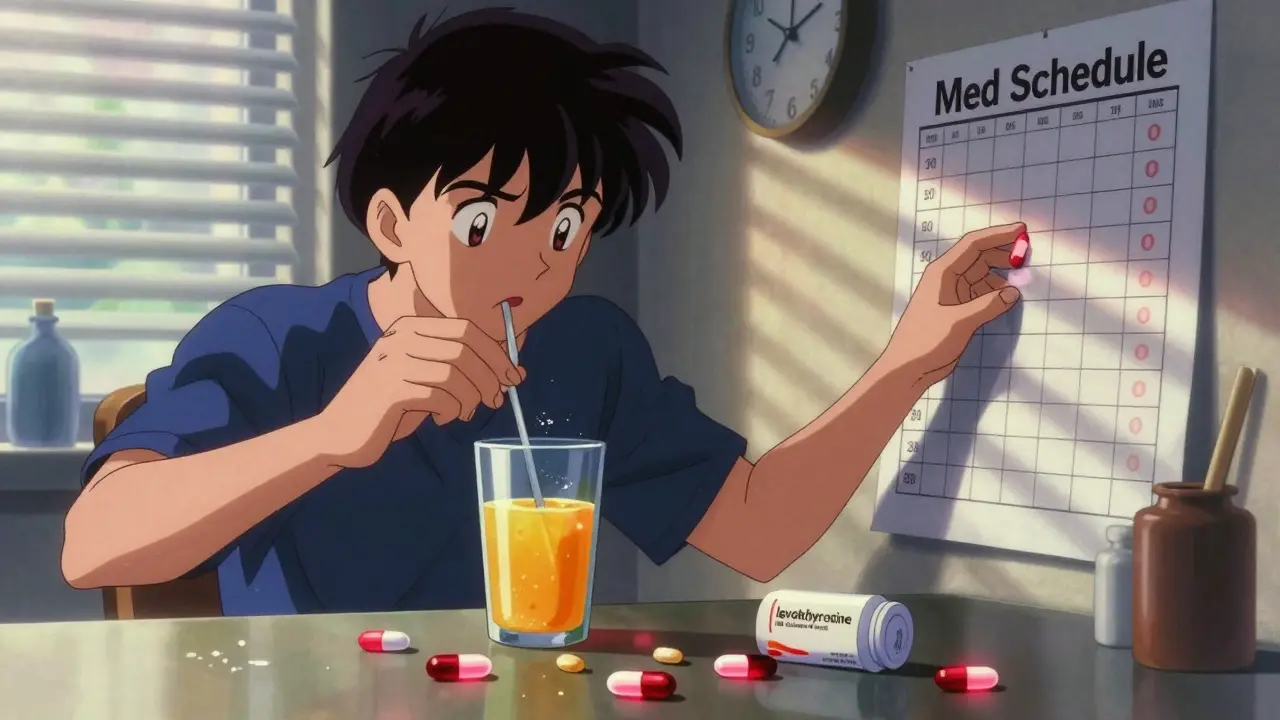
Bile Acid Sequestrant Timing Calculator
How This Calculator Works
Enter your current time and select your medications to see recommended separation times. Based on FDA guidelines and clinical studies, this tool helps prevent dangerous interactions between bile acid sequestrants and other drugs.
Recommended Timing
Based on FDA GuidelinesEnter your medications and time to see separation requirements.
Important Notes
For warfarin: Separation time should be at least 6 hours (8 hours recommended for unstable INR).
For levothyroxine: 8 hours minimum separation required for colesevelam (4 hours for others).
Always check with your doctor before changing medication schedules.
Take a bile acid sequestrant like cholestyramine or colesevelam to lower your cholesterol, and you’re doing everything right-until you realize your blood thinner, thyroid pill, or birth control isn’t working anymore. It’s not your fault. It’s not bad luck. It’s bile acid sequestrants binding to other drugs in your gut and sweeping them out before your body can absorb them. This isn’t a rare side effect. It’s the main reason these medications come with a long list of warnings and a complicated schedule.
How Bile Acid Sequestrants Actually Work
Bile acid sequestrants (BAS) aren’t absorbed into your bloodstream. That’s their whole point. Instead, they act like sticky sponges in your intestines, grabbing bile acids-the stuff your liver makes to digest fat. When those bile acids get pulled out of circulation, your liver has to use cholesterol to make more. That lowers your LDL, the "bad" cholesterol, by 15% to 30%. That’s a solid drop, especially if you can’t take statins.
There are three main ones: cholestyramine (Questran), colestipol (Colestid), and colesevelam (Welchol). Cholestyramine is the oldest and strongest binder. It’s a powder you mix with water or juice. Colesevelam comes as a tablet and is gentler on your gut. But all three work the same way: they bind. And they don’t care if what they’re binding is bile acid-or your blood pressure pill, your antidepressant, or your insulin.
Why Timing Isn’t Optional-It’s Life-Saving
Doctors used to say, "Take your other meds 1 hour before or 4 hours after." But that’s outdated. The real rule? It depends on the drug.
Warfarin is the biggest red flag. If you’re on this blood thinner and your BAS binds to it, your INR can drop dangerously low. One study showed patients on cholestyramine had INR levels fall by over 30% within days if they took warfarin too close to their BAS dose. That’s a real risk of clotting. The fix? Separate them by at least 6 hours. Some experts recommend 8 hours if your INR is unstable.
Levothyroxine? Even worse. This thyroid hormone needs to be absorbed in the upper small intestine. BAS can block up to 40% of it-even if you wait 4 hours. A 2022 study found patients who took levothyroxine 8 hours before colesevelam had near-normal absorption. Those who waited 4 hours? Still had 23% less hormone in their blood. That means fatigue, weight gain, brain fog-all because of timing, not dosage.
Metformin is tricky too. The extended-release version needs 4 hours separation from colesevelam. Regular metformin? Less of an issue. But if you’re on both, don’t assume they’re safe together. Check your blood sugar closely for the first two weeks after starting BAS.
What About Birth Control and Other Common Drugs?
Oral contraceptives? Yes, BAS can reduce their effectiveness. A 2023 survey of over 1,200 BAS users found that 17% had an unplanned pregnancy because they didn’t separate their pill from their cholesterol med. The fix? Use a backup method like condoms for the first 3 months. Or switch to a non-oral form-patch, ring, or IUD. These aren’t affected by gut binding.
Antibiotics like tetracycline or ciprofloxacin? Don’t risk it. BAS can cut their absorption by half. If you need an antibiotic, pause your BAS for the duration of the course. Ask your pharmacist to help you reschedule your doses.
Even vitamins can get caught. Fat-soluble ones-A, D, E, K-are absorbed with bile. If BAS are grabbing bile, they’re also grabbing these vitamins. Long-term users often need supplements. A 2019 study found 12.7% of BAS patients had vitamin K deficiency, which can cause dangerous bleeding. Your doctor should check your levels yearly.

Why Colesevelam Is the Easier Option
Not all BAS are created equal. Colesevelam (Welchol) has a lower binding capacity than cholestyramine. Studies show it interferes 30-40% less with warfarin and levothyroxine. It’s also less likely to cause constipation-the #1 reason people quit taking these meds. One user on EverydayHealth said, "I only need to separate my metformin by 2 hours with Welchol versus 4 hours with Questran, which fits better with my schedule."
If you’re starting a BAS, ask if colesevelam is an option. It’s not perfect, but it’s the least disruptive. It’s also the only one approved for type 2 diabetes, so if you have both high cholesterol and diabetes, it’s a two-in-one.
Real-World Challenges: Why People Fail
It’s not that people don’t know the rules. It’s that they can’t stick to them.
Imagine this: You take your BAS with breakfast. Your thyroid pill goes in the morning on an empty stomach. Your blood thinner at night. Your metformin after dinner. Your vitamin D at lunch. Now add in a statin, a beta-blocker, and a daily aspirin. That’s six different times to remember. And if you’re over 65? You’re more likely to need help from a caregiver.
A 2022 study found 38% of older BAS users relied on family members to manage their schedule. And even then, 41% still had at least one interaction. The biggest culprit? Forgetting. Or rushing. Or taking a pill at the wrong time because you were tired.
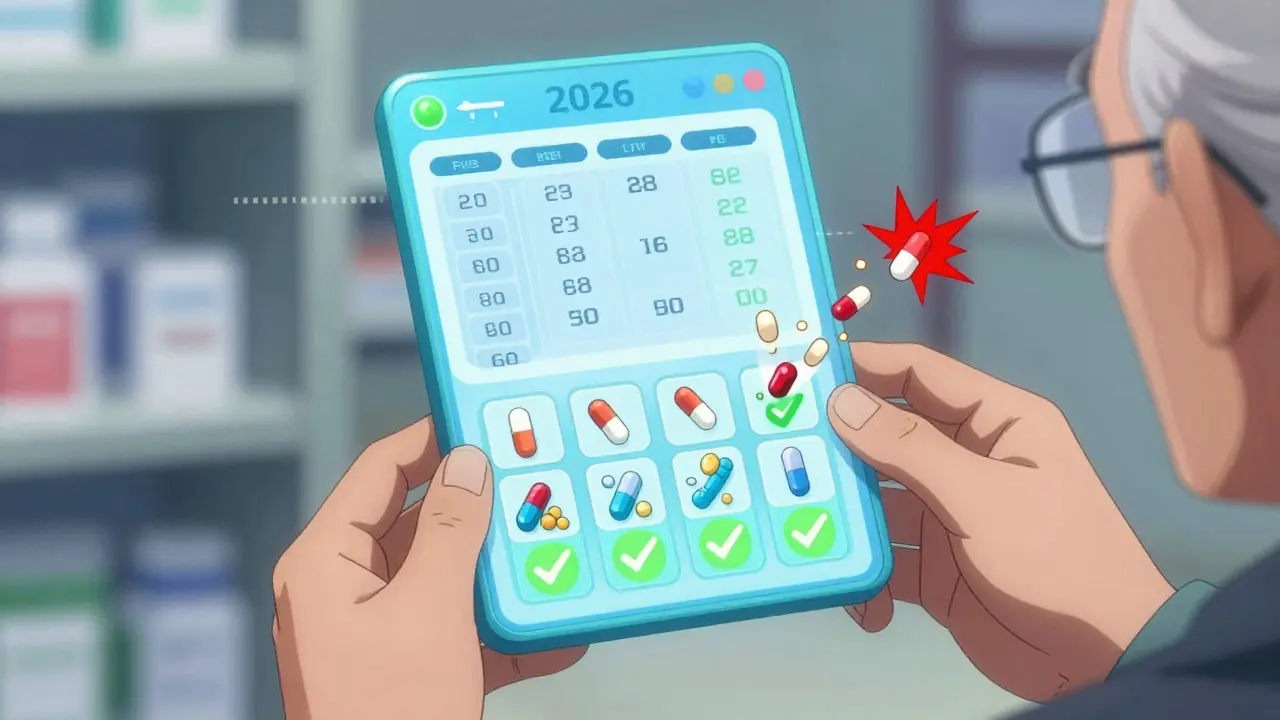
That’s why apps like Medisafe are so helpful. They send alerts: "Take levothyroxine now. BAS in 4 hours." One 2023 survey showed 42% of BAS users used these apps-and their interaction rates dropped by nearly half.
What to Do If You’re Already on BAS
If you’re already taking a bile acid sequestrant and you’re on other meds, here’s your action plan:
- Make a full list of every medication, supplement, and vitamin you take daily.
- Check each one against the BAS interaction list. Don’t guess. Use your pharmacist’s database or the FDA’s drug interaction checker.
- Set up a written schedule. Use a whiteboard or printed chart. Put it on your fridge.
- Use a medication app with alarms. Set multiple reminders for each dose.
- Ask your pharmacist to review your schedule monthly. They’re trained for this.
- Get your INR, TSH, and vitamin levels checked every 3 months for the first year.
If you’re on warfarin or levothyroxine and you’ve ever missed a dose or taken them too close to your BAS, get those levels checked right away. Don’t wait for symptoms.
What’s Changing in 2026
The FDA approved a new, lower-binding version of colesevelam in 2023. Early data shows 22% fewer drug interactions. That’s huge. More research is underway to use AI to personalize timing based on your metabolism, meal times, and other meds. In the next 2 years, you might get a custom schedule generated by your pharmacy app.
But for now, the rule stays simple: Timing matters more than dose. A 5 mg dose of levothyroxine taken 2 hours before BAS might work better than a 10 mg dose taken 1 hour after. The same goes for warfarin. It’s not about taking more. It’s about taking it at the right time.
These medications are still vital. For people who can’t take statins, they’re often the only option. But they’re not a set-it-and-forget-it drug. They’re a precision tool. And like any precision tool, they need careful handling.
Can I take my bile acid sequestrant with food?
Yes, you should take bile acid sequestrants with food or right after eating. This helps them bind bile acids more effectively and reduces stomach upset. But don’t take other medications with the same meal. Always separate them by the recommended time window.
What happens if I accidentally take my thyroid pill with my bile acid sequestrant?
If you accidentally take them together, don’t panic-but don’t ignore it either. Take your next thyroid dose 8 hours after your BAS, and get your TSH level checked within 4 to 6 weeks. One missed interaction won’t cause harm, but repeated ones can lead to under-treated hypothyroidism. Talk to your doctor about adjusting your dose if needed.
Is colesevelam safer than cholestyramine?
Yes. Colesevelam has a lower binding capacity and causes fewer drug interactions. It’s also less likely to cause constipation or bloating. If you’re starting a bile acid sequestrant and have multiple medications, colesevelam is usually the better choice. But it’s not risk-free-timing still matters.
Can I switch from cholestyramine to colesevelam to avoid interactions?
Yes, many patients do. Switching from cholestyramine to colesevelam can reduce the number of timing conflicts and improve side effects. But don’t switch on your own. Talk to your doctor. Your cholesterol levels need to be monitored during the switch, and your other meds may need dose adjustments.
Do I need to stop my bile acid sequestrant if I need an antibiotic?
You don’t have to stop it permanently, but you should pause it during the antibiotic course. Take your antibiotic at least 4 hours before or after your BAS. Resume your BAS 24 to 48 hours after finishing the antibiotic. This ensures the antibiotic works properly and your cholesterol stays controlled.
How long do I need to keep taking bile acid sequestrants?
These are usually long-term medications. If they’re working and you’re tolerating them, you’ll likely take them for years. But if you’re struggling with timing, side effects, or interactions, talk to your doctor. There are newer options like PCSK9 inhibitors or inclisiran that may be better suited. The goal isn’t to take the hardest drug-it’s to keep your cholesterol low and your life simple.
Final Thought: It’s Not About Willpower-It’s About Systems
You’re not failing because you forgot to take your pill at 9 a.m. instead of 8. You’re failing because the system is broken. No one should have to juggle six different times a day just to stay healthy. But until AI-driven scheduling and lower-binding drugs become standard, your best tool is a written plan, a reliable app, and a pharmacist who knows your full list.
Ask for help. Use the tools. Track your levels. And don’t assume your doctor knows every interaction. You’re the one taking the pills. You’re the one who needs to know when to take them-and when not to.

Comments (10)
Alex Flores Gomez January 29 2026
Wow. Finally someone who gets it. Not just "take it 4 hours apart" like some robotic pharmacist drone. This is the kind of info you only learn after your INR crashes and your doctor looks at you like you’re a lab rat who didn’t follow the manual. I took cholestyramine for 3 years and thought I was doing fine-until I got a blood clot. Turns out I was taking my warfarin 2 hours after my powder. Stupid. So stupid. Now I use Medisafe. And I hate it. But I’m alive.
Kacey Yates January 30 2026
Levothyroxine and BAS is a nightmare. I took mine 4 hours apart like the pamphlet said and my TSH went from 3.2 to 9.8. My doctor acted like it was my fault. I had to Google the 2022 study myself. Now I take it 8 hours before. No more brain fog. No more weight gain. Just pure thyroid peace. Also-vitamin D? Take it at lunch. BAS at dinner. Simple. Done.
Laura Arnal January 31 2026
Thank you for this!!! 🙏 I was about to quit my BAS because I felt like a zombie-tired, bloated, forgetful. Then I found out my vitamin K was low and I was taking my meds too close. Switched to colesevelam, started spacing everything, and now I’m actually sleeping through the night. I even bought a little whiteboard for my fridge. It’s ugly but it saved my life. You’re not alone. 💪
Robin Keith February 1 2026
It’s not just about timing, is it? It’s about the metaphysical dissonance of modern pharmacology-where the body becomes a battlefield of molecular antagonisms, and we, the mere vessels, are reduced to timekeepers of chemical warfare. We are not patients-we are administrators of a crumbling system. The bile acid sequestrant? It doesn’t hate you. It doesn’t love you. It simply is. And in its indifferent binding, it reveals the fragility of our biological contracts. We take pills to live, yet we must orchestrate their dance like priests in a temple of dosage. What is human agency here? Is it control? Or is it just the illusion of control, masked in alarm clocks and apps? I ask not for answers… but for witness.
Kristie Horst February 2 2026
It’s fascinating how we’ve turned medical compliance into an Olympic sport. Six medications, six different times, and somehow we’re expected to be perfect. Meanwhile, the system doesn’t even provide a single integrated app that auto-schedules based on your actual routine. You have to build your own Frankenstein calendar. And then blame yourself when you miss a dose. The real failure isn’t the patient. It’s the healthcare infrastructure that treats human beings like machines with unbreakable schedules. Just saying.
Andy Steenberge February 3 2026
I’ve been on colesevelam for two years now. Started on cholestyramine, hated the constipation and the taste-it was like swallowing chalk mixed with regret. Switched to Welchol and my life changed. I still separate my meds, but now I only need 2 hours for metformin and 4 for levothyroxine. My pharmacist set up a color-coded chart for me. I take a picture of it every morning. It’s not glamorous, but it works. And if you’re struggling? Talk to your pharmacist. They’re the unsung heroes of this whole mess.
Laia Freeman February 4 2026
Okay but why is no one talking about the fact that BAS makes you feel like you’re digesting sand?? I tried cholestyramine for 3 days and I swear I could feel my intestines screaming. I switched to Welchol and it’s still not fun-but at least I can poop without crying. Also-yes to backup birth control. I had a scare. Now I use the ring. Life is so much easier. Don’t be a hero. Just switch.
paul walker February 5 2026
Just got prescribed colesevelam yesterday. This post saved me from a disaster. I was about to take my levothyroxine with breakfast. Now I know to wait. Thanks for the clarity. I’m printing this out and taping it to my pill organizer.
Megan Brooks February 5 2026
Thank you for the detailed breakdown. I particularly appreciate the emphasis on vitamin K deficiency-it’s rarely discussed. I’ve been on BAS for five years and never had my levels checked. I’ll schedule that this week. This isn’t just about cholesterol. It’s about systemic awareness. We owe it to ourselves to be informed advocates, not passive recipients of prescriptions.
Ryan Pagan February 6 2026
Let’s be real-bile acid sequestrants are the OG drug-interaction monsters. Cholestyramine? More like "cholesterol-destroyer-of-your-meds." I used to joke that my pills were having a Mexican standoff in my gut. Now I take Welchol, and my meds don’t try to murder each other anymore. Pro tip: if you’re on warfarin, get your INR checked every 2 weeks for the first month after switching. No excuses. Your life isn’t a gamble.