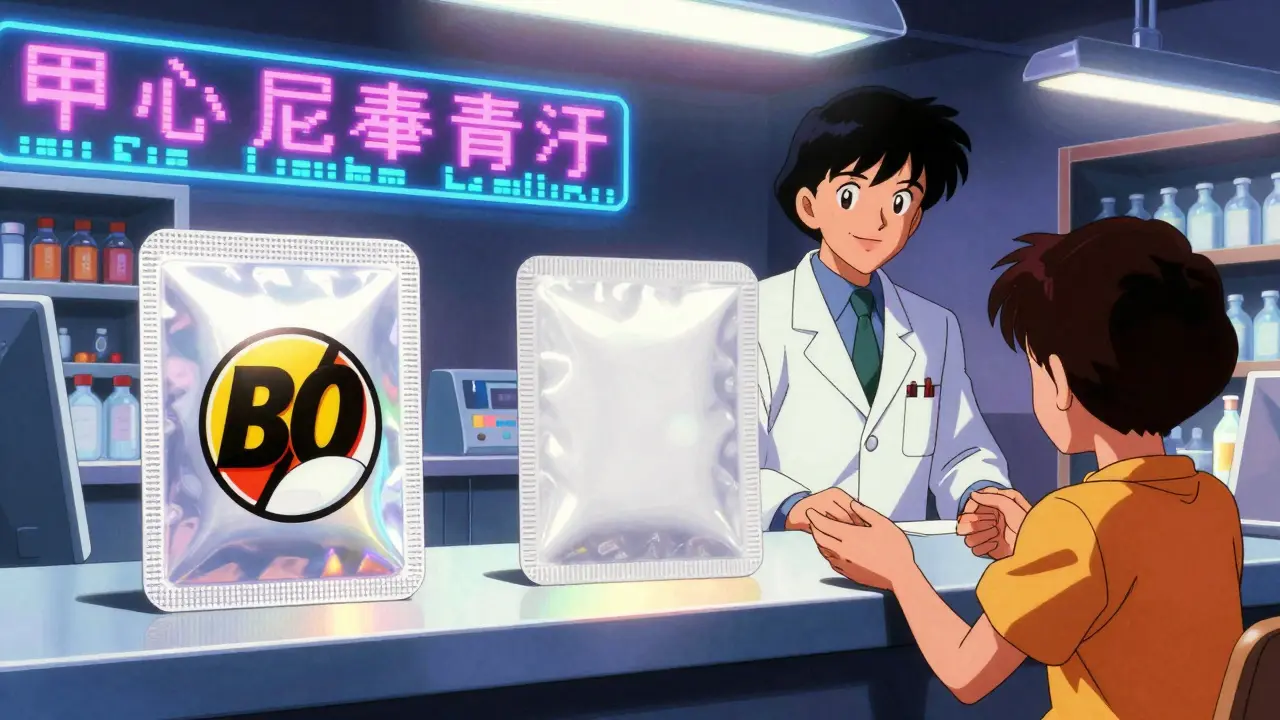
When you pick up a prescription, you might see two very different-looking pills on the counter-one with a familiar brand name, another with no name at all. You might wonder: is this cheaper version really the same? The answer, in many cases, is yes. Authorized generics are not just similar to brand-name drugs-they’re exactly the same. No guesswork. No variation. Just the same pills, same packaging (minus the brand logo), same results.
What Exactly Is an Authorized Generic?
An authorized generic is the exact same drug as the brand-name version, made by the same company, in the same factory, with the same ingredients. The only difference? It doesn’t carry the brand name on the label. That’s it.
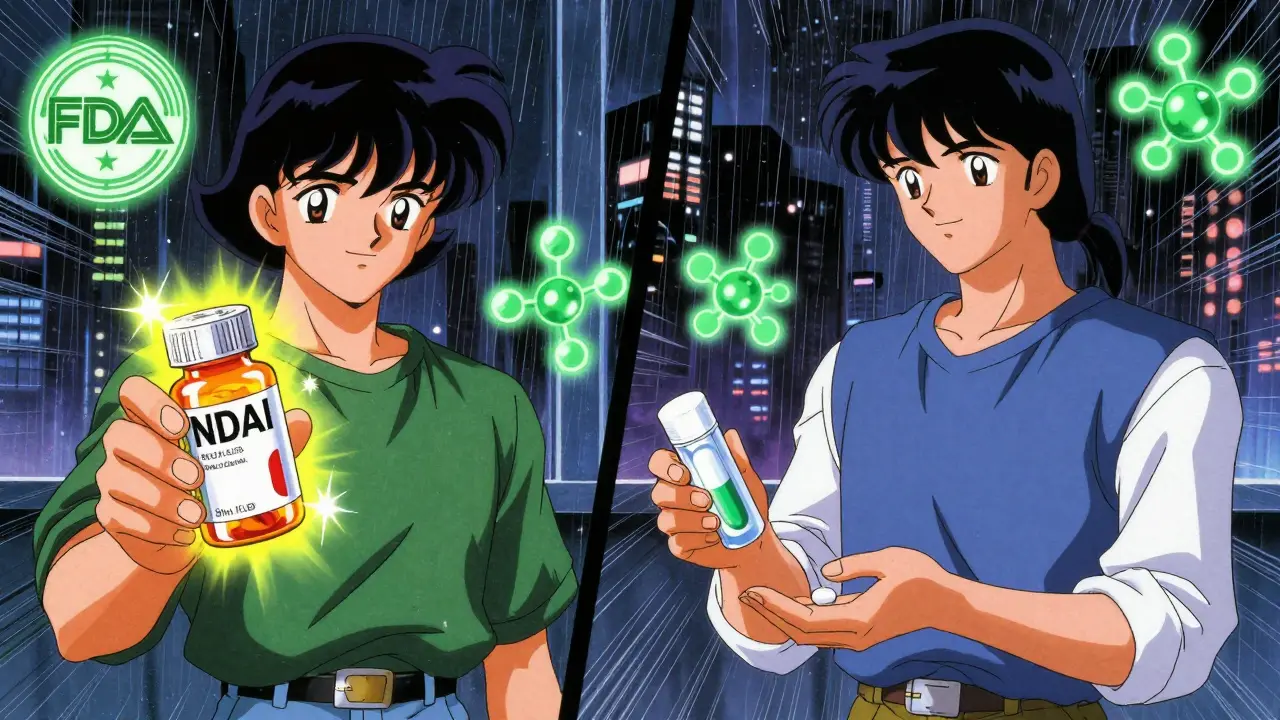
The U.S. Food and Drug Administration (FDA) defines it clearly: an authorized generic is an approved brand-name drug sold without the brand name on the packaging. It’s made under the original brand’s New Drug Application (NDA), meaning it skips the usual generic approval process. That’s why it’s chemically and physically identical-same active ingredient, same fillers, same coating, same size, same color.
Traditional generics, on the other hand, are approved through a different pathway called an Abbreviated New Drug Application (ANDA). They must prove they’re bioequivalent-meaning they work the same way in your body-but they’re allowed to use different inactive ingredients. Those fillers, dyes, and preservatives can sometimes cause reactions in sensitive patients. Authorized generics don’t have that risk because they use the exact same formula as the brand.
Why Do Brand Companies Sell Their Own Generics?
It sounds strange at first: why would a company that just spent millions developing a drug turn around and sell a cheaper version of it? The answer is competition.
After a brand drug’s patent expires, other companies can legally make generics. But the original manufacturer doesn’t just sit back and watch their profits vanish. Many introduce their own authorized generic-often through a subsidiary or licensed partner-to compete directly with those new generic makers. This strategy keeps them in the game, captures market share, and sometimes delays the full drop in price that comes with multiple generic competitors.
It’s not always about squeezing customers. Sometimes, it’s about control. By launching an authorized generic, the brand company ensures the product remains identical to what patients trusted. That’s especially important for drugs where even tiny changes in inactive ingredients can cause issues-for example, in asthma inhalers, epilepsy meds, or allergy treatments.
Authorized Generics vs. Traditional Generics: The Real Difference
Let’s cut through the confusion. Here’s how they stack up:
| Feature | Brand Drug | Authorized Generic | Traditional Generic |
|---|---|---|---|
| Active Ingredient | Same | Same | Same |
| Inactive Ingredients | Brand formula | Brand formula | May differ |
| Manufacturer | Brand company | Brand company or licensee | Third-party generic maker |
| Regulatory Path | New Drug Application (NDA) | Uses brand’s NDA | Abbreviated NDA (ANDA) |
| Appears in FDA Orange Book? | Yes | No | Yes |
| Typical Price Discount vs. Brand | Full price | 15-40% lower | 80-85% lower |
That last row-price-is where things get tricky. Authorized generics are cheaper than brand drugs, but often not as cheap as traditional generics. Why? Because the brand company still controls the supply. If they’re the only one making the generic version, they can keep prices higher than if five different companies are competing.
But here’s the thing: if you’ve had bad reactions to traditional generics-rashes, stomach upset, or just feeling “off”-switching to an authorized generic might be the fix. Because the inactive ingredients are identical, your body won’t have to adjust to new fillers or dyes.
Do Authorized Generics Work the Same?
Yes. And the science backs it up.
A 2018 study published by the National Center for Biotechnology Information looked at over 5,000 patients switching from brand drugs to either traditional generics or authorized generics. The results? No meaningful difference in hospital visits, emergency room trips, or medication adherence between the two generic types. Patients on authorized generics didn’t stop taking their meds any more than those on brand drugs.
Some studies even found slightly higher emergency room visits with authorized generics-but that’s likely because those patients were switching from brand drugs (which they trusted) to something new, even if it was identical. The drug didn’t change. Their perception did.
The FDA is blunt about it: “An authorized generic is therapeutically equivalent to the brand name drug because it is exactly the same drug.” No wiggle room. No “close enough.” It’s the same pill.
Why Don’t More People Know About Them?
Because the system isn’t designed to explain them.
Pharmacists are trained to substitute generics when allowed. But they’re not always trained to tell you if what they’re giving you is an authorized generic. You might get one without realizing it. The label won’t say “authorized generic.” It’ll just say the drug name, maybe the manufacturer, and the dose.
And patients? They see a different-looking pill and panic. “Is this the real thing?” they ask. The truth is, if it’s an authorized generic, it’s the real thing-just without the marketing.
Pharmacists report that about 30% of patients question the switch to an authorized generic, even though it’s identical. That’s why patient education matters. The FDA has free materials explaining this. Ask your pharmacist for them.
When Should You Ask for an Authorized Generic?
You don’t always need to. For most people, traditional generics work perfectly fine. But there are situations where an authorized generic makes sense:
- You’ve had a bad reaction to a traditional generic-rash, nausea, or unusual side effects.
- You’re on a medication where small changes matter: seizure drugs, thyroid meds, blood thinners, or asthma inhalers.
- You’ve been on the brand drug for years and want to save money without risking a change in how the drug feels.
- Your insurance covers it at the same price as a traditional generic.
Ask your doctor or pharmacist: “Is there an authorized generic for this?” They can check. It’s not always obvious from the label.
What About Cost? Is It Worth It?
Price varies. A brand-name drug might cost $150 a month. A traditional generic? $10. An authorized generic? Maybe $40.
That’s not a huge discount-but if you’re one of the 5-10% of people who react to inactive ingredients, $40 is worth it. You avoid doctor visits, ER trips, and the stress of wondering if your meds are working.
Also, check your insurance. Some plans put authorized generics in the same tier as traditional generics. That means you pay the same low copay, even though the drug is technically the brand version. That’s a hidden win.
GoodRx and other price-comparison tools can show you the difference. Always check before you fill. Sometimes, the authorized generic is the cheapest option-even if it’s not the cheapest on paper.
What’s Next for Authorized Generics?
The FDA is watching. With authorized generics making up about 5-7% of the U.S. generic market, regulators are looking at pricing transparency. There’s talk of requiring brand companies to list authorized generic prices in the Orange Book so patients and insurers can compare them fairly.
Some lawmakers are pushing to limit how brand companies use authorized generics to block competition. But for now, they’re legal, approved, and widely available.
As more patients become aware of them, demand will grow. And that’s a good thing. Because if you can get the same drug, at a lower price, with no risk of ingredient changes-why wouldn’t you?
Are authorized generics as safe as brand-name drugs?
Yes. Authorized generics are made under the same FDA-approved process as the brand-name drug, using the exact same ingredients and manufacturing methods. The FDA confirms they are therapeutically equivalent and carry the same safety profile.
Can I switch from a brand drug to an authorized generic without problems?
Absolutely. Since the formulation is identical, including inactive ingredients, switching should not affect how the drug works in your body. Many patients report no difference at all-only a lower price.
Why is an authorized generic sometimes more expensive than a traditional generic?
Because the brand company controls the supply. If only one company makes the authorized generic, they can set a higher price than if multiple generic manufacturers are competing. Traditional generics often drop to 80-85% below brand price; authorized generics typically cost 15-40% less.
How do I know if my prescription is an authorized generic?
Check the label. If it has no brand name but matches the brand’s dosage and shape, it might be one. Ask your pharmacist: “Is this an authorized generic?” They can look up the manufacturer and confirm. You can also search the FDA’s authorized generic list online.
Do insurance plans cover authorized generics?
Yes, most do. Many insurers treat them the same as traditional generics, placing them in the lowest cost tier. Some even prefer them because they’re identical to the brand and reduce the risk of patient side effects.
Final Thought: It’s Not About the Name. It’s About the Medicine.
Drug companies spend billions on branding. But when it comes to your health, the logo on the pill doesn’t matter. What matters is what’s inside. Authorized generics prove that. They’re not a compromise. They’re the same drug, stripped of marketing. And for many people, that’s the smartest, safest, and most affordable choice.

Comments (12)
bhushan telavane December 18 2025
Been using authorized generics for my blood pressure med for years. Same pill, half the cost. No side effects, no drama. Why pay extra for a logo?
Mahammad Muradov December 19 2025
Let me be clear: the FDA’s definition is technically correct, but the regulatory loophole here is absurd. Authorized generics aren’t ‘generics’ at all-they’re brand drugs in disguise. This isn’t transparency, it’s market manipulation dressed up as consumer choice. The system is rigged.
Connie Zehner December 21 2025
OMG I JUST REALIZED MY MIGRAINE MED IS AN AUTHORIZED GENERIC!! 😱 I thought I was being scammed but now I feel so smart!! My pharmacist didn’t tell me but I checked the label and it’s the exact same shape and color as the brand!! I’m telling everyone!! 🙌❤️
mark shortus December 21 2025
Okay so let me get this straight-some pharma giant makes a drug, spends billions on ads, then turns around and sells the SAME THING for less under a different label??
That’s not capitalism. That’s psychological warfare.
I’m not mad, I’m just disappointed. And also kinda impressed. 🤡
Elaine Douglass December 23 2025
I switched to an authorized generic for my thyroid med last year and I didn’t even notice the difference. My doctor said it was fine but I was nervous. Turns out I was worrying for nothing. So glad I didn’t overthink it. You guys are right, it’s just medicine. No brand needed. 😊
Allison Pannabekcer December 23 2025
For anyone who’s ever had a weird reaction to a generic-like a rash or nausea or just feeling ‘off’-this is the quiet win you didn’t know you needed. Authorized generics are the unsung heroes of the pharmacy aisle.
They’re not flashy. They don’t have ads. But they’re the closest thing to a brand drug you can get without paying brand prices. If your body’s sensitive, this is your lifeline. And yeah, it’s weird that the same company makes both, but honestly? I’ll take consistency over competition any day.
Also, pharmacists should be trained to proactively say ‘this is an authorized generic’ instead of just handing it over like it’s nothing. We deserve to know what we’re taking.
Sarah McQuillan December 24 2025
Why are we letting foreign-owned pharmaceutical companies dictate our healthcare? The FDA lets American companies sell their own generics? That’s not innovation, that’s national betrayal. We’re being sold a lie. The brand companies are just playing us. They’re not saving us money-they’re controlling the market. This is how they keep prices high. America needs to ban this practice.
Kitt Eliz December 26 2025
🚨 PSA FOR EVERYONE: Authorized generics = same active + inactive ingredients = zero bioequivalence guesswork. Traditional generics? Could have different fillers, dyes, binders-hello, GI distress or allergic reactions. If you’re on a narrow-therapeutic-index drug (think warfarin, levothyroxine, or carbamazepine), you’re playing Russian roulette with ANDAs.
Authorized generics are the gold standard for patient safety. Ask for them. Demand them. Your body will thank you. 💪💊 #PharmaceuticalTransparency #PatientFirst
Aboobakar Muhammedali December 27 2025
I never knew this existed until my dad got his epilepsy med switched. He was having seizures every other week after switching to a cheap generic. Then the pharmacist gave him the authorized one. Same pill. Same everything. No more seizures. We cried. No brand. Just science. Thank you whoever made this possible.
Laura Hamill December 27 2025
They’re hiding this from us on purpose. Why? Because if people knew they could get the exact same pill for less, they’d stop buying the brand. And then the pharmaceutical giants would lose control. This is all part of the Great Pharma Cover-Up. They don’t want you to know you’ve been paying for ads, not medicine.
Alana Koerts December 29 2025
So you’re telling me a drug company can legally sell its own product as a ‘generic’ to undercut competitors? That’s not a loophole. That’s a monopoly with a label change. The FDA is complicit. The whole system is broken. End of story.
Dominic Suyo December 29 2025
Let’s be real-authorized generics are the only honest thing in this entire pharma circus. The brand companies are basically saying: ‘We know you’re tired of being scammed. Here’s the real thing, minus the marketing tax.’
Meanwhile, traditional generics? Sometimes they’re fine. Sometimes they’re a crapshoot. But this? This is transparency. It’s not perfect, but it’s the closest thing we’ve got to a win. And honestly? I’d rather pay $40 for the real thing than $10 for a gamble.