
Getting a vaccine when your immune system is dampened by medication isn't as simple as walking into a pharmacy for a quick jab. For people managing autoimmune diseases or recovering from transplants, the timing of a vaccine can be the difference between building a strong defense and getting almost no protection at all. The core problem is that immunosuppressive drugs do exactly what they are designed to do: they quiet the immune system. When you introduce a vaccine, your body might not "notice" the trigger or produce enough antibodies to fight the actual virus later.
Quick Guide: Vaccine Timing and Impact
- Pre-treatment: Aim for vaccines at least 14 days before starting immunosuppressants.
- B-cell therapies: Ideally, wait 6 months after the last dose, though some experts suggest up to a year.
- Steroids: If taking more than 20mg of prednisone daily, hold off on non-flu vaccines until you taper down.
- Efficacy drop: Depending on the drug, your vaccine response could be 30% to 80% lower than a healthy person's.
Why Timing Matters for Your Immune Response
When you're healthy, a vaccine teaches your immune system to recognize a pathogen. However, if you're on immunosuppressive therapy, the "teaching" process is interrupted. For example, data from the CDC showed that solid organ transplant recipients had 56% lower antibody levels after two doses of mRNA vaccines compared to people with normal immune function. This doesn't mean the vaccine is useless, but it means the "shield" is thinner.
The goal for clinicians and patients is to find the "sweet spot"-the window where the disease is controlled, but the immune system is active enough to respond to the vaccine. If you vaccinate too early during a flare-up or too late during a heavy medication cycle, you're essentially wasting the dose. This is why guidelines from the Infectious Diseases Society of America (IDSA) and the American College of Rheumatology (ACR) emphasize scheduling rather than just administration.
Navigating B-Cell Depleting Therapies
Drugs like Rituximab are a special case because they target B-cells, the very cells responsible for making antibodies. If you have no B-cells, you can't make antibodies to the vaccine. The general rule of thumb is to wait at least 6 months after your last infusion before getting a non-live vaccine. This gives your B-cells time to bounce back.
But here is where it gets tricky: practical reality often clashes with ideal biology. While some specialists at Memorial Sloan Kettering suggest waiting 9 to 12 months for the best possible response, the CDC sticks to 6 months to balance urgency with efficacy. If you are in a high-risk environment or there's a massive spike in community transmission (more than 100 cases per 100,000 people), the IDSA suggests it's better to get the shot now than to wait for the perfect window and risk a severe infection.
| Medication / Therapy | Recommended Timing Window | Key Consideration |
|---|---|---|
| Rituximab / B-cell therapies | 4-5 months post-infusion / 2-4 weeks pre-next dose | Wait for lymphocyte recovery |
| Methotrexate | Hold for 2 weeks after flu shot | Coordination with rheumatologist |
| Prednisone (>20mg/day) | Defer until dosage is tapered | High doses suppress overall response |
| Organ Transplant | ≥2 weeks pre-transplant or ≥3 months post | Avoid during pulse immunosuppression |

Practical Strategies for Different Scenarios
If you're just about to start a new treatment, the best move is to get your shots early. The CDC recommends getting inactivated vaccines at least 14 days before your first dose of immunosuppressants. This ensures your body has a head start on building immunity before the drugs kick in.
For those already in the thick of treatment, coordination is everything. If you're on a cyclical chemotherapy schedule, like with Obinutuzumab, the best time to vaccinate is often the week immediately before your next treatment. Why? Because that's usually when your white blood cell counts are at their highest point in the cycle.
It's also worth noting that not all vaccines are created equal in this context. Live vaccines are generally avoided entirely for those on heavy immunosuppression because they could potentially cause the disease they are meant to prevent. Stick to inactivated or recombinant vaccines, and always verify the type with your doctor.
The Gap Between Guidelines and Reality
You might notice that different organizations give slightly different advice. For instance, the NCCN suggests chronic lymphocytic leukemia patients get vaccines "when available," while other protocols are much stricter about waiting for lymphocyte reconstitution. This happens because there is no single "test" to tell a doctor exactly how immunocompromised you are today. We rely on time intervals because we lack a universal biomarker.
This lack of precision is why some people still don't develop a strong response even when they follow the timing rules perfectly. A study in Blood Advances found that 60-70% of patients on B-cell therapy still had suboptimal responses at the 6-month mark. This is driving new research, including a large NIH trial looking at CD19+ B-cell counts to see if we can move away from "guessing by the calendar" and toward personalized timing.
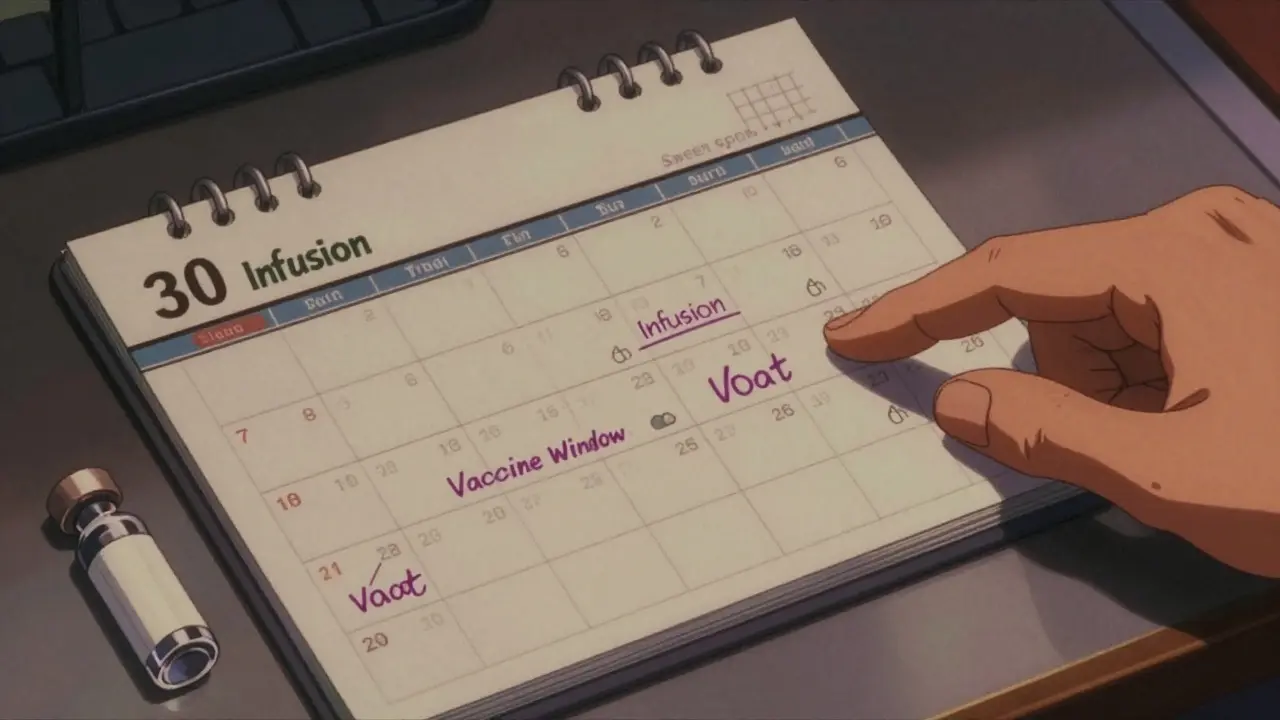
Managing Your Vaccine Schedule: A Checklist
- Review your med list: Identify which are B-cell depleting, steroids, or general immunosuppressants.
- Map your cycle: Mark your last infusion and your next scheduled dose on a calendar.
- Check the community: Is there a local outbreak? If yes, talk to your doctor about prioritizing speed over perfect timing.
- Confirm the vaccine type: Ensure the vaccine is inactivated, not live.
- Plan the "Hold": If using Methotrexate, coordinate the two-week hold with your specialist.
Can I get a vaccine if I'm currently taking high-dose steroids?
Generally, if you are taking more than 20mg of prednisone daily, non-influenza vaccines are usually deferred. High doses of steroids can significantly blunt your immune response, making the vaccine less effective. Your doctor will typically wait until you've tapered down to a lower dose before scheduling the shot.
Why is the 6-month wait for Rituximab so important?
Rituximab wipes out B-cells, which are the "factories" that produce antibodies. If you vaccinate while your B-cell count is zero, you won't produce the antibodies needed for protection. Six months is a clinical compromise-it's enough time for most people's B-cells to start returning, even though full recovery can take up to a year.
What happens if I miss the "ideal" window?
Missing the window doesn't mean you shouldn't get vaccinated; it just means the efficacy might be lower. In cases of high community transmission, experts agree that getting some protection is better than none. You may need additional doses or a different schedule to compensate for the reduced response.
Are live vaccines ever okay for immunosuppressed patients?
Generally, no. Live vaccines contain a weakened form of the virus. In a healthy person, the immune system handles this easily. In an immunosuppressed person, that weakened virus could potentially multiply and cause an actual infection. Always double-check the vaccine type with your healthcare provider.
Does the vaccine still work if my antibody levels are low?
Yes, it can. While antibody tests are the standard way to measure response, your body also has T-cell responses. T-cells can help prevent severe disease and hospitalization even if the antibody levels are low. This is why vaccination is still strongly recommended even for those with diminished responses.
Next Steps and Troubleshooting
If you're unsure about your current status, ask your doctor for a lymphocyte count or a B-cell panel. While not yet a gold standard for every vaccine, it gives a better picture than a calendar ever could. For those with complex chemotherapy cycles, use a shared digital calendar that both your primary care doctor and your oncologist can access to avoid the common pitfall of fragmented care coordination.
If you've already been vaccinated during a period of heavy immunosuppression and are worried about efficacy, discuss "booster" strategies with your team. Some patients may benefit from an additional dose once their medication is tapered or their B-cell counts have recovered.